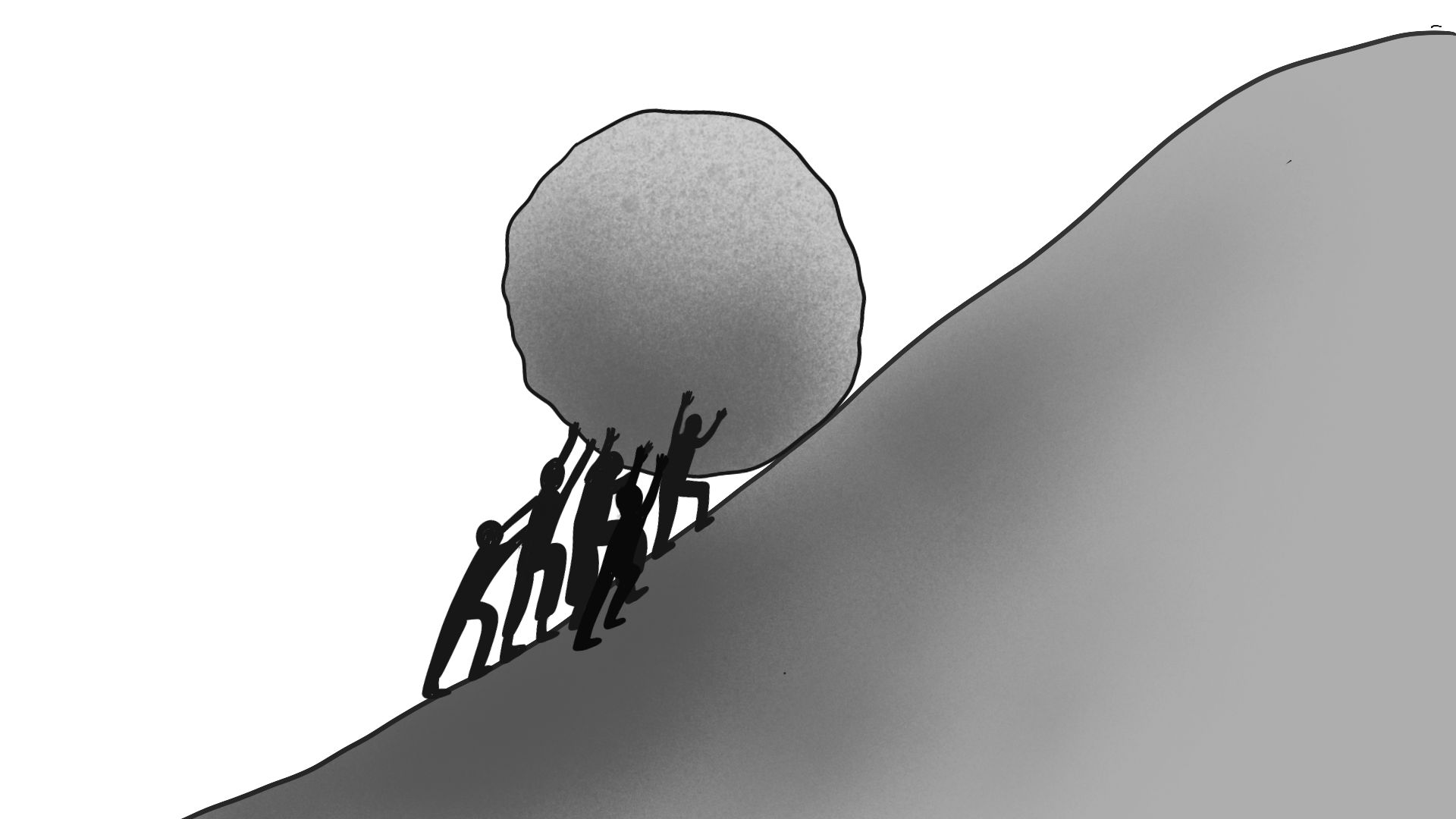
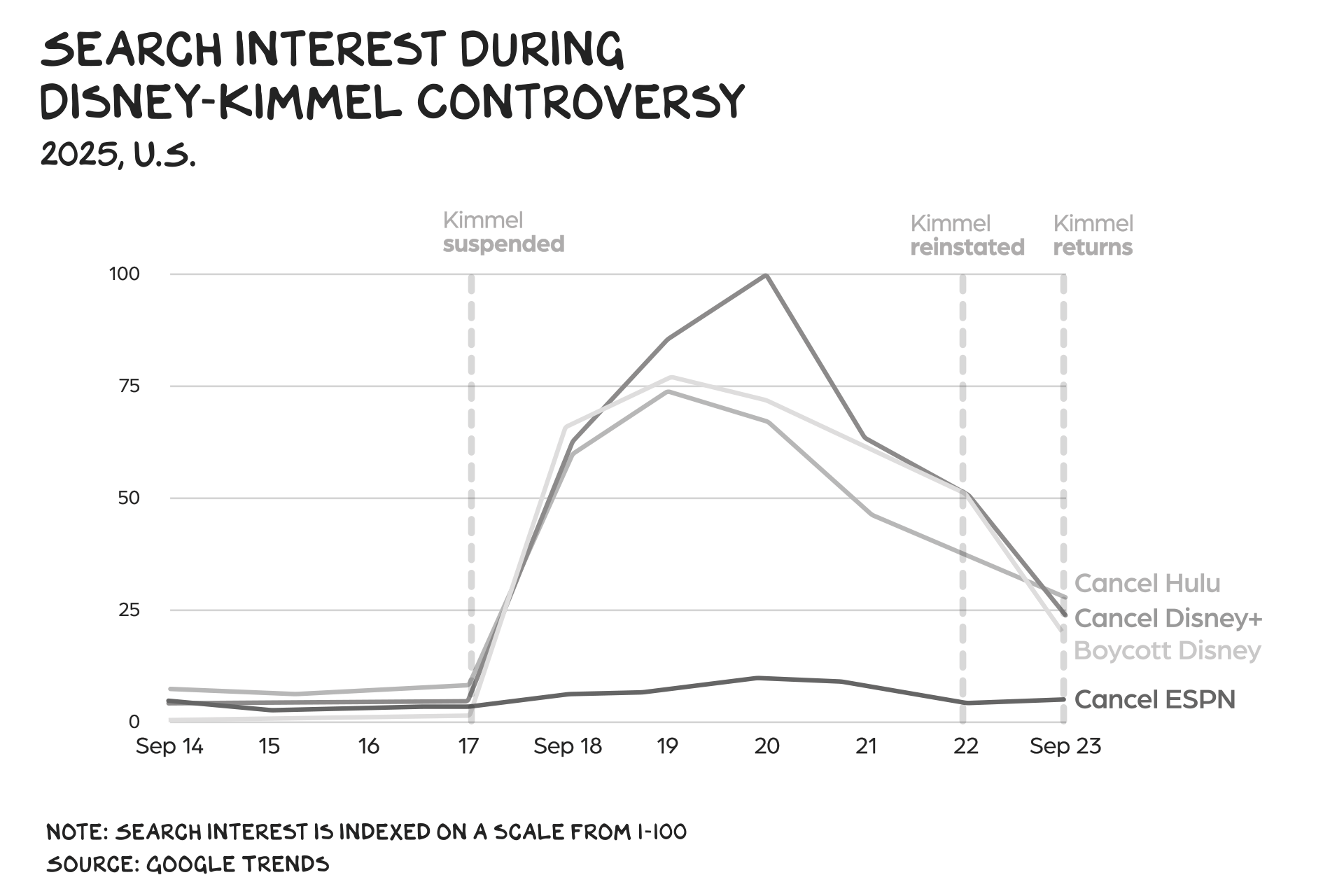
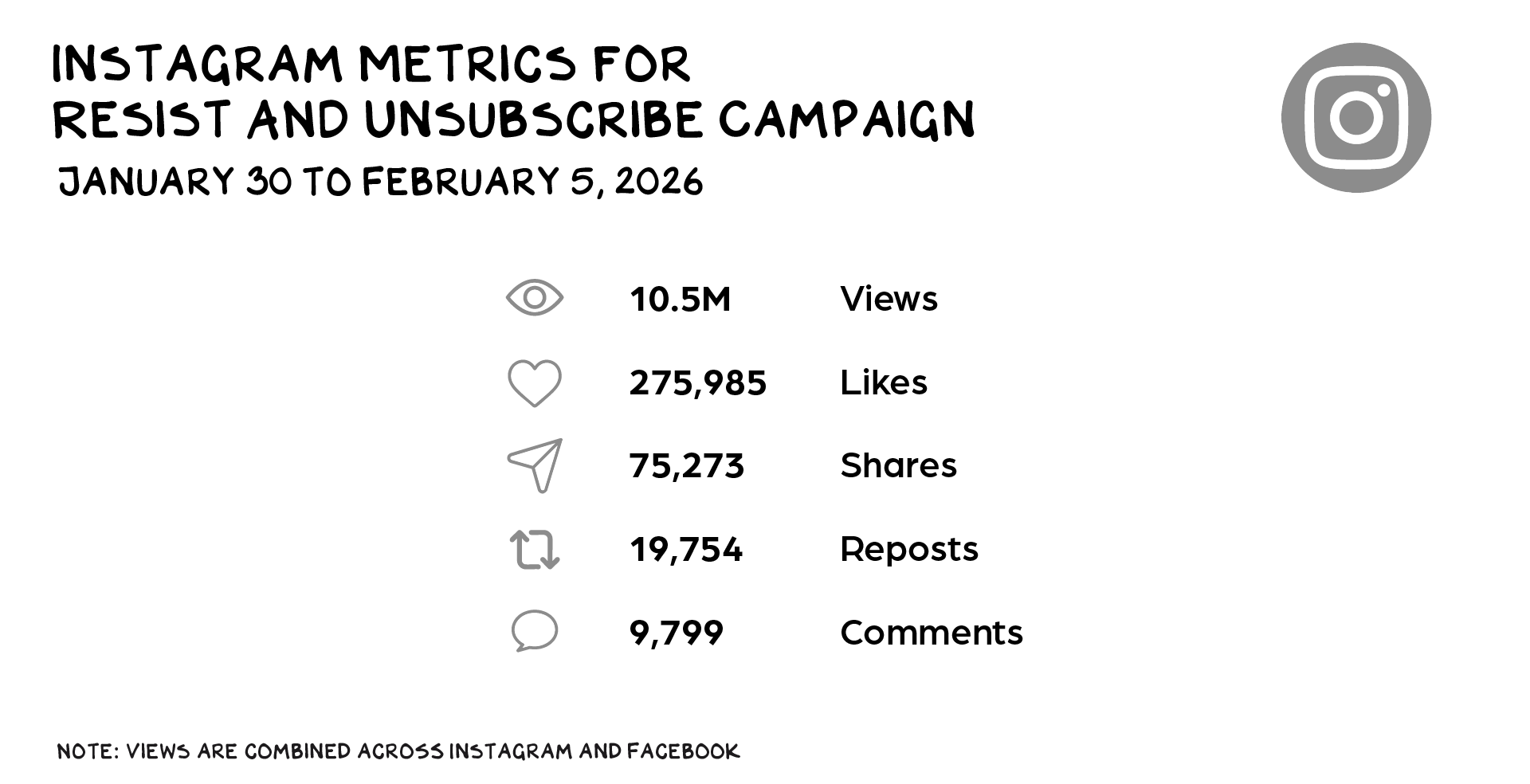
| | Was this newsletter forwarded to you? Subscribe here | | I've struggled my whole life to discern the difference between being right vs. effective. Over the past decade, the U.S. has been on a slow burn to fascism. The best description I've seen of America's current political landscape came from David Frum: "If progressives won't enforce the border, fascists will." We are squarely in the fascist part of the program. Now that it's happened, to borrow from Sinclair Lewis, being right isn't enough. We need to be effective. The question isn't what to say or who to vote for, but what to build? A: Resistance infrastructure. | American Duma | Congress has the power to rein in ICE, restore the rule of law, and unwind authoritarianism in America. But to paraphrase a quote popular with self-help gurus and motivational speakers, Congress isn't coming to save you. Last year's government shutdown over healthcare didn't result in a solution, but the assignment of blame. Democrats leveraged the recent partial government shutdown to negotiate for "guardrails" on America's gestapo. Good. But banning federal agents from wearing masks and ordering independent investigations into the murders of American citizens are empty wins if the Trump administration is responsible for enforcing those policies. In addition, without true structural change — de-gerrymandering, reversing Citizens United, installing term limits — we'll continue to endure a bipolar America. | Democrats, playing by a rulebook that's been incinerated, come across as neutered and voiceless. Meanwhile, Republicans are Jekyll and Hyde. In private, they say Trump is a threat to American democracy; in public, they're sycophants, praising the president no matter what he says or does. The result? Congress is America's answer to the Russian Duma, i.e., nominally important but functionally irrelevant. | When I interviewed historian Timothy Synder, author of On Tyranny, on my podcast at the end of January, he said the current state of American politics is best understood as a system of competitive authoritarianism. A democratically elected leader erodes checks and balances, attacks institutions, and weaponizes the justice system against his opponents. "There will still be elections, but you don't wait for the opposition party," Synder said. "Instead [the people] have to push out ahead of the opposition party. You have to set the moral terms, take risks, and build a coalition of which the opposition party is a part, but isn't necessarily leading." Pro-democracy movements aren't created by political parties, they're created by people. | | If We Build It … | Political parties are elected and returned to office for promising and then delivering tangible results to their constituents: good jobs, better schools, clean drinking water, etc. Political movements are graded on a similar curve, but the connection between action and outcome is rarely a straight line. The 1955 Montgomery bus boycott began as a one-day protest. Despite a 90% participation rate, the single-day action achieved no tangible results. But after 13 months and a favorable Supreme Court ruling, the boycott successfully forced the integration of Montgomery's bus system. During that long campaign, however, it would've been easy for onlookers to be cynical. | Over the past decade, I've been a protest cynic, believing most actions, viewed through the narrow lens of the moment, are performative measures that generate selfies and make participants feel good about being right, without having any actual impact. But Timothy Snyder says my thesis is incorrect. "The main reason you protest is to tell the rest of the people who are watching you that what's going on isn't normal," Snyder told me. "The second reason you protest is that it's the gateway to doing other things." In other words, what looks like sound and fury signifying nothing is in fact an incubator for building infrastructure and organizing further actions. Case in point: After the first day of the Montgomery bus boycott, activists, led by a young preacher named Martin Luther King Jr., organized a carpooling network with more than 200 cars and 100 pickup locations. That infrastructure sustained their movement, allowing them to register an estimated $3,000 hit per day ($35,000 adjusted for inflation) to the city's bus service until their demands were met. | Infrastructure | When we launched Resist and Unsubscribe last week, we contributed some infrastructure to a political movement. Our goal is to demonstrate to consumers that they wield enormous power, as their spending accounts for more than two-thirds of the U.S. economy. Your wallet is a weapon, and in a capitalist society the most radical act is withholding your money. Deployed broadly across the economy, however, a consumer boycott is a blunt instrument that maximizes damage while diluting influence. We prefer surgical strikes to carpet-bombing. | America's economy has become one giant bet on AI, with seven tech companies representing more than a third of the S&P 500. The concentration of economic power in so few hands renders those businesses uniquely vulnerable to a boycott, as consumers can focus on a short target list. Big Tech's vulnerability is further multiplied by the subscription model, as valuations for subscription companies are typically 8x to 20x revenue. One example: In 2022, Netflix reported losing just 200,000 subscribers in a single quarter, and that wiped out $50 billion in market cap overnight. (Netflix attributed the churn to increased competition and the lifting of pandemic restrictions that had kept people in front of their TVs.) The free gift with purchase? Consumers maximize political impact while minimizing household expenses. In America, 4 out of 5 adults spend nearly $200 per year on unused subscriptions. I had three HBO Max subscriptions … somehow. | Some of you have asked why we are targeting Amazon, my 2026 stock pick? Others want to know why we didn't target Disney? A: I'd rather be effective than right. The companies at ground zero of Resist and Unsubscribe have an outsized influence over the national economy and our president. The stocks in the "blast zone" belong to consumer-facing companies we've identified as active enablers of ICE. Collectively, ground zero and blast zone businesses don't represent the totality of complicity, but rather the jugular of American authoritarianism. | For a recent example of what happens when consumers deploy their spending power against the jugular of authoritarianism, see Disney's suspension and reinstatement of Jimmy Kimmel. In the end, it took fewer than 1% of the Mouse's total streaming subscribers to accomplish what CEO Bob Iger couldn't — stand up to an authoritarian. (Note: According to Erica Chenoweth, a political scientist and professor at Harvard who analyzed 323 nonviolent and violent mobilizations between 1900 and 2006, when at least 3.5% of a country's population actively engages in a peaceful protest movement, it has always resulted in political change.) | | Expectations | My go-to framework for understanding the rise of fascism in America today is the rise of fascism in Europe in the 1930s. The most chilling parallel between then and now is the relationship between business elites and authoritarians. German industrialists weren't necessarily enthusiastic Nazis, Timothy Snyder told me, but they saw Hitler as a tool to crush unions and undermine democracy, the source of labor's power. The most powerful American business leaders are making a similar bet, trading their support for tariff carveouts, a promise not to regulate AI, and hundreds of billions in shareholder value. | I believe consumers can force a change in the incentive structure around American CEOs. The clearest possible proof point that the incentive structure is changing would be for Resist and Unsubscribe to show up in earnings calls. That would signal that business leaders feel emboldened to speak up and insist that democracy and the rule of law prevail. That said, earnings calls aren't the only relevant metric. | According to Brayden King, a professor at Northwestern University's Kellogg School of Management who studies social movements and corporate social responsibility, and Sarah A. Soule, dean of the Stanford Business School, the typical boycott doesn't have much impact on a company's market cap. In their 2007 study of 342 boycotts against U.S. corporations between 1962 and 1990, they found that boycotts, on average, caused a 1% decline in a company's stock price. "The number one predictor of what makes a boycott effective is how much media attention it creates, not how many people sign onto a petition or how many consumers it mobilizes," King said in 2017. | The reason media attention matters so much is that boycotts aren't a tool to permanently destroy shareholder value, but rather a vehicle to pressure leaders to change their behavior. Some people mocked me for saying last week I was keeping Instagram despite our boycott. Fair. But be practical. Infrastructure plus the distributional scale of Instagram's 3 billion monthly active users is the peanut butter and chocolate for a political movement. Sharing screenshots of your canceled subscriptions inspires others to Resist and Unsubscribe. Equally powerful, the community in r/ScottGalloway is sharing tips for canceling, including how to get a refund on the unused portion of your annual Amazon Prime subscription. Infrastructure begets infrastructure. Finally, in a nod to the King-Soule study, I have been a total media whore (comes easy) the last couple days, hitting CNN, NPR, BBC, MSNow, etc. | | Marker | I recently wrote that we should be deeply concerned about a world where connections are forged without friction, as we're seeing resilience muscles atrophy, especially among young people. In my conversation with Timothy Snyder, he shared a related concern about the lack of friction in the way we conceptualize politics. "People talk about the Insurrection Act or martial law, whether they're for them or against them, like [we're in] a video game and you just level up," he said. "It's not like that." In reality, politics is a messy, unpredictable struggle that favors the most resilient. Deploying the language of video games — "unlocks," "cheat codes," "speedrunning," etc. — lulls us into believing that political change, whether in the direction of dictatorship or democracy, is a frictionless experience, achievable by pressing the right combination of buttons. | This isn't a game. Resist and Unsubscribe is a one-month campaign to demonstrate political power both to consumers and those we seek to influence. Smashing the unsubscribe button won't defeat the final boss, but making that small sacrifice builds (some) resilience. It also lays down a marker for battles to come. As Timothy Snyder explained, we're making it clear that there will be severe consequences if the regime attempts to steal the midterms. Recognizing the friction in our politics isn't an invitation to opt for the path of least resistance; it teaches us that saving democracy requires the same things that build lasting relationships: showing up, enduring discomfort, and wielding the power we actually have rather than waiting for someone else to fix our problem. Finally, action absorbs anxiety. It feels good to do something with others — that whole community thing. Or put another way, stop doomscrolling/hectoring/complaining … and do something. | Life is so rich, | | P.S. Resources to help you Resist and Unsubscribe can be found here. | |
|




No comments:
Post a Comment