
Today’s Top Founders All Have One Thing in CommonFounders with big followings raise more money and spend less acquiring customers
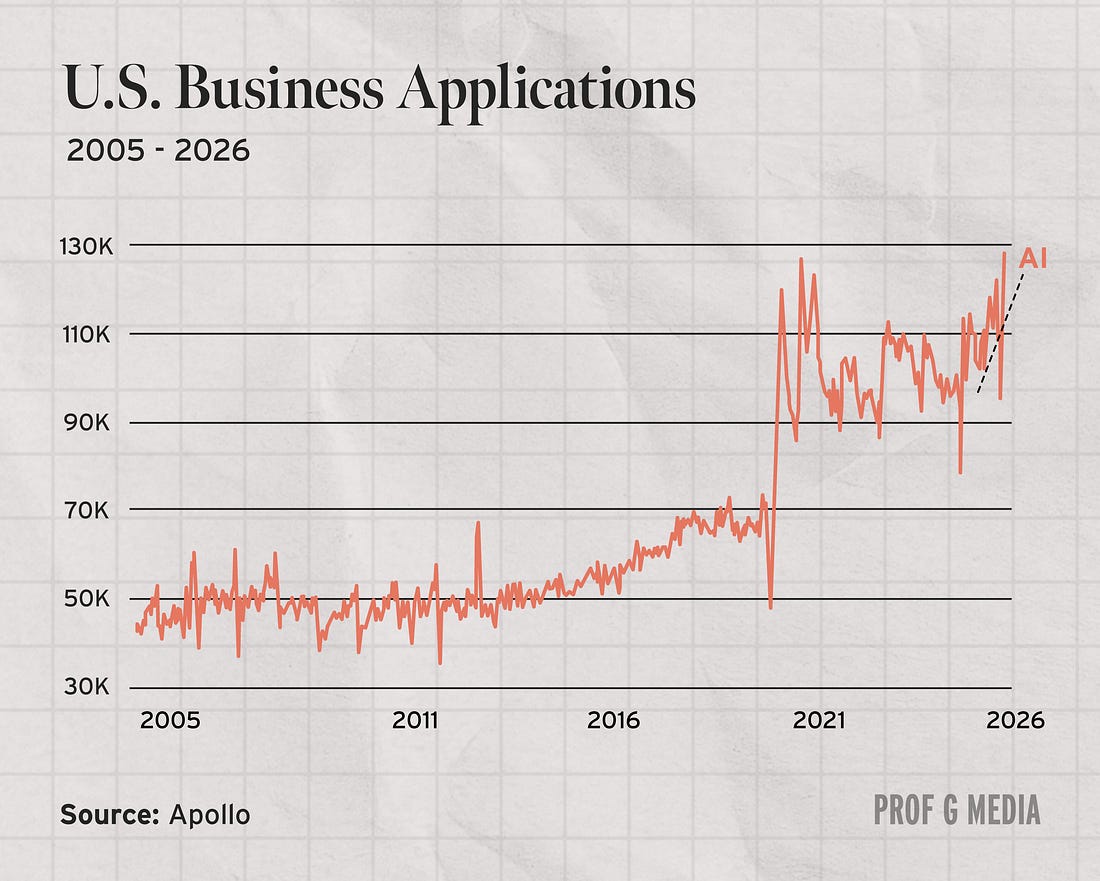
There’s a new job in the startup world. The requirements: daily posting, personal branding, and community building. The job description screams “influencer,” but the title is “founder.” The founder-influencer has become a defining feature of 2026 startups. Founders used to build products, manage teams, and collaborate with investors. Now they’re posting six or more times a day, spending 70% of their workday on content, and building audiences even before they build products. AI has made it cheaper and faster to build a product, which means the product itself has become a weaker differentiator. Now, what makes companies stand out is the size of their community, and the loyalty of their followers (this is partly why Prof G Markets went on tour). This shift has changed the job description for both early-stage founders and Fortune 500 CEOs. Distribution Is the New MoatThe old moat was a better product. Build something better and you win. AI has made starting a company easier than ever, which means more companies, more competition, and a more crowded market.
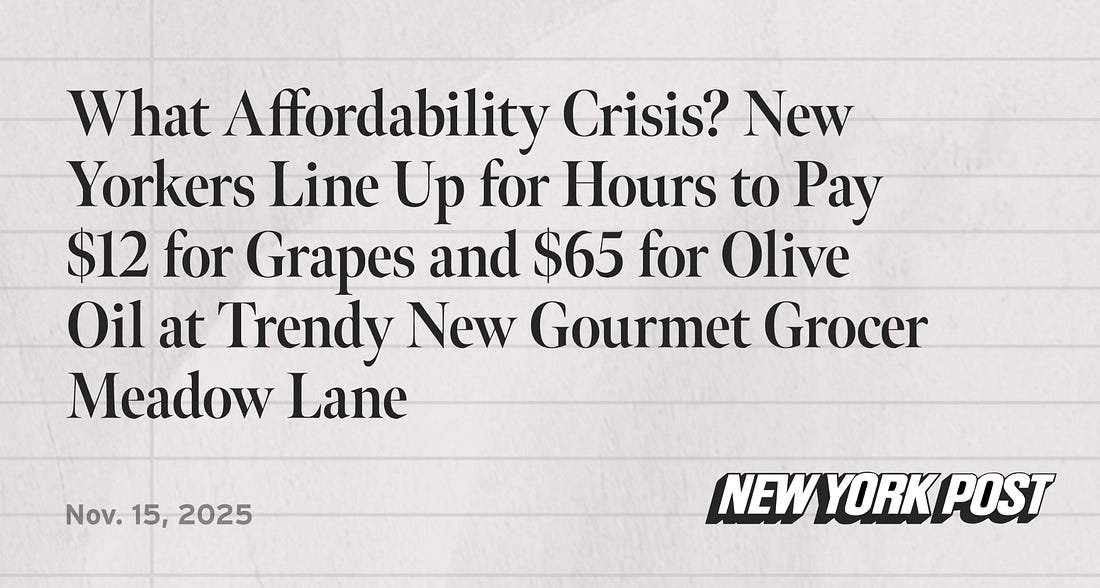
In response, Silicon Valley has declared that taste is the new moat. That might be right, but taste means nothing without reach. The rivers of capital flow to the companies and founders that command attention. This was true even prior to the AI-fueled boom in entrepreneurship. A 2017 study out of Wharton, Harvard Business School, and Indiana University found that startups active on social media were more likely to close funding rounds and raise more capital than less active companies. The differences were substantial: One standard deviation increase in the attention startups commanded on Twitter was estimated to produce an extra $1.5 million in funding. These findings likely hold true today, but the influencing responsibility has switched from companies to the founders themselves. My colleague Ed Elson has written extensively about this — in his words, “people are the new brands.” Why? We’re all lonely, so we seek out parasocial relationships with the humans we see on the internet. Our worries and insecurities have always shaped our commercial choices. Indeed, 63% of people say they trust influencer opinions over corporate advertisements. The implication is that a founder with a loyal audience has something no competitor can buy: trust. Trust then breeds engagement, and an engaged following is a prebuilt customer base, market research team, PR, and a fundraising lever all in one. There’s no one “right” way to build a loyal audience. The founders below all reached that following differently. Rage-Bait, Board Decks, and Chicken NuggetsRoy Lee was a student at Columbia when he built a tool for cheating on coding interviews. He received three job offers — but then got expelled. That tool became Cluely, and Lee gave it a deliberately incendiary slogan: “cheat on everything.” The company hit 70,000 sign-ups in its first week, then raised more than $20 million from investors, including Andreessen Horowitz in its first three months. That success didn’t just come from the product itself. It came from Lee’s determination to attract attention. He paid 60 content creators and 700 video editors to produce rage-bait on a rolling basis. In an interview with a16z, Lee said that he might as well quintuple down on every crazy thought or belief I have in pursuit of virality. Even serious mistakes became viral content. When he was caught overstating Cluely’s revenues by almost $2 million, Lee turned the scandal into a marketing moment. His thesis is that distribution is the moat. He even went so far as to say that if a company’s head of marketing doesn’t have more than 100,000 followers, they should be fired. Tyler Denk, CEO of beehiiv, built his growth strategy on transparency about starting a company. He posted company milestones and feature launches in real time on LinkedIn and X, and shared materials for board meetings on socials before even the board had seen them. When it came time to raise Series B, he crowdsourced $1 million from his own users through site Wefunder. The audience he built became his investor base and strong proof point for the business. The founder of Meadow Lane, a luxury Tribeca grocery, adopted a similar strategy. Founder Sammy Nussdorf turned 14 months of construction delays, permit issues, and food testing into a serialized TikTok show that attracted 130,000 obsessed followers. Nussdorf asked his audience to weigh in on menu decisions, made running bits out of the setbacks, and documented everything from architectural drawings to a now-infamous chicken nugget mishap. Without having to spend a dollar on marketing, according to Nussdorf, Meadow Lane did $2 million in gross revenue in its first two months, or about $108 per square foot, weekly. The average supermarket grosses about $19 per square foot per week.
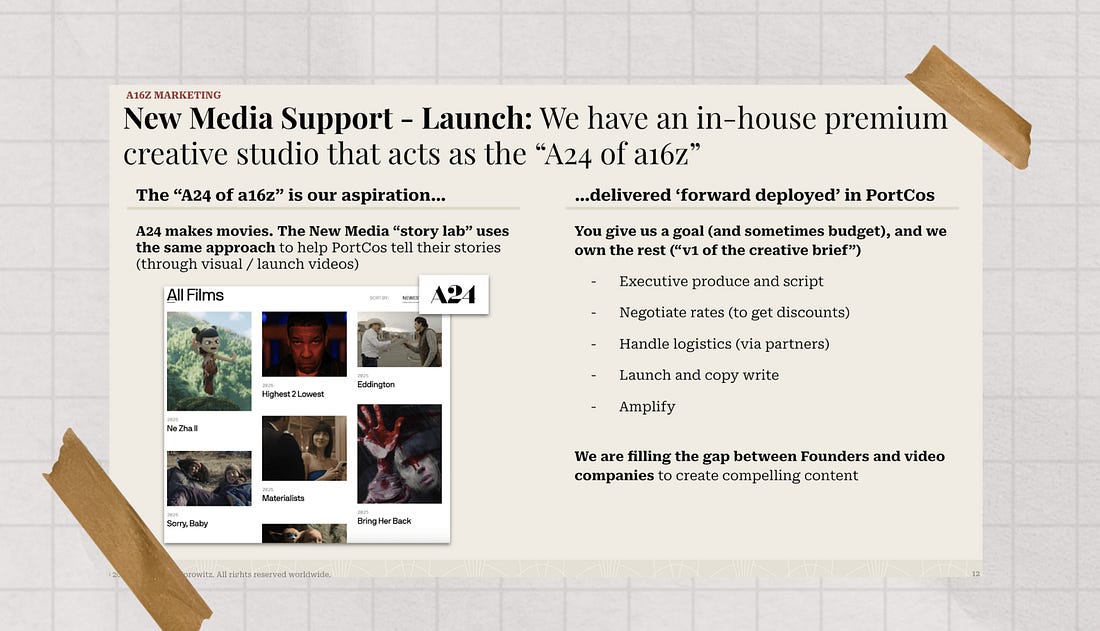
Good Girl Snacks founders Leah Marcus and Yasaman Bakhtiar noticed that pickle content had 9 billion views on TikTok, so they quit their jobs and started posting daily about building a pickle company. This was all before they had a product. But within nine months, they had 100,000 Instagram followers and a best-selling brand at Erewhon. Oh, and they spent $0 on ads. Cluely manufactured outrage. Beehiiv and Meadow Lane exposed and dramatized the mechanics of running a company. Good Girl Snacks jumped on a trend that was already cresting … pickles. All four treated their audience as a core feature of the company, not a marketing function bolted on after. The New Competitive AdvantageWhat Lee, Denk, and Good Girl Snacks built themselves, a16z now offers as a service. Last November, the firm launched a dedicated team to handle founders’ media operations. A top-tier VC now has to offer content and distribution as services, the same way they offer capital or board seats.
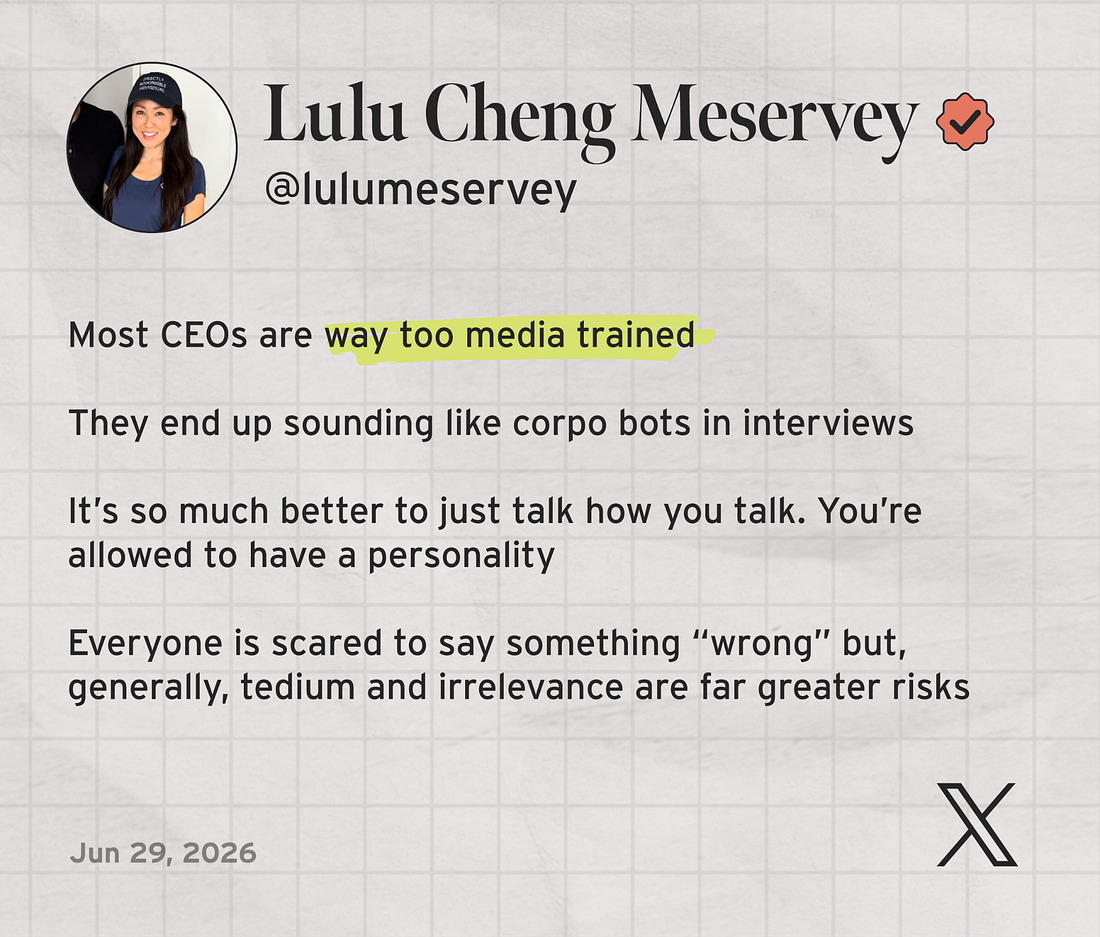
a16z understands what these founder-influencers figured out first: The companies winning right now are not just building better products. They are building bigger audiences. Distribution has become the defining competitive advantage of the modern startup. Corporate Biz RizzThe founder-influencer playbook isn’t just limited to startups. Consumers now expect to hear directly from company leaders, not just their PR teams. As Dan Roth, editor-in-chief of LinkedIn, told Fortune: “There’s a call for more authenticity and transparency, and people now expect to hear directly from their leaders.”
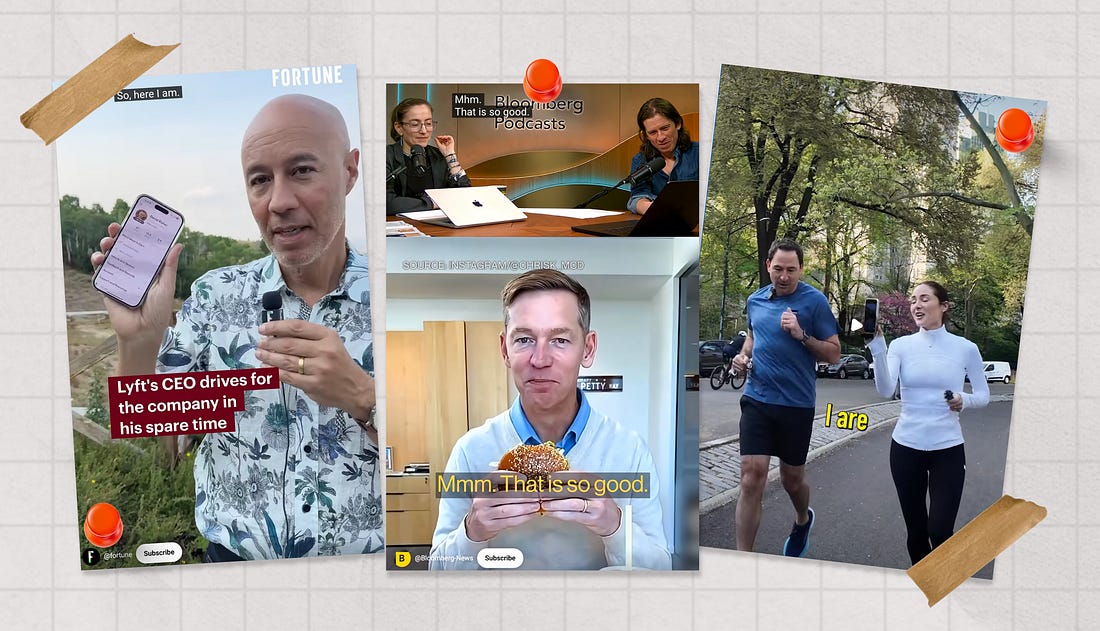
The C-suite is adjusting. David Risher, CEO of Lyft, drives for his own platform on his days off, posts the passenger selfies on LinkedIn and X, and has added 25,000 followers since taking the job. Blackstone’s Jon Gray films short videos midrun covering market insights and earnings updates. The key is to communicate authenticity, and it’s not easy. McDonald’s CEO Chris Kempczinski went viral this year for posting a video eating the new Big Arch burger and taking a bite so small and awkward the internet made it a meme. Arguably, this mishap ended up working out for Kempczinski; his followers grew 30% in the month after the taste-testing video.
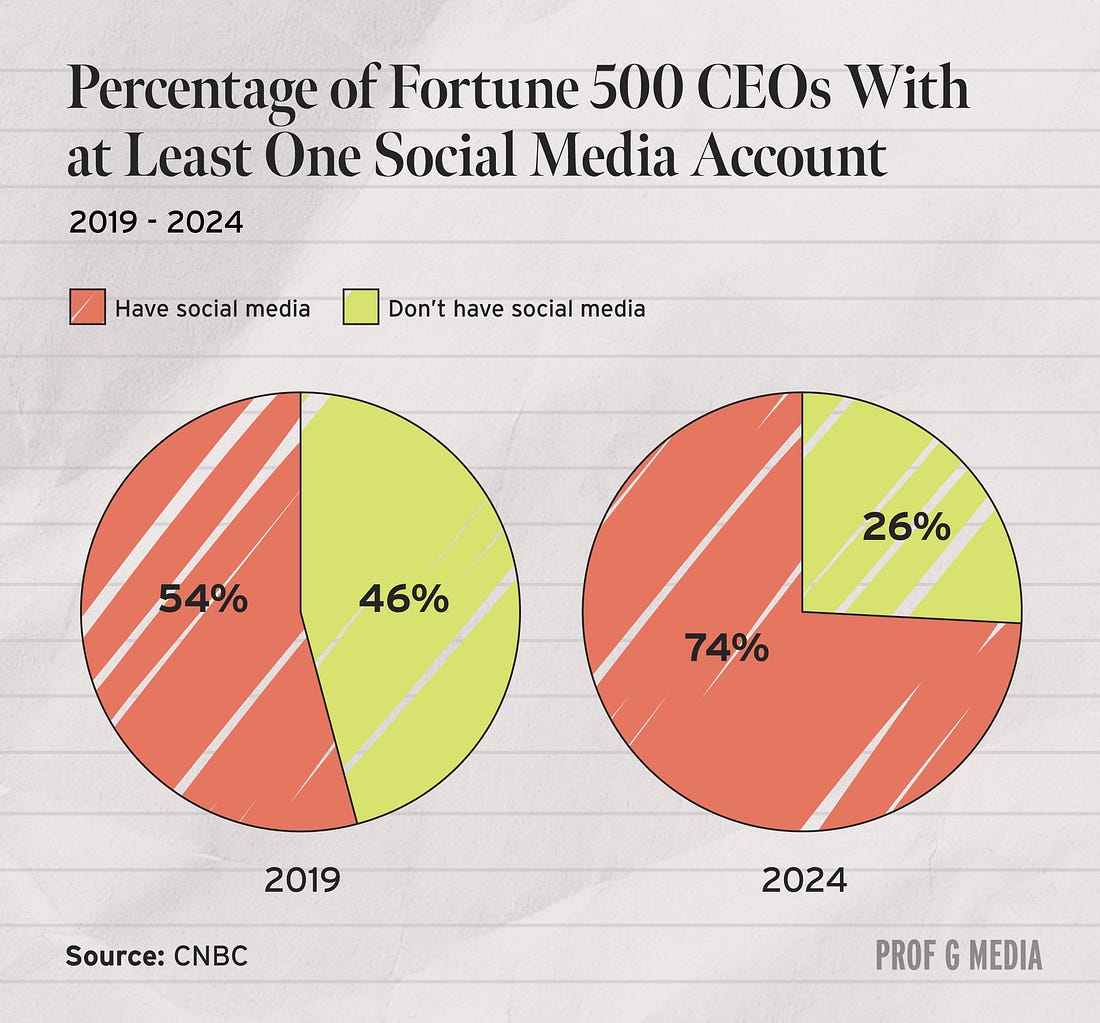
In 2025, two-thirds of Fortune 100 CEOs had a social media profile, and of those, 71% posted at least once per month — up 32% from 2024. This isn’t a comms team checkbox: 92% of professionals are more likely to trust a company whose senior executives are active on social media.
An entire support industry has been built around these functions. Job titles have emerged across agencies and communications firms to include executive social media ghostwriter, head of executive communications, and in its most elevated form, the CEO whisperer. My take? There’s a real irony here — the more authentic a CEO appears online, the more likely it is that someone else writes their posts. Are We Selecting for Better Companies or Better Content?If distribution is the moat, then founders with followings have a structural advantage over those who don’t. But in an attention economy, we have started to conflate presence with transparency and trust. We distrust what we cannot see. So the incentive to be visible is now total, which means the performance of authenticity has become its own industry. The traditional timeline for starting companies has been disrupted. Founders are not launching and then finding customers — they are building followings and then launching. But this raises the harder question. When the founder is the brand, what happens when they sell, leave, or burn out from posting six times a day? Prof G Media knows this better than most. The company was built entirely on Scott Galloway’s personal brand. That’s the asset, but it’s also a risk. Our solution has been to expand the Prof G brand by infusing it with new talent, like Ed Elson, who co-hosts Prof G Markets, and Jessica Tarlov, who co-hosts Raging Moderates. Even the research team publishes pieces under their own bylines, like this one. As I’ve noted, distribution is a crucial moat — but moats need more than one person to defend them.
Scrolling through my feeds one day, I realized that the founders cutting through the noise weren’t necessarily building the best products. They were telling the best stories. Whether it was a new AI app, a pickle brand, or a grocery store, how something was being communicated seemed to matter more than what was actually being built. Scott believes that storytelling is the most valuable skill in business. While researching this piece, I came to believe he was right. Every single brand featured here crossed my feed before it crossed my path in real life, and I ended up purchasing all of them. The founders who figured out that the story is the product aren’t just good communicators. They have a structural advantage over everyone who hasn’t.
You're currently a free subscriber to Prof G Media. For the full experience, upgrade your subscription.
|







No comments:
Post a Comment