
Inside OpenAI's leaked financialsPlus: Trump's Iran deal gets complicated, and Snap loses $1.7 billion on AR glasses
$250 millionThat’s how much Fox could make from hydration break ads during the World Cup, recouping more than half of the $485 million it paid FIFA for the U.S. English-language TV rights.
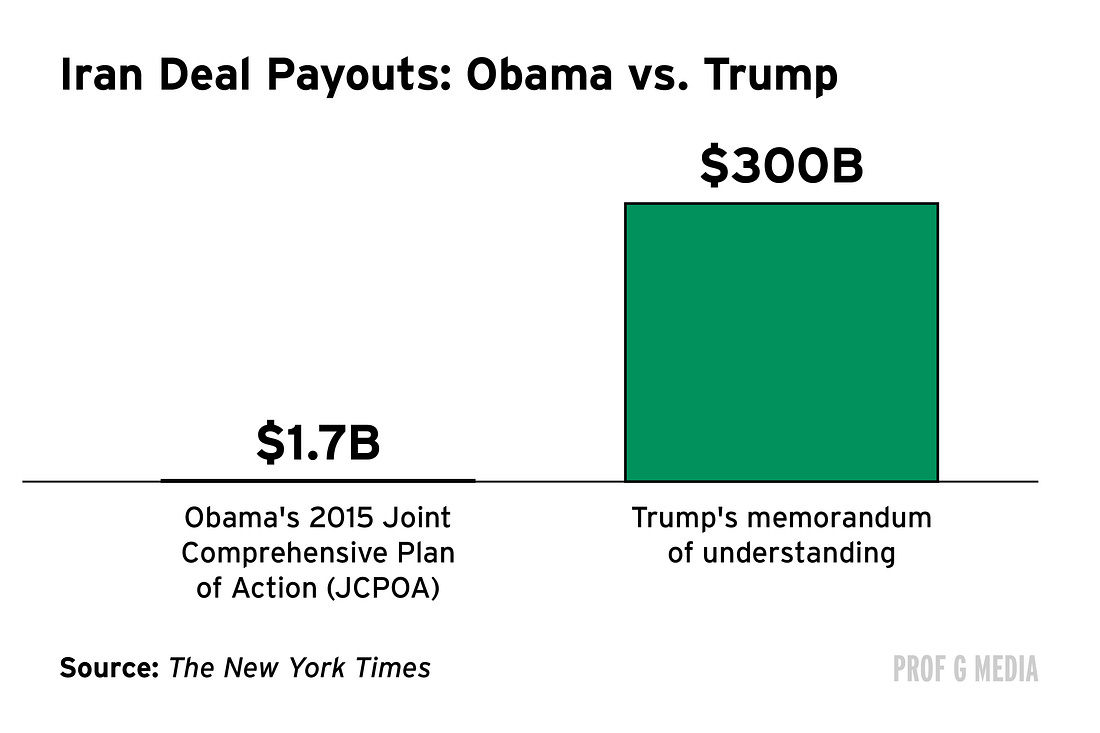
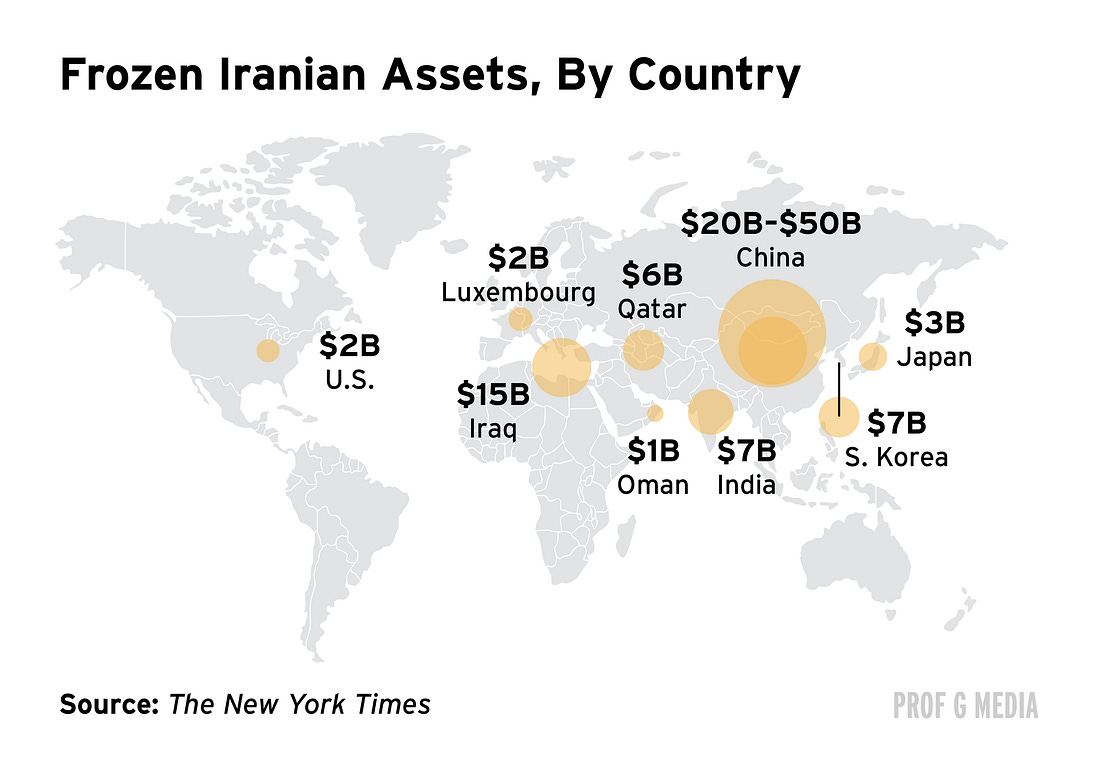
The Art of the Unfinished DealThe United States and Iran signed a memorandum of understanding last week that paused the conflict and reopened the Strait of Hormuz free of charge for commercial shipping. However, over the weekend, Iran reclosed the waterway, citing continued fighting between Israel and Lebanon and the U.S. military’s continued presence in the region. In response, President Trump threatened to restart the war and take control of the strait. The now fragile-looking memorandum covers 14 key points, including the U.S. lifting its naval blockade immediately, unfreezing billions of dollars in Iranian assets, terminating all sanctions, and creating a $300 billion reconstruction fund (equal to roughly 80% of Iran’s entire GDP) financed by private companies based in the U.S., the Gulf Arab states, Asia, South America, and Africa. In exchange, Iran reaffirmed that it will not develop nuclear weapons — a key component of President Obama’s 2015 deal.
But the agreement leaves some of the toughest issues unresolved. Key negotiations, including the future of Iran’s nuclear program, as well as the disposition of existing stockpiles of enriched uranium, have been deferred to a second round of talks scheduled over the next two months. President Trump acknowledged the ambiguity, stating: “It’s a very strong deal. Nobody knows what it is, but it’s very strong.” Along with the $300 billion reconstruction fund, Iran could access up to $100 billion in frozen assets. The price of oil fell 6% last week in anticipation of the deal, but climbed 1% over the weekend as talks broke down.
This agreement will not hold. Israel isn’t a signatory and has continued to strike Lebanon, Iran has already fired drones at commercial ships since this was signed, Trump has called reports of the $300 billion reconstruction fund fake news — and it’s only a 60-day agreement, so by definition it’s a pause, not a resolution. The clearest signals are coming from Trump himself. He’s said if he doesn’t like it, “we’ll go back to shooting at them, dropping bombs on their head.” When asked if the 60-day window was a hard deadline for finalizing negotiations, Trump said “No, I don’t … just as long as they’re behaving I really don’t care that much.” If the president isn’t treating this as real, I don’t see why we should.
The perfect reflection of the stupidity of this “deal” was the signing at Versailles, where nobody in the Trump administration has taken a history course and realized that Versailles is known for elaborate signings that don’t mean a f*cking thing. This isn’t an agreement, it’s a memo of understanding. Those convert to real agreements less than half the time. The JCPOA, Obama’s deal, cut Iran’s enriched uranium stockpile by 98%, dismantled two-thirds of its centrifuges, capped enrichment at 3.7%, and required unannounced International Atomic Energy Agency inspections. This memo has none of that. In addition, something that hasn’t gotten any coverage and is really important is the JCPOA was a multilateral agreement. Its signatories included the U.S., Iran, the EU, U.K., France, Germany, and — get this — China and Russia. This deal is just us and Iran. We have reduced our credibility globally. We have given up leverage of our military. We have alienated European allies. We have sent the world into economic disarray. We have shown the Gulf states and every other nation around the world that when you put a U.S. military base on your territory, it’s not protection, it’s a bull’s-eye.
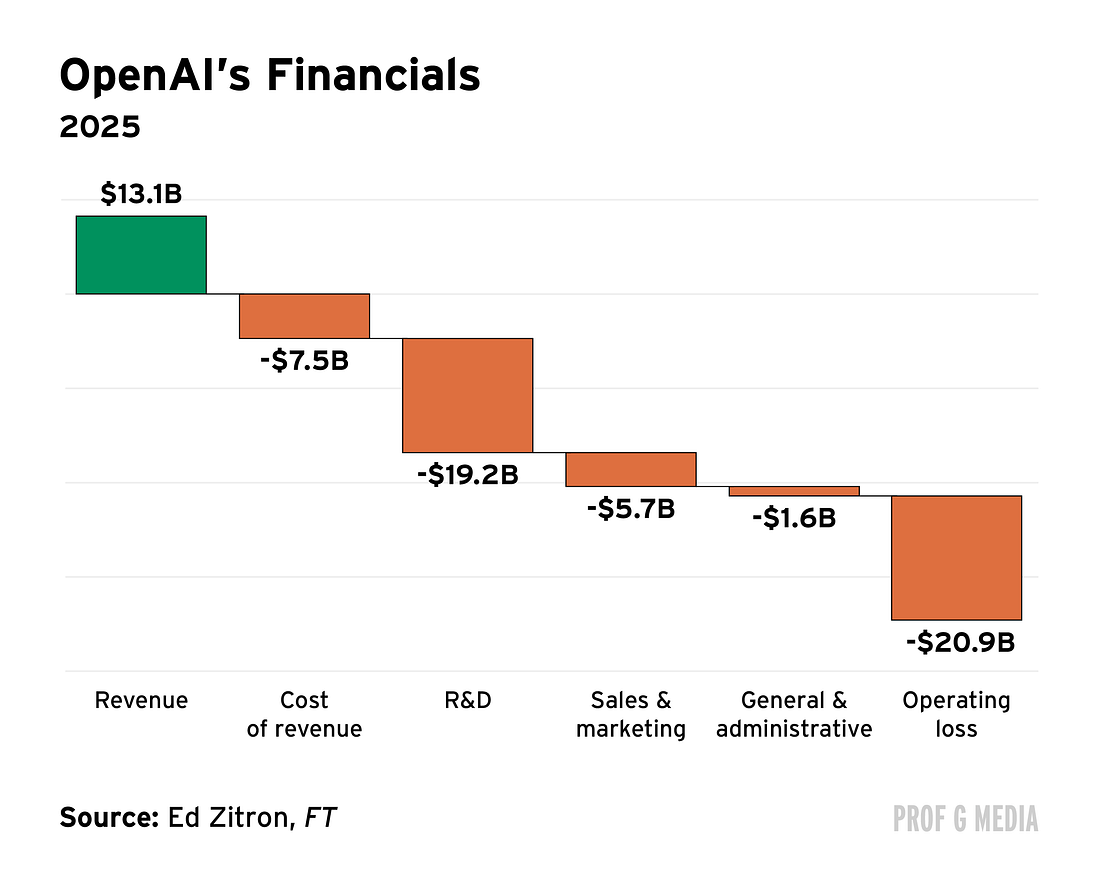
OpenAI vs. Anthropic, by the NumbersLast week, leaked financial statements revealed that OpenAI lost $39 billion in 2025, raising questions about how long the company can sustain its current level of spending, and whether its $852 billion valuation is justified. The financials are particularly relevant as investors prepare for OpenAI’s and Anthropic’s IPOs later this year. Both companies have filed confidentially and are expected to list early this fall. OpenAI’s revenue more than tripled from $3.7 billion to $13.1 billion in 2025, but research and development costs (most likely referring to model training) ballooned to $19 billion from $8 billion the year before. That makes OpenAI more R&D intensive than Eli Lilly, which spent 13% of its revenue, or $13 billion, last year on R&D. Sales and marketing spend also jumped 418% last year, from $1.1 billion to $5.7 billion — and now comprise 44% of revenue. For context, Facebook’s marketing peaked at 28% of revenue in 2008. Google hit 13% in 2003.
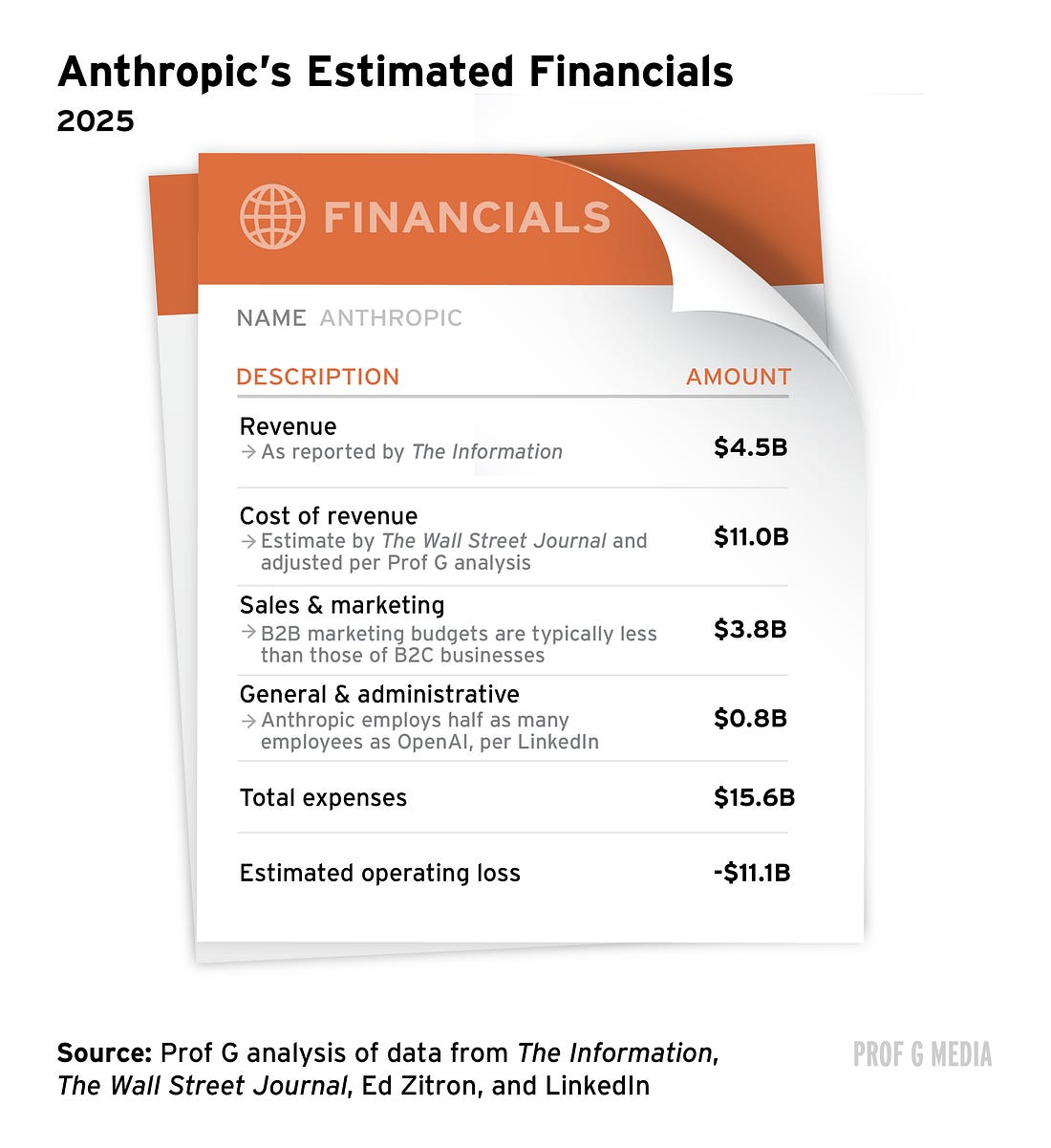
Anthropic, meanwhile, appears to be on a different trajectory. According to reporting from The Wall Street Journal, the company expects revenue to surge 130% year over year to $10.9 billion in the second quarter, putting it on track to generate its first operating profit. The Prof G Markets team used OpenAI’s leaked financials, estimates from The Wall Street Journal and The Information, and publicly available information to approximate Anthropic’s 2025 financials.
OpenAI’s headline numbers need some unpacking. Revenue hit $13 billion in 2025, up 240% year over year, and the reported net loss was $38.5 billion. Supposedly around $30 billion of it came from a one-time charge tied to their restructuring out of nonprofit status. But what isn’t up for debate is the $21 billion operating loss. That’s what they lost running the actual business. Anthropic, by our estimate, lost around $11 billion last year, about half of OpenAI’s loss. We got there by correcting The Wall Street Journal’s compute cost estimate, which undercounted OpenAI’s real spend by roughly 60%, and applying the same correction to Anthropic’s numbers. Anthropic claims $47 billion in current ARR. If that revenue is real and they manage to keep cost growth under 200%, there’s an actual path to profitability.
The SpaceX IPO demonstrated that the numbers don’t even matter anymore, and now everyone at OpenAI and Anthropic is asking themselves: How can we manufacture the same artificial scarcity and infinite TAM? This feels like 1999 to me. The tech sector has gotten so hot that the fundamentals have stopped mattering and multiples just keep expanding. I think both of these IPOs pop hard on day one regardless of what the income statement says, and I’m telling anyone who calls me asking about allocation to take it, but as a trade, not an investment. Wait for the first couple of trades and then sell into the strength. Unless something like 40% of jobs actually get displaced by AI, I don’t see how the math holds up long term. But the trade is working right now, and that’s what’s pulling in more capital.
Snap Keeps Betting on AR, and Shareholders Keep PayingLast week, Snap unveiled its new augmented reality glasses, the Snap Specs. CEO Evan Spiegel called the glasses, which are as heavy as a baseball and cost $2,200, his “life’s work.” Investors were less impressed. Snap shares fell 14% last week, erasing $1.7 billion in market value. Snap, which has never achieved full-year profitability, has doggedly pursued augmented reality projects. It has launched five previous generations of smart glasses and plowed $3.5 billion into AR initiatives since 2014 — 11% of its total revenue over that period. These efforts have attracted activist investors who, this spring, urged Spiegel to focus on the core business and divest or shut down Specs, its AR division. Refocusing on its core assets, its user base, could unlock substantial value. If Snap were to achieve Reddit’s forward earnings multiple, it would be worth 3.5x what it is today.
But activist progress will be challenging. Snap is a dual-class shareholder company, and Spiegel and his co-founder have 99% of the voting power in the company. In practice, that means they can block any board or governance changes they don’t support, making it difficult for outside investors to force leadership or strategy shifts. Dual-class companies have only become more common. More than 40% of tech companies that went public last year did so with dual-class stock. In the ’90s, that number was less than 10%.
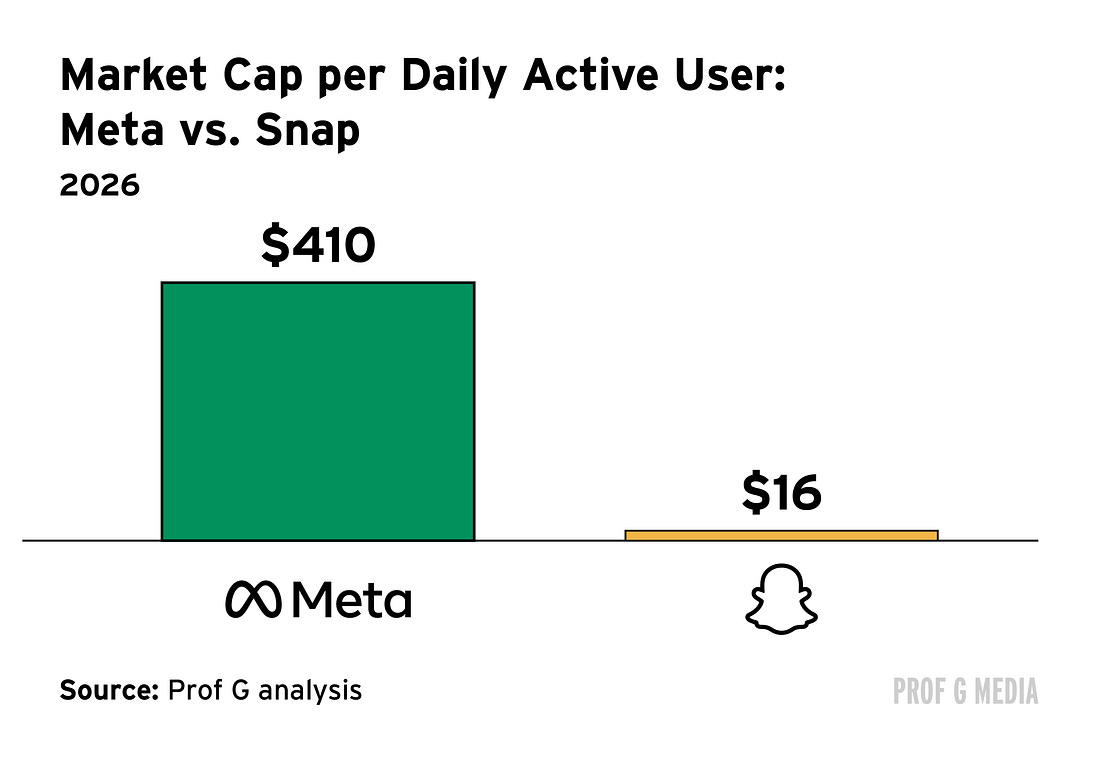
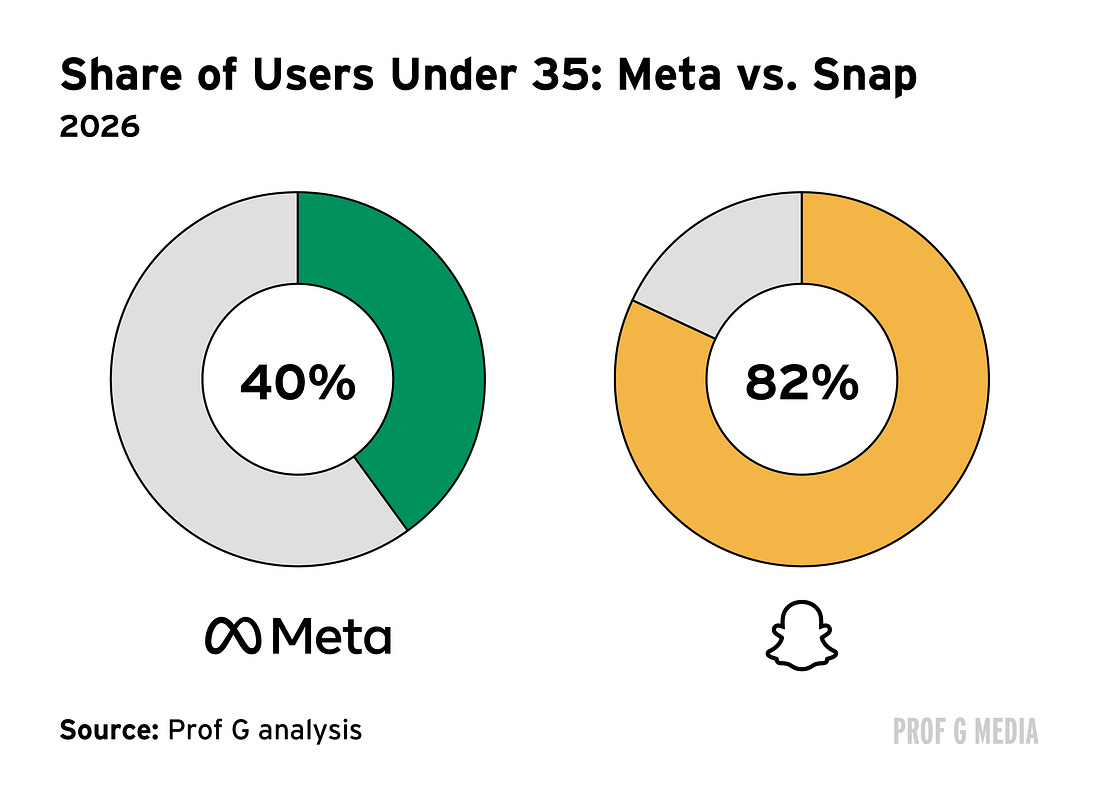
When I saw him in those glasses, I thought: For the first time in my life, I am much cooler than Evan Spiegel. This is the beginning of the end of Snap as a hardware company. The stock is down 90% over five years, while the S&P is up 80%. And the tragedy is that the core business is actually good. Snap has a young, engaged user base. American Snapchatters open the app, and I can testify to this as the father of teenagers, 30 times per day. On a larger level, this reflects the danger of dual class shareholder stocks. Investors value Meta’s daily users at $400 each and Snap’s daily users at $16 each. The reason is Evan Spiegel. Spiegel is the controlling shareholder. He’s already a billionaire married to a model. He does not care what the stock price is. The board needs to either spin out the Specs business or kill it, and focus on what Snap actually is: a great messaging platform with one of the most attractive user bases in media. This is a $5 stock, but it could easily be a $20 or a $30 stock if they get this guy’s lips off of the crack pipe of believing he’s Steve Jobs and can come up with the next iPhone.
Snap has a market cap of $8 billion. It’s less valuable than Domino’s Pizza. It’s roughly as valuable as the Gap. This is a very acquirable company, and I would be shocked if other firms aren’t looking at that market cap and thinking, let’s make an offer, acquire the audience, maybe some of the hardware and wearables tech. Our producer Claire Miller suggested a company that I think will probably do it: OpenAI. OpenAI loves spending money on stupid bullsh*t. They’ve acquired 18 companies so far. If they’re trying to build a wearable device with Jony Ive, they could justify this.
AI lab Midjourney’s new full-body ultrasound scanner is going to inspire a hardware revolution. Hardware is about to become the new software, where the coolest thing to be working on isn’t the next large language model, but something physical.
You're currently a free subscriber to Prof G Media. For the full experience, upgrade your subscription.
|




















No comments:
Post a Comment