Hi! Four of the world’s biggest companies — Microsoft, Google, Meta, and Amazon — are set to report after the bell today; if they are released at around the same time as last quarter, some $12 trillion of market cap in the US could see its fate decided in just 80 seconds. Today we’re exploring:
|
- Alter algo: Maryland’s first-of-its-kind law will block pricing systems for groceries. systems for groceries.
- UAExit: What the United Arab Emirates’ OPEC departure means for the group’s supply.
- Floating up: A certain ship-tracking app has become popular off the back of the Iran war.
|
Maryland is set to be the first state to ban dynamic pricing at grocery stores
|
Anyone who’s attempted to score seats at the World Cup, or tickets to a number of major concerts, or just tried to hail an Uber at rush hour will know how dynamic pricing models can convert demand surges into sky-high prices.
But while booking giants like Ticketmaster have recently been scrutinized for deploying dynamic price algorithms in their ticketing systems, some US retailers are now introducing the models into grocery stores, carried out via electronic shelf labels that allow for instantaneous in-store price changes based on factors like inventories, demand, the time of day, and even data about the consumers themselves.
|
Supermarkets such as Walmart, Kroger, and Whole Foods are already using digital shelf labels to adjust product costs (though Walmart has asserted that these are “unrelated to dynamic pricing”). In response to the trend, the state of Maryland announced the Protection from Predatory Pricing Act back in January, which was signed into law by Governor Wes Moore on Monday.
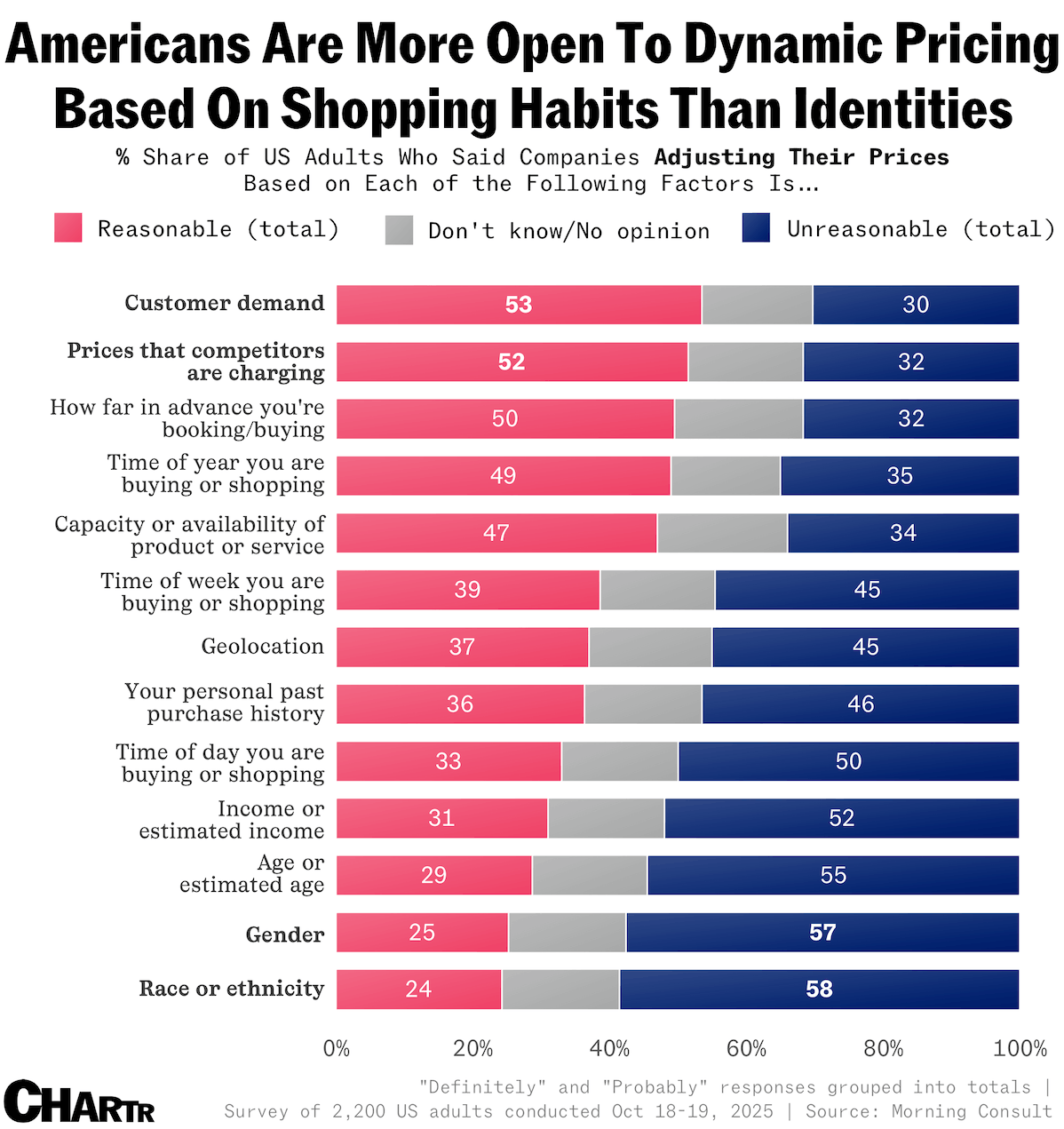
As well as ensuring on-shelf prices stay steady for at least one business day, the first-of-its-kind legislation will prohibit retailers from using surveillance data, including inferred income and ethnicity, to determine prices — interestingly, something that Americans object to far more than when dynamic pricing is based on purchasing behavior alone.
|
In a recent survey conducted by Morning Consult, at least half of US adults said that inputs that are traditionally factored into fee setting — like customer demand (53%), competitor prices (52%), and how far in advance the purchase is happening (50%) — were reasonable grounds to adjust prices.
However, identity-based factors such as race, gender, and age, which may be used to discriminate against customers, were considered to be unreasonable by a majority of respondents.
|
The UAE’s OPEC departure will hit the group in the barrels
|
After just shy of 60 years in OPEC, its membership predating its status as a nation state, the United Arab Emirates yesterday announced its shock departure from the oil production group, effective from May 1st, as the knock-on effects of the Iran war continue to play out across the Middle East and the energy landscape.
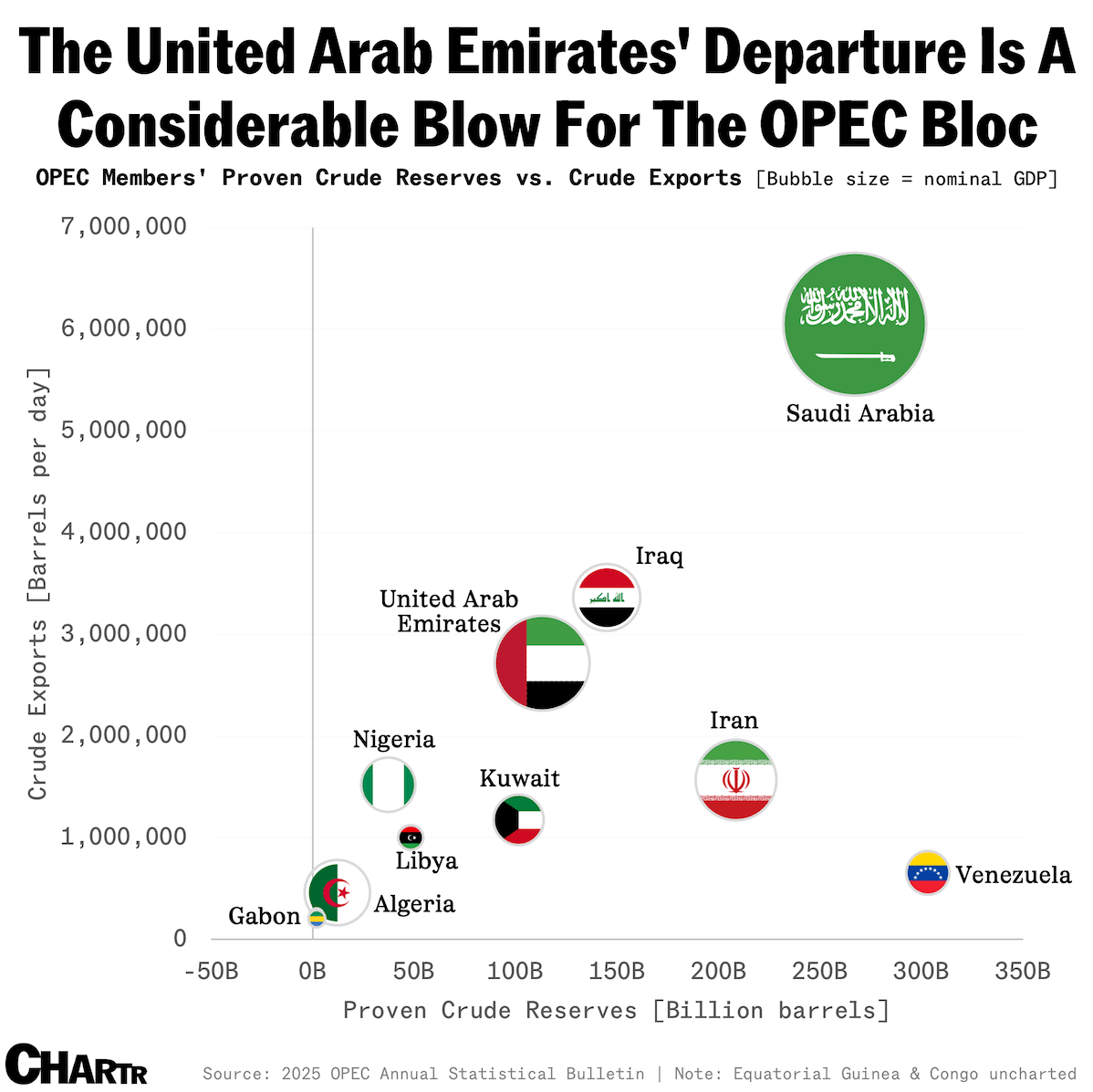
For context, the UAE produces the third-highest amount of oil in the group per April data and, according to OPEC’s latest set of annual statistics, it’s in third place on daily crude exports, too.
|
According to the cartel’s 2025 Annual Statistical Bulletin, the OPEC group was collectively exporting some 19 million barrels of crude oil a day, with the United Arab Emirates accounting for some 14% of that daily output.
The nation, whose Energy Minister yesterday told Reuters that the decision was taken “after a careful look at current and future policies related to level of production” and wasn’t made following discussions with any other country, made up a healthy share of the group’s total confirmed crude oil reserves as well.
|
Of the 12 nations in the core group, which was founded by just five oil powers back in September 1960, only two (Iraq and Saudi Arabia) exported more barrels of daily crude oil than the UAE, pumping out 3.36 million and 6.05 million barrels, respectively, around the world each day.
For its part, the UAE said it will “continue its responsible role by gradually and thoughtfully increasing production, in line with demand and market conditions,” per the official state news agency. Clearly, the nation now wants a little more control of how much oil it can pump around the world, with the UAE having to eat a large proportion of lost revenues due to its healthy abundance and OPEC restrictions.
|
|
|
|
Is The Golden Rule Unraveling?
|
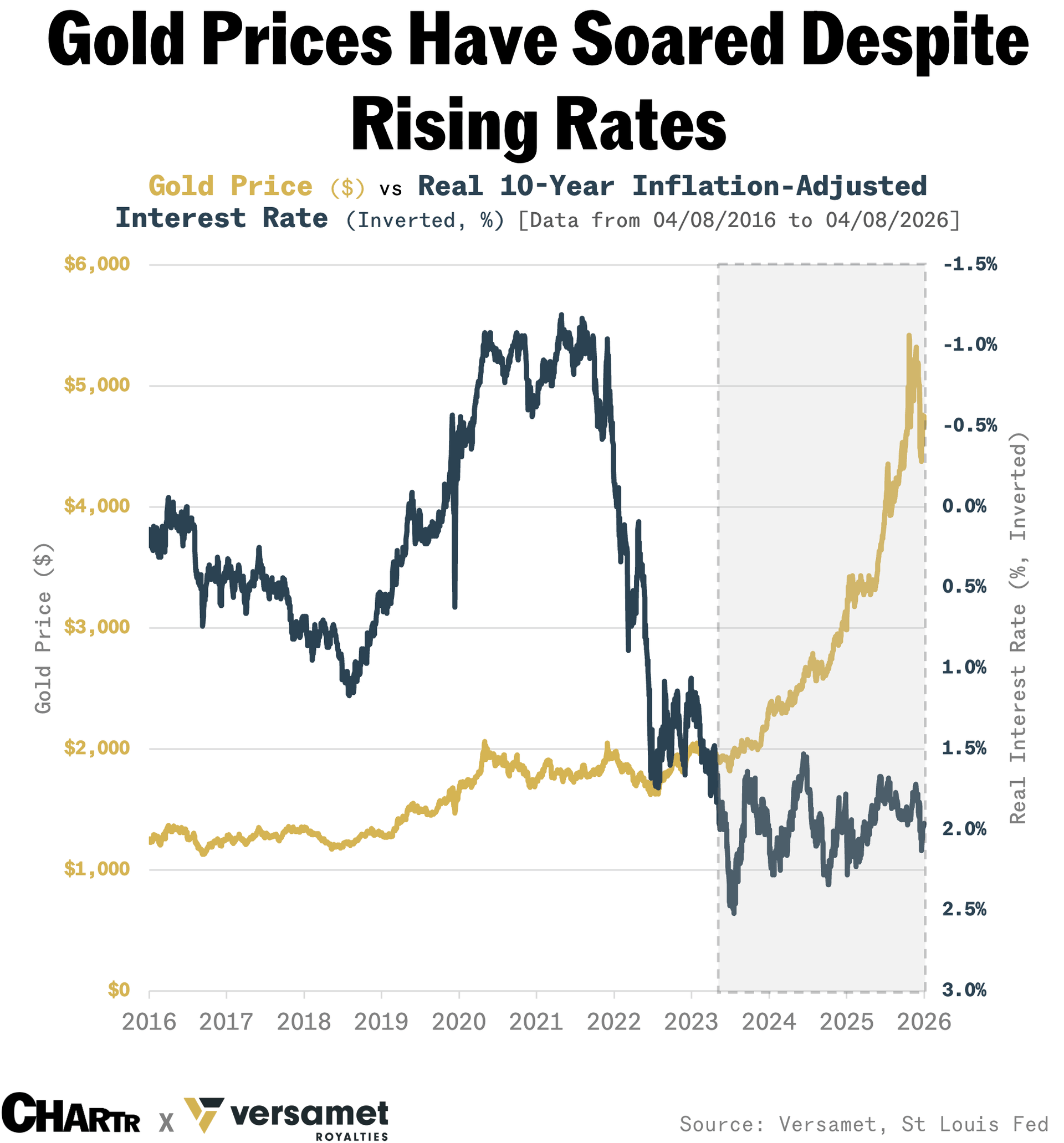
For years, conventional wisdom has held that when interest rates go up, gold prices come down.
The past two years have debunked that trend. Gold prices have been soaring despite increased interest rates, driven by a structural shift in global demand. For investors, the rules are being re-written — and the need for a smart entry point has never been greater.
|
As a royalties company, Versamet (Nasdaq: VMET) provides capital to precious metals mining projects across the Americas, Africa, and Australia in exchange for a protected percentage of their production. That means Versamet’s stake is shielded from operational headaches or inflationary cost rises, allowing investors to own the cut that consistently generates cash flow.
With over $750M in acquisitions since 2022 and production that could double by 2026,1 VMET offers a secure foundation and the potential for large-scale growth.
Align your strategy with gold’s structural strength.
|
1 Potential for attributable GEO production to be over 20,000 GEOs in 2026 based on assumption that Greenstone, Kiaka, Toega, Kolpa, Rosh Pinah Zinc, Santa Rita and Blackwater and Mercedes production is at a rate that is within 15% of the latest publicly disclosed forecast by each mine operator as of March 2025.
|
|
|
|
Ship-tracking app surges as Iran war continues
|
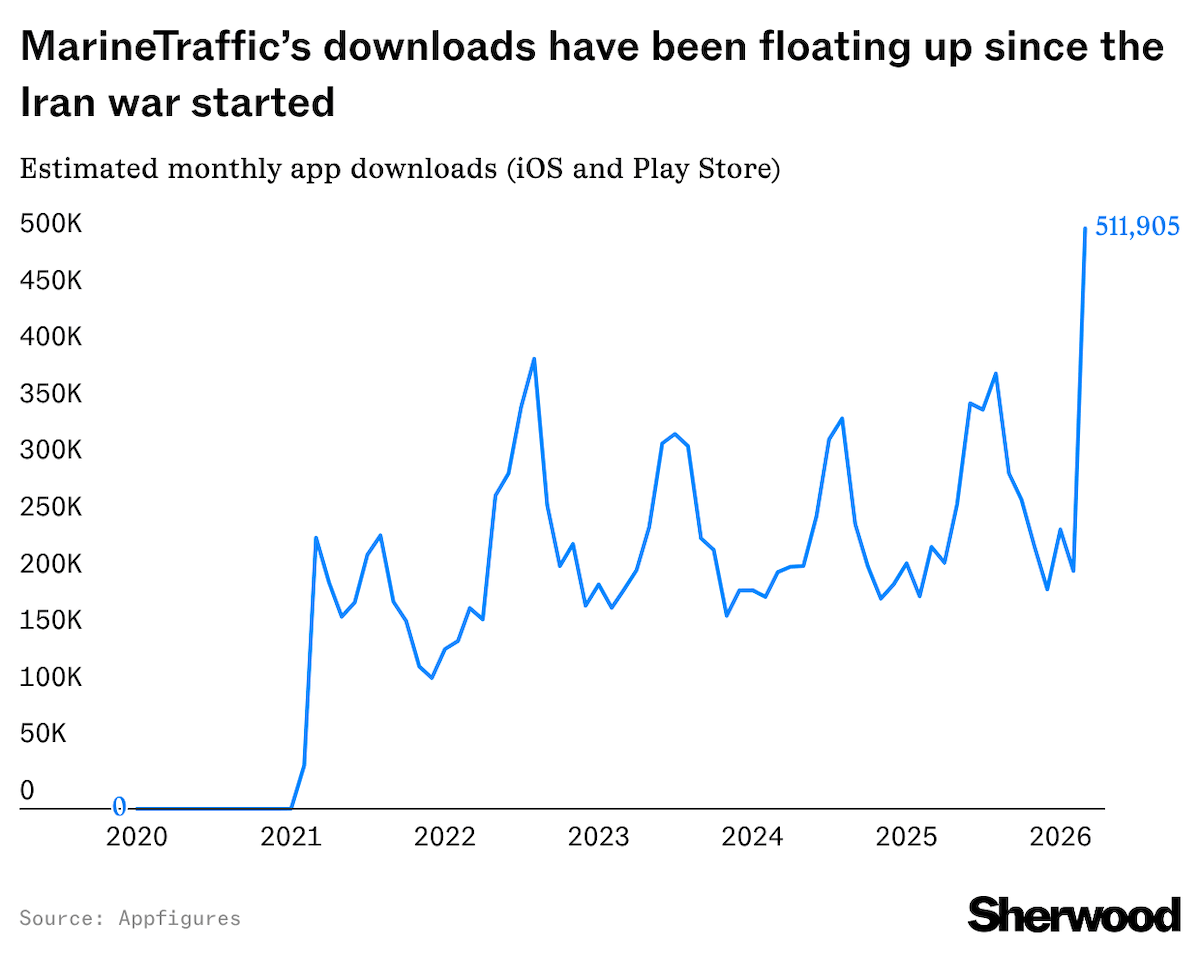
In other Middle East news: while peace talks stretch on, with Tehran reportedly offering to reopen the Strait of Hormuz if the US lifts its blockade and ends the war, the owner of shipping intelligence platform MarineTraffic revealed that the app has gained millions of new users since the conflict began.
MarineTraffic’s user count jumped to 8.5 million this April, up from 3.5 million a year ago, said its parent company Kpler in an interview with the Financial Times, published Tuesday. Over the same period, Paid subscribers — often workers within companies and governments looking for more data on supply chains and commodities trading — rose by 11,000 in the same period.
|
Kpler, which also owns shipping intelligence platform FleetMon, draws its data from a range of sources, including the Automatic Identification System, satellites, and more than 500 people on-site, like port terminal operators.
Appfigures estimates that MarineTraffic raked in almost $1 million across March and April in app revenue (through April 27), more than double the ~$346,500 from the same months last year. Across the full year, Kpler expects to earn between $300 million and $400 million in annual recurring revenues.
|
|
|
|
- The six biggest airlines in the US spent about $1.2 billion more on jet fuel in Q1 this year than the same period in 2025, with American Airlines alone spending an extra $341 million.
- Bot.com: Researchers investigating Internet Archive data found that roughly a third (35%) of websites created since 2022 are AI-generated.
- Disney is no longer considering spinning off sports giant ESPN, which the NFL gained a 10% stake in last year, Business Insider reported Tuesday.
- Per a Pew Research analysis of CDC data, 44,447 people died from gun-related injuries in the US in 2024, down 9% from 2021’s peak.
- Folk-law: Taylor Swift has reportedly filed 3 trademark applications to protect her voice and likeness from being used in AI-generated deepfakes, including the artist saying “Hey, it’s Taylor.”
|
|
|
|
In recent years, gold has decoupled from interest rates, soaring to record highs despite positive yields. Versamet (Nasdaq-CM: VMET) provides diversified exposure to gold’s new paradigm through a high-margin, low-overhead portfolio. Discover VMET.
|
|
|
|
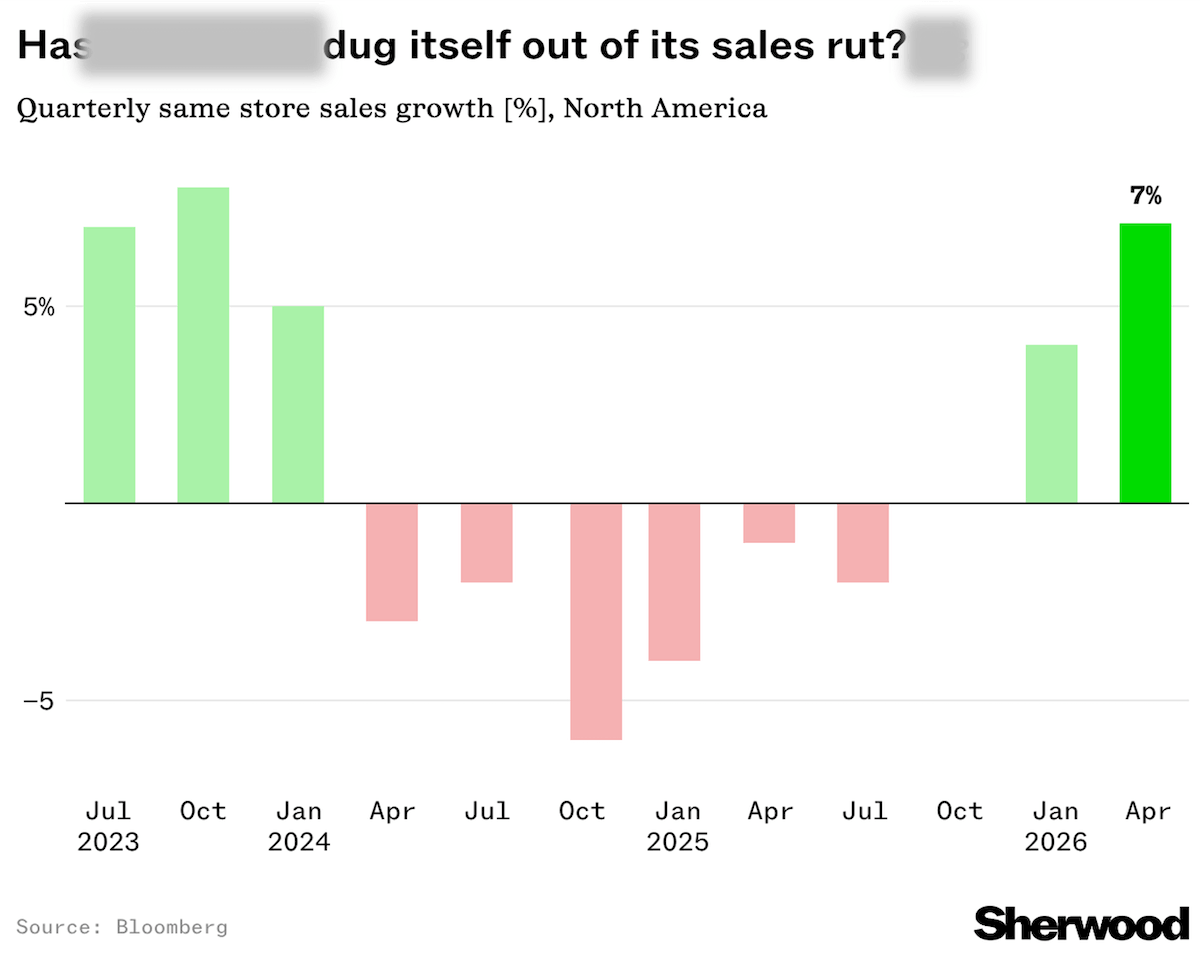
Off the charts: Which beverage company reported its second consecutive quarter of North American sales growth earlier today, breaking away from a prolonged slump? [Answer below].
|
Not a subscriber? Sign up for free below.
|
Advertiser’s disclosures:
IMPORTANT: HIGH-RISK INVESTMENT
Investing in mining stocks involves a high degree of risk. You could lose your entire investment.
This content is sponsored by Versamet Royalties Corporation (“Versamet Royalties”). Katusa Research (www.katusaresearch.com) has received cash compensation of one million three hundred thousand dollars from Versamet Royalties for the preparation and dissemination of this content. Katusa Research is extremely biased. Katusa Research, its owners, directors, and employees may directly or indirectly own shares of Versamet Royalties. Measures are in place such that no shares will be sold during the active marketing awareness campaign.
Katusa Research, as a publisher, is not a broker, investment advisor, or financial advisor in any jurisdiction. The information provided is for informational purposes only and does not constitute a recommendation to buy, sell, or hold any security. Please do not rely on the information presented as personal investment advice. If you need personal investment advice, please consult a qualified and registered broker, investment advisor, or financial advisor.
This content contains forward-looking statements that involve known and unknown risks, uncertainties, and other factors that may cause actual results to differ materially from those anticipated. Such factors include those set out under the heading “Risk Factors” in the Versamet Royalties’ final non-offering long form prospectus dated May 12, 2025 and short-form base shelf prospectus dated August 1, 2025, both available for review on the Versamet Royalties’ profile at www.sedarplus.ca, as well as the Company’s Form 20-F filed with the SEC on March 4, 2026, available for review on the Company’s profile at www.sec.gov/edgar.
There can be no assurance that any forward-looking statements will prove to be accurate. Readers should not place undue reliance on forward-looking information. Neither Katusa Research nor Versamet Royalties undertakes any obligation to update forward-looking statements except as required by law.
Mineral resources are not mineral reserves and do not have demonstrated economic viability. There is no certainty that all or any part of the mineral resources will be converted into mineral reserves. Inferred mineral resources have a lower level of confidence than Indicated mineral resources and must not be converted to mineral reserves. Investors are cautioned not to assume that all or any part of an inferred mineral resource is economically or legally mineable.
The estimate of mineral resources may be materially affected by environmental, permitting, legal, title, taxation, sociopolitical, marketing, or other relevant factors.
Past performance is not indicative of future results. Historical returns, including those referenced in this content, should not be taken as an indicator or predictor of future stock prices. The value of investments can go down as well as up, and investors may lose their entire investment.
Before making any investment decision, readers should review Versamet Royalties’ public filings available at www.sedarplus.ca (for Canadian filings) and www.sec.gov (for U.S. filings), including annual information forms, technical reports, and financial statements.
Information in this content regarding Versamet Royalties has been derived from its SEDAR+ and SEC filings.
|
Sherwood Media, LLC produces fresh and unique perspectives on topical financial news and is a fully owned subsidiary of Robinhood Markets, Inc., and any views expressed here do not necessarily reflect the views of any other Robinhood affiliate... See more
|
|
|
|
SHERWOOD MEDIA, LLC, 85 Willow Road, Menlo Park, CA 94025
|
|
|
|
|





No comments:
Post a Comment