Justice Amy Coney Barrett was in conversation with the Chief Justice’s Counselor, Judge Robert M. Dow Jr. (we discussed Judge Dow and the role of the Counselor here), at the 2026 Supreme Court Fellows Program Annual Lecture at the Library of Congress today. “Freedom of speech and freedom of religion commit us to pluralism,” she told him. “They commit us to tolerance. They commit us to having to respect and allow to be heard even those viewpoints that we might disagree with.” So, what does she make of a president who is not committed to freedom of speech or freedom of religion? Are we to draw the obvious conclusion? Or is she just speaking generically here? Justices speak publicly at programs like this, but they usually attract little attention. It’s unlikely, with public confidence in the Court at an all time low, that it’s lost on the Justices that they present a unique opportunity for the Court to try and reclaim some of that ground. But words like these are easier to say than live by today. Justice Barrett is correct that these rights make the country more open, more accepting, more diverse, and much more rich and interesting. But we live in an era when they are undeniably being constricted, as we discussed last night. The president of the United States has taken to calling his war in Iran an “excursion” as though we are all off on spring break. Seven American are dead, possibly more following today’s news that an incident involving two KC-135 refueling aircraft, one that did not involve enemy or friendly fire, resulted in one of the planes crashing. Recovery efforts are still underway.
Now that Trump has his war, he doesn’t seem to know what to do with it. He appears to have had no plans in place for either the future or Iran or protection for the straits of Hormuz. Instead, the White House account on Twitter is posting videos that equate war with video games or football. It did that here, using video of University of Nebraska receiver Kenny Bell’s blind-side block on a Wisconsin defender during the 2012 Big Ten title game and other sports footage mixed in with footage of U.S. strikes on Iran. Bell told the Washington Post that the White House’s video made him sick.
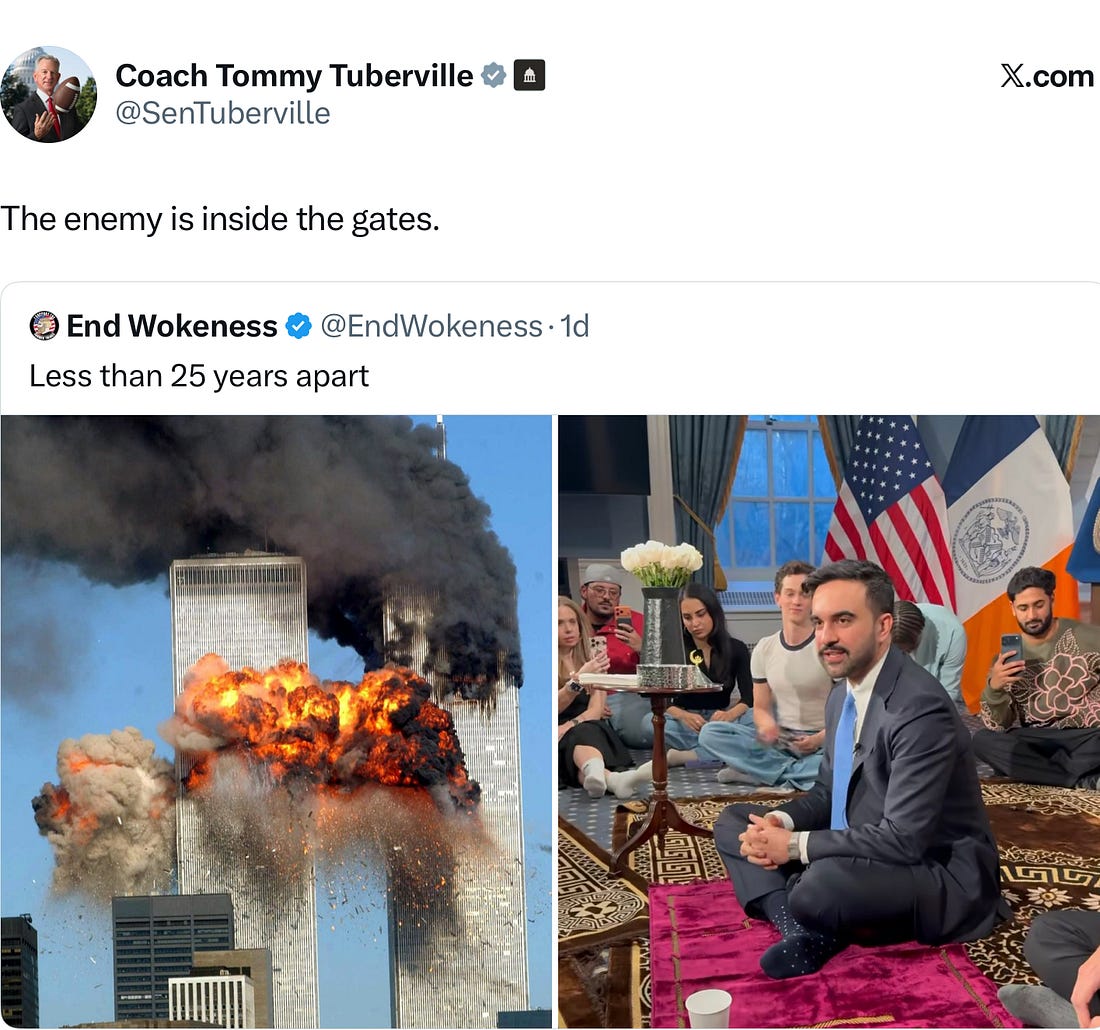
There were two shootings in the U.S. today, one at Old Dominion University, the other at a reform Jewish synagogue in Michigan, Temple Israel, where children were in daycare when the shooter drove his vehicle into the building. There is a rising tide of antisemitism in this country that continues to grow. The administration pays lip service to opposing it, even as Trump encourages a tide of hate against people because of their race, religion, national origin, gender, or sexual orientation. They are not unrelated. Legitimizing hate begets more hate. The shooter at ODU, who is now deceased, spent over a decade in federal prison for material support of terrorism. He took the life of an army ROTC officer who was in his classroom, a horrific act. But there is risk in these moments that when a person or a small group commits acts of violence motivated by hate directed at Jews, Muslims, or anyone else, the criminal acts are ascribed to a group broadly to justify dehumanizing that group. That leads to more hate and more hate crimes. The dehumanization is an effort to make it acceptable to attack American Jews if you don’t like Israel’s policies or condemn all Muslims for the acts of two men who committed odious crimes today. It is much the same as pretending all immigrants are violent criminals or all transgender people pose a threat to kids. These are the kinds of passions most administrations try to tamp down on. Not this one. Alabama Senator Tommy Tuberville received some support from his side of the aisle for a tweet Democrats condemned:
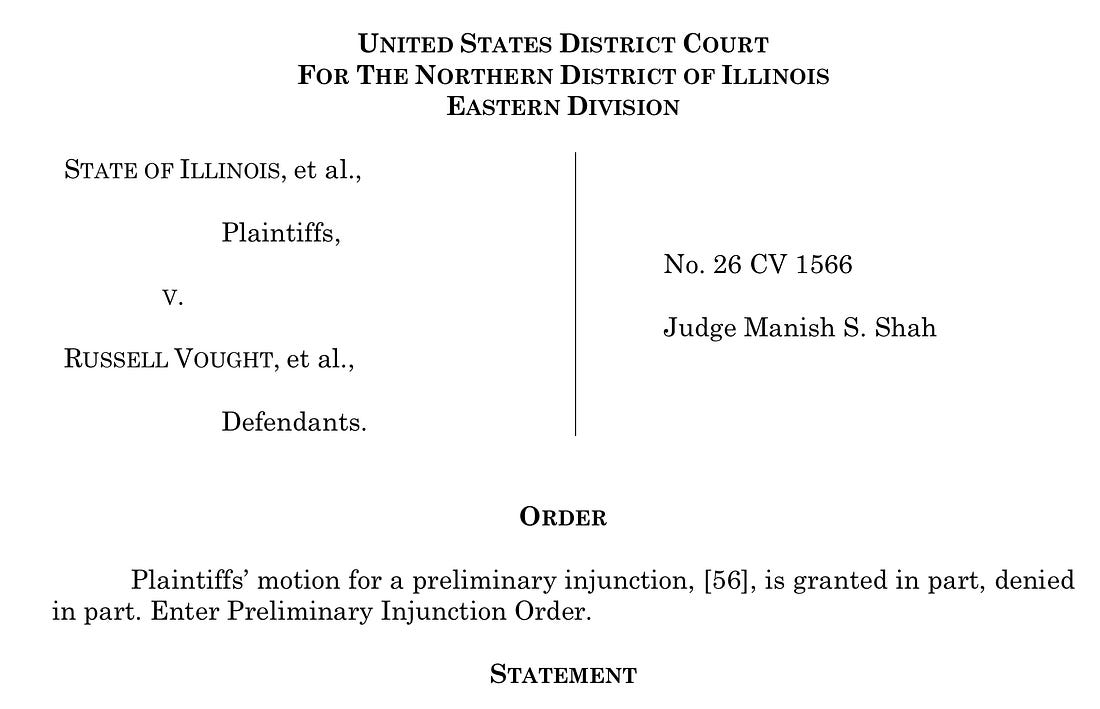
The federal judiciary continues its pushback against the administration’s politicization of how taxpayer dollars are spent. Tonight, Judge Manish Shaw told the Trump administration it could not stop funding health care in states led by Democrats, which it had tried to do to the tune of $600 million. The Judge called the effort “contrived” and held that it was an illegal effort to punish the states for trying to protect immigrants with sanctuary policies.
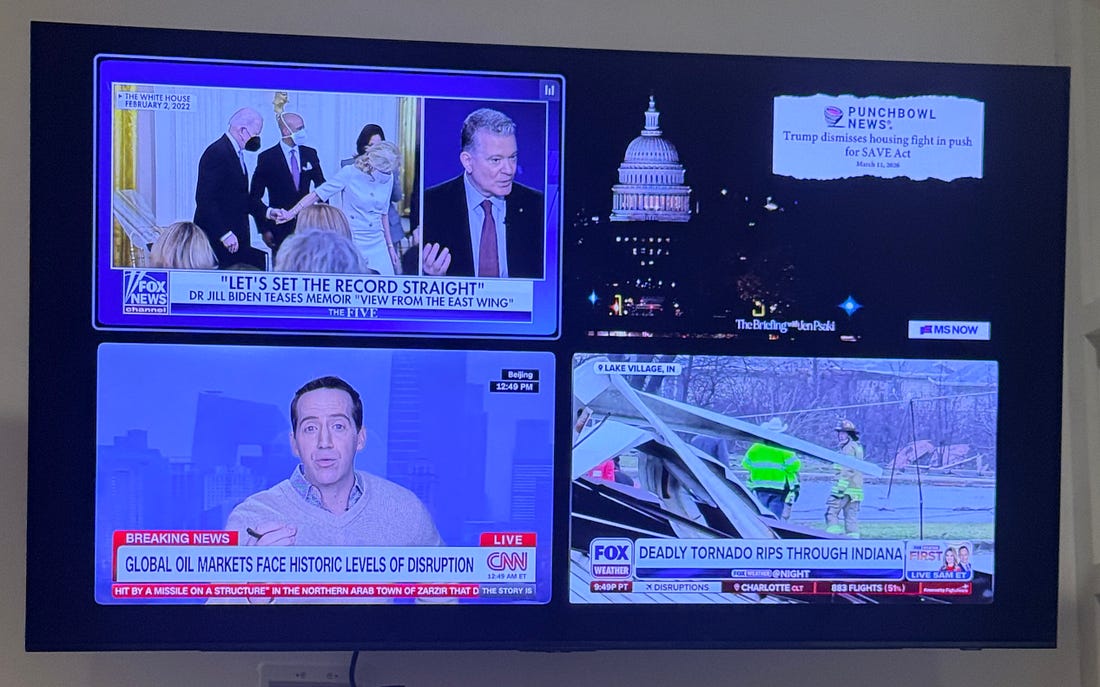
The Judge explained how the administration was penalizing the four states, “Plaintiffs are four states that usually receive billions of dollars in federal funds through the Department of Health and Human Services, the Department of Transportation, and the Department of Homeland Security. Other states receive federal funding from similar sources and based on similar criteria. But these four are on a list that the federal Office of Management and Budget pushed out to agencies in January 2026. Around the same time and over the next few days, word got out (formally and informally) that there would be no money from grants administered by HHS and no funds obligated from DOT and DHS to the four states. These funds support health and safety initiatives, infrastructure modernization projects, and disaster recovery and relief—projects deeply embedded in basic operations of state and local government. The funds are authorized by Congressional appropriations that are unrelated to immigration policies or political pique, and, for many grants from the Centers for Disease Control, that set a floor for required spending.” He continued, “On January 13, 2026, the President announced that starting February 1, 2026, the federal government would not make any payments to ‘states having sanctuary cities.’” These are the facts. And they do not line up well for the government here. It’s left to argue that the plaintiff states have some evidence, but it’s not enough to get the injunction they seek. The states want to stop the federal government from discriminating against them. The Judge concluded that “the public interest is ‘served by an injunction in that it acts as a check on the executive’s encroachment of congressional power that violates the separation of powers.’” Whether it’s the economy and affordability, Trump’s wars, the Epstein files, or the state of our democracy, there is little good news for Trump as the primaries continue and midterms come closer. I turned on the TV tonight, to find that Fox News was telling its viewers about Dr. Jill Biden’s new biography as CNN discussed the disruption in the oil markets and MS NOW highlighted Trump’s ongoing efforts to pass the SAVE Act.
The SAVE Act, which far too many people assumed was a dead letter, has cropped back up. Hopefully, Marc Elias, who said Tuesday night when we spoke to Big Tent that it would not pass in the Senate (and that if it did he will challenge it), will prove correct. Because ultimately, it’s up to voters to decide the future of the country. For Trump, pushing the SAVE Act is about the only perceived path to success in the midterm elections—keeping eligible Americans from voting. Trump has had success at using his war to turn attention away from the Epstein files. But he knows he’s still vulnerable. His party is in danger and it’s in danger because of him. There is no telling what a man who cannot tolerate losing, who incited the January 6 insurrection to pretend it didn’t happen in 2020, will do when he is backed into a corner. We should be prepared for anything and ready to do whatever it takes to vote. If you read Civil Discourse because you want to understand what the headlines actually mean—and not just react to them—paid subscribers make that level of analysis possible. For the price of a couple cups of coffee each month, you get the perspective of someone who has spent decades inside the legal system explaining how the pieces really fit together. We’re in this together, Joyce You're currently a free subscriber to Civil Discourse with Joyce Vance . For the full experience, upgrade your subscription.
|
Thursday, March 12, 2026
Thursday in America








Subscribe to:
Post Comments (Atom)
Thursday in America
Justice Amy Coney Barrett was in conversation with the Chief Justice’s Counselor, Judge Robert M. ͏ ͏ ͏ ͏ ͏ ͏ ...
-
On Monday, Leon County Circuit Judge Angela Dempsey rejected Bear Warriors United's request for a temporary injunction to halt the s...
-
Four Ohio cities ranked in the nation's top 100 best cities for single people, according to a WalletHub survey that considered fact...


No comments:
Post a Comment