Indivisible's Ezra Levin On No Kings, Letting Go, And Building A Mass Pro-Democracy Movement In AmericaMarch 28th is the next No Kings day. Sign up, or build an event yourself. Let's make this day the biggest No Kings day yet!
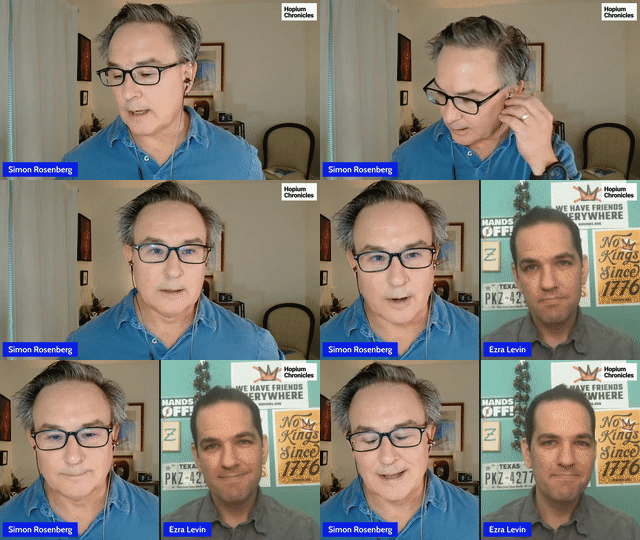
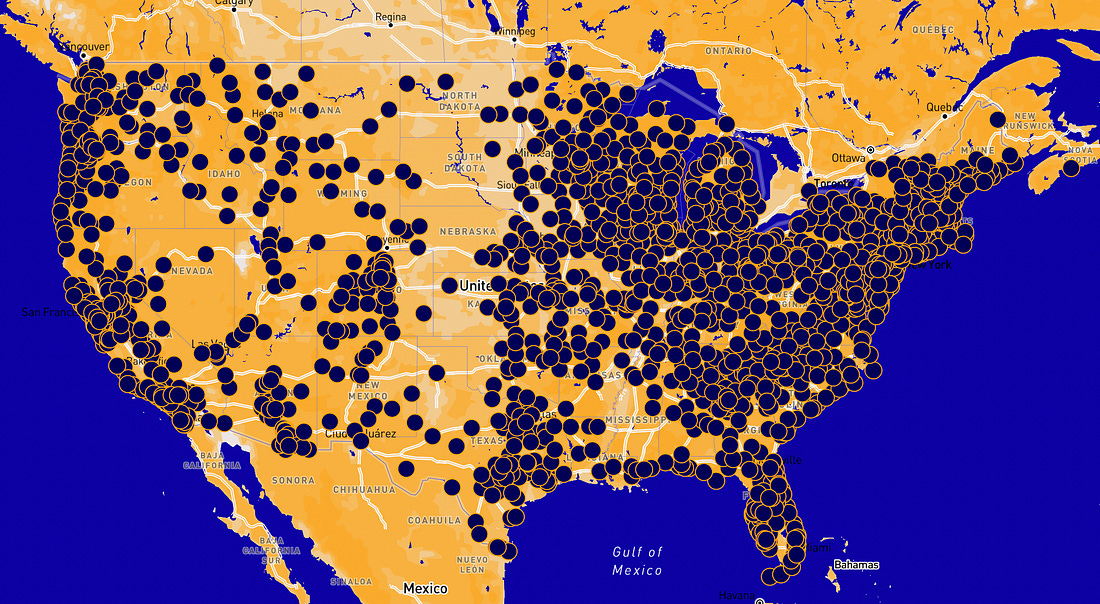
Greetings all. Sending along one of my favorite discussions since the founding of Hopium - a new talk recorded earlier today with Indivisible’s Ezra Levin. I asked Ezra to come by and preview the upcoming March 28th No Kings day, and reflect a bit on the inspiring success of Indivisible and the No Kings movement. A recording of our wonderful discussion can be found above and a full transcript is below. If you haven’t found a No Kings event near you head here. Here’s their latest map of events on March 28th. Thousands and thousands events across the country. So remarkable…..
There is so much in this discussion I think you will find helpful in your own work each day. Here is one of my favorite parts:
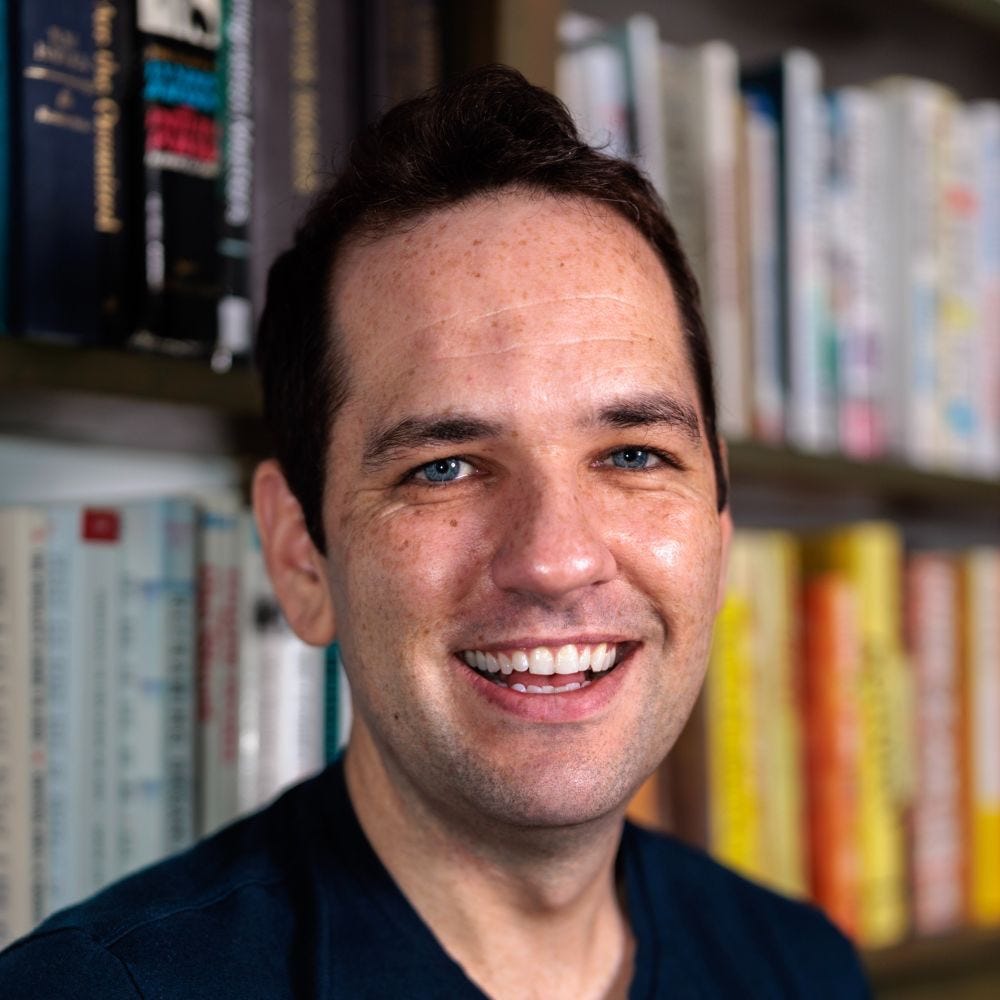
Amen to all that……. Get to this discussion with one of the great heroes of this moment when you can, my friends, and let’s work together to make this next No Kings the biggest day of protest in American history. It is what is needed now, and what our Mad King so richly deserves - Simon Bio - Ezra Levin, IndivisibleEzra Levin is the co-founder and co-executive director of Indivisible. Prior to founding Indivisible, Ezra served as Associate Director of Federal Policy for Prosperity Now, a national anti-poverty nonprofit. Previously, he was the Deputy Policy Director for Congressman Lloyd Doggett (D-TX), Field Director for Doggett’s 2010 reelection campaign, and an AmeriCorps VISTA in the Homeless Services Division of the San Jose Housing Department. Along with his co-founder and spouse Leah Greenberg, Ezra has been featured as one of TIME 100’s Most Influential People of 2019, included on GQ’s 50 Most Powerful People in Trump’s Washington, and ranked #2 on the Politico 50 list of top thinkers, doers and visionaries transforming American politics. He has appeared as a commentator on and/or been interviewed by MSNBC, CNN, NPR, Pod Save America, the New York Times, the Washington Post, Politico, TIME Magazine, the New Yorker, the Nation, Slate, and Rolling Stone, among others. He is the co-author of We Are Indivisible: A Blueprint for Democracy After Trump, published by Simon & Schuster’s One Signal Publishers in 2019. He holds a Bachelor of Arts from Carleton College and a Master in Public Affairs from the Princeton School of Public and International Affairs.
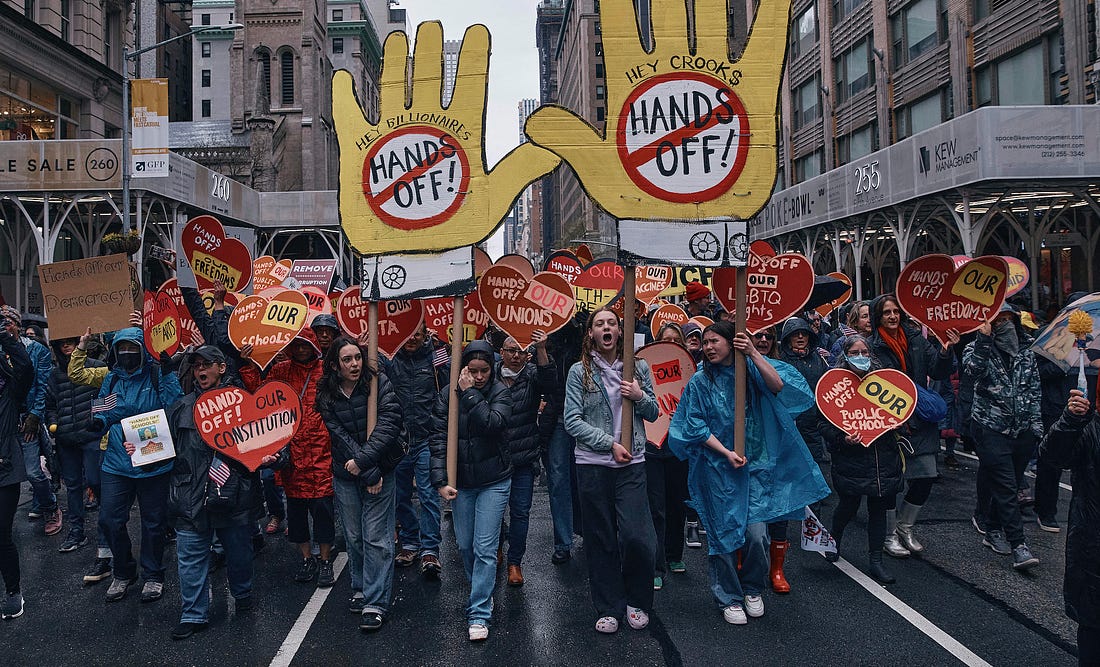
Transcript - Simon Rosenberg and Ezra Levin (3/10/26)Simon Rosenberg: Ezra Levin: Simon: Ezra: They organized locally. They focused on their elected officials and they played defense. They said no loudly and treated that as a complete sentence. And so Leah and I drafted this Google Doc and I posted it to what was then Twitter, which was not then a fascist hellhole, X, but actually a useful site for getting in touch with people. And look, shockingly, it went viral. People started reading it and they started communicating with it. They started sending us emails and they all said the same thing… this guide is full of typos. Because it was just a Google Doc. That's all it was. We weren't trying to start some kind of big movement or anything. We were trying to give people information about how do you effectively push your elected officials? Why should you be engaged? And what can you hope to accomplish? And our argument was simple. It starts locally. In a democratic republic, you as an individual, unless you're rich or famous, you don't have a lot of power. But the good news is you do have power if you organize together and your elected official fears you. They fear your votes. They fear your advocacy. But you got to organize in order to get them in shape. So we put it out in the world. And then we started seeing now at this point more than 2,500 local Indivisible groups organizing in just about every congressional district in the country. I think the key thing is we wrote a Google Doc. We're not the leaders of this movement. The leaders of this movement are building it up independently all over the country. I think that's why we're here nine years later still building power because it's not me and Leah out there. As much as I appreciate these conversations, Simon, it's not about me. It's not about this conversation. It's about the millions of conversations that are happening at the local level. That's where the power is actually being built and wielded. Simon: Ezra: Yeah. Simon: But it's also far more, I think, in keeping with how people want to approach their own democracy, right? Which is that they don't want to be told what to do. They want to build their own alternative. And what's important for you… just as an outsider… is that the amount of people who will openly talk about their affiliation with Indivisible just in these casual conversations, you know, oh, I'm an Indivisible, you know, blah, blah, blah. You've created crazy brand power by letting people invent their own thing. You deserve a lot of credit, you know, you and Leah for having built something very powerful. We're now seeing the power of it, you know, emerge… the true power of it in the second Trump term. Ezra: The answer for us is not [that] you develop a massive centralized organization at the national level. Maybe somebody could do that. That's not in the cards for us. I don't think that's in the cards for the pro-democracy community. If we are going to succeed, we need a participatory democracy. That means people got to participate. So look, I'm proud of Indivisible national. I'm proud of the work we do to support the groups, but I'm even more proud that if you Google image search Indivisible logo, you'll see the Indivisible national logo, and then you'll see hundreds and hundreds and hundreds of other Indivisible logos lovingly created by the folks who own and operate their local Indivisible group… that's the magic. That's how it actually is able to sustain and build itself… that the real success is losing control… it's not controlling it here… it is allowing other folks to actually control it. I'm just a deep believer in that. I think that's how democracy has to function. Simon: Ezra: Now, where you apply that constituent power could be different based on the political realities. What you are going to organize for in rural Arkansas is going to be different than what you organize for in Berkeley. What you organize for in a purple district or purple state is going to be different than what you organize for in a deep blue or deep red state. But you still got to organize. You got to find out where you can apply that power. Maybe that's at your trifecta Democratic state level, or maybe it's you've got a squishy Democratic member or a squishy Republican member… you can push them in Congress. But we came out with that guide and the response was overwhelming. People wanted to be part of the opposition. They wanted to be asked to do more in that moment and not just told to donate, or to sign a petition, or to vote in two years to get them back in power. They wanted to organize now. And look, we've quadrupled the size of the movement in the last year because people want to organize to fight back. The first place that materialized where the public saw it were the town halls in February of last year. About a year ago, people were showing up at town halls yelling about Elon Musk, yelling about what he was doing in the federal government to ransack federal programs and and raid the federal coffers. That was in February. We built towards the first major mobilization in April was called Hands Off. And it was aimed at fracturing this relationship between the richest man in the world and this authoritarian in the White House. It was called Hands Off because of what Musk was doing in the White House. And at the time, I know it seems quaint at this point, but Hands Off was enormous.
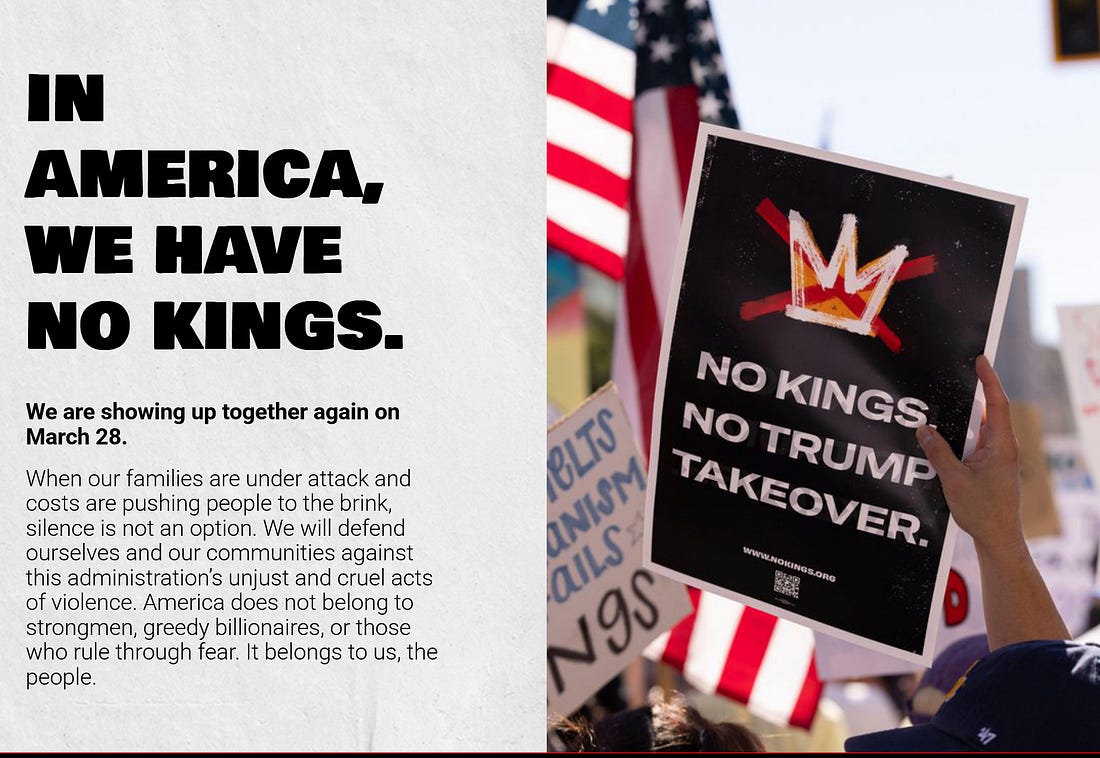
Hands Off had 1,300 events all across the country. There were 3 million people. I'll put that in context, Simon. The largest protest, which is a big, empowering, inspiring protest of the first Trump term was the Families Belong Together protest, which was protesting the family separation that Trump was doing at the time. There were about 750 events nationwide. We almost doubled that with Hands Off. And one of the signs that we saw repeatedly in Hands Off, it was a lot of the 50501 groups that were putting this on, we saw it at 50501 events for Hands Off as well. What did the signs say? They said No Kings. We saw it again and again and again in communities across the country. And as we were looking for what we do next, and as we heard that Trump was planning this ridiculous military birthday parade for himself on June 14th, we said, well, we got to we got to bust through that image that he's trying to present as this all powerful authoritarian. We're not going to confront him in D.C. He can have D.C. for that day. We're going to protest everywhere else and we're going to call it No Kings. That's what's resonating out there. That's why we called it no kings. It wasn't some idea Leah and I dreamed up. It wasn't poll tested in some back room. This was coming out of the streets. This was coming from people who are already showing up. And it succinctly said, we're not going to go along with this undermining of the Constitution on the heels of the 250th anniversary of the Founding of this country, a country founded on rejecting authoritarianism and the attack on our basic rights. So we thought it would resonate. We hoped it would build. But you know, anytime you announce a big party, you don't know who's going to show up. And No Kings ended up being at the time the largest –– one of the largest protests in American history. There were five million people at 2,100 events. We ran it again in October for No Kings 2. The Republicans were claiming we were going to be violent Marxists showing up in the streets in these troubling ways. Mike Johnson couldn't stop talking about how dangerous it was going to be. [We] saw the National Guard called out in Texas and in Virginia. I remember the Austin Indivisible groups who were putting on No Kings in Austin… [they said] well, great, they can come listen to our bands and dance with our fellow participants if they like, which is exactly what happened. There were no incidents. The nonviolent protests at Hands Off, No Kings, No Kings 2… the image coming out of that is enormous numbers of people, joy and power, joyfully coming together to say, look, this is not what we stand for. There are more of us than there are of them. And we're not afraid to show up. I don't care if he calls out the National Guard. I don't care if he threatens us with prosecution. I don't care if he threatens to take away our rights. If we don't show up for rights, we don't have them. So we're going to show up. So we had three million people at Hands Off, five million people at No Kings 1, seven million people at No Kings 2, No Kings 3 on March 28th. This week, we are going to announce we have more events on the map than we had for No Kings 2. It's going to be the largest protest in American history. Because as bad as he is, as much as he is lashing out, every time he does that, more people come into the movement.
Simon: Ezra: This is how we build towards a mass pro-democracy movement in this country. How we build the capabilities we're going to need as we head to a midterms which I believe we will win hand over fist. We are going to crush the regime in the midterms, but they're not going to go like that. They are going to try to undermine the results. And so we're going to need to show up in force when they do, nonviolently, insisting that we are going to respect the rules set out in the Constitution, that we're going to respect the results of the election, and we are going to seat a new Speaker of the House, a new Senate Majority Leader, and we're going to hold this regime accountable. That means showing up now. And so whether you're starting your own No Kings event or you are recruiting people to come to your No Kings event, this is a time when we don't just sit on the sidelines. We've got to get into the game. Simon: There was joyful sentiment, and given Hopium's orientation, which is that we believe that part of the way that we beat them is by putting positive sentiment out into the world to sort of counter their negative sentiment, I think this has been a remarkable collective achievement, the overarching sentiment of this process. Talk a little bit about that, because when you began that, there's no way to have known that's what would have happened. But it's become… I think the reason why this is growing is because you identify with this movement, and what you're getting is joyful protest, not bitter, angry, frustrated protest, which could have happened, Ezra, right? I mean, I think that would have been one way this could have manifested, but that's not really what I have found when I've gone through these events. Ezra: Yes. A couple of things. One, this speaks to just the quality of the folks who are participating in this movement and the amount of training and preparation that is done for all these events. This is not somebody just sends an email and suddenly there's a No Kings event. There has to be a safety and security lead for every single one of these events. We're offering de-escalation safety trainings again and again and again to make sure people know how can we best prepare for this to make sure that these are successful events. There's a lot of work that goes in to making these as successful as they are. I'm proud that the No Kings team makes it look easy. It ain't easy. You don't get to three of the five largest protests in American history just by putting something on a website. There's a lot of effort that goes in this, and there's a lot of effort going into No Kings 3 to make it as successful as it is. But the second thing, 1000% agree, Simon. I think sometimes it feels like our enemy is Trump, or our enemy is the Republicans, or our enemy is some elected official that isn't doing what we would like them to do. Or some business or some university or some law firm… those aren't the enemies. They are opponents from time to time in these campaigns. But the real enemy in this moment… when we're trying to defeat this authoritarian agenda, the real enemy is cynicism and nihilism and fatalism, a sense that nothing we do matters, that it's all a foregone conclusion, that this guy has all the power. It doesn't matter what we do because the end is already written. And that's what we try to bust through. That's what we try to break people of thinking. We want them to have hope. We want them to believe that what they're doing matters and that by collectively doing it, we can actually make change. So I think events like No Kings, what they can accomplish if they are wildly successful is they make clear that, oh, wow, maybe democracy will reassert itself. Maybe we are going to have elections. Maybe he can't just railroad the Twin Cities or Chicago or L.A. Maybe he's not going to be able to accomplish everything he wants to accomplish because maybe people aren't going to be so afraid that they don't show up. That is one thing it can accomplish, but if that is one day, that's not success. The biggest one-day protest that you can imagine will not save democracy, will not defeat fascism. So half of the successes [is to] get a whole bunch of new people out, an unexpected number of people in an unexpected number of places. But then the other half of it is plugging them into their own local organizing. I want to see people going to start new Indivisible groups or 50501 groups, or finding the immigrant rights organization and becoming an ICE watcher themselves, or signing up for an ACLU “Eyes on ICE” training. We need people plugged in to that organizing work, not just to do the work and learn the skills. Bcause then they become part of a community. It’s not just existing on an email list or belonging to the right party and voting the right way… it’s finding your people where you are. And that's what will fuel your work from here until when Trump is just in the trash heap of history. So I am most interested in how do we get people to take the step on March 29th to join that community. And so a lot of work is going into that handoff between No Kings 3 and the next thing. Simon: Ezra: Simon: And people needed to come back together in physical community. It's something I think a lot about for Hopium –– that I don't think Hopium will not really get to where it needs to go until we start having physical interactions with each other and not just digital ones, but I think you also caught this wave of people kind of going back into society again and people who are doing remote work who were not necessarily as connected physically to others, and I think that's been part of the joy, that I think the joy is people being in physical community again in ways that we used to be. Which was like kind of a no-brainer. And the third observation I have about all this is that I do think that you're right... what I'm seeing, just in Hopium, the feedback I'm getting is that this is translating to local in-person networks that are cohering into not just talking to their electeds now more aggressively and learning… because that's also something we do, one of the things we've done together is to really help people understand that talking to their elected officials should be a daily thing, if possible, and that this is how our democracy was supposed to function… and that actually, as you know from being a former congressional staffer, these offices really pay attention to this stuff… I mean, I've had to really convince people that they really pay attention to this stuff, but they really do. And so, you know, we have daily calls that we make and I'm asking people to make every single day, asking people to put aside if they have the time… but I think the other thing that I agree with you on is that you're starting to see these local networks develop that have electoral and advocacy impacts that are going to really matter this year and in the future. Where communities are forging, people are meeting one another at Tesla takedowns, at these No Kings, right, electoral events, I mean I love the stories we get of people protesting or going and scheduling an appointment with their local congressional office to meet with a staffer to go through all of their issues with them and bring 20 people in. I love those kinds of events because we're teaching, we're helping people understand that this is what democracy was supposed to be, right? This is the whole theory of this. And the absence of this is actually part of what becomes the danger. And that we're filling an incredible void of engagement that is required for us to have a healthy and muscular democracy. And so I do think what I get a lot of joy of at Hopium, as somebody who, like you Ezra, right, I made a choice at some point in my life to do this, and not to other things, is to see the joy that people get of meaningful engagement with the process and how empowering that really is to people and how much they feel like they're doing their part. They're being proud patriots, as we call it at Hopium, and contributing to their democracy through their voice, through their actions. And what you've done is you've created a lot of powerful patriots. This process has created muscular patriots all over the country who are never going to let go of this. I mean, I think it may ebb and flow depending on the moment, but I think a new floor has been raised for the country and for our pro-democracy movement that is going to be lasting potentially for decades. Because I don't think we will have sunshine patriots here. I think we're creating 24-7, 365 patriots in this country and it's been very rewarding, and I think that you know we'll have you back in April when we get through this, and you had an amazing day to talk about next steps. I mean in our community we have things we do every day, right, we're raising money for candidates… we're more candidate focused than some other parts of the family, but that's also my background and where I come from. It's what I know, the part of the game that I know. But I agree with you that where this all matters is translating it into sustained activity over time. I think my feeling is like, I've seen that with my own eyes through the Hopium community, people now are hungering for this engagement, looking for new things to do, looking for ready to pounce when an issue emerges to sort of define, you know, get their talking points, to build their signs, to make their social media posts, right, like there's now an incredible appetite for this. So it's exciting. I's been really exciting to be working in a parallel way, and I'm glad now that we're more formally connected, Ezra, and just very grateful for what you guys have been able to build. As you pointed out, this is hard, you know, hard work. And because you're dealing with people's hopes and dreams, and their aspirations and their love of country, and they want to do it right. And you've been able to help a lot of people do it right. Ezra: I don't want to just say the same thing that you said, but I agree with so much of what you just said. People are hungry to be part of something real right now. People are hungry for actual human connection. And so much of the way that we engage in this world right now is digitized and extractive. You try to get my email address so you can ask me for money. You try to keep me on your app so that you can sell ads. You try to keep me disconnected from real human connection because how do you monetize that? I think the reason for hope that this isn't just creating a few sunshine patriots for this particular moment is because something special happens when people actually gather in community together. Something special happens when people observe their power that they have built actually have an impact in the world. They like it. They want more of it. And so I think we're converting millions of people right now to a new relationship to democracy. And that gives me a hell of a lot of hope. Simon: Me too, brother. So just remind everybody about how they get involved on March 28th. Ezra: Go to NoKings.org. Simple as that. Find the event near you if there is No Kings, but there is still time to organize. There are maps. There are new No Kings events being put on the map every single day. There are more than there were on October. This is going to be the largest protest in history. It's going to be powerful. It's going to be joyful and it's going to be impactful. You should be part of it. Simon: And just I'll end by saying, listen, everybody, we got to get this done on March 28th. So let's go to work. Ezra: Let's do it. Thanks all. Simon:
You're currently a free subscriber to Hopium Chronicles By Simon Rosenberg. For the full experience, upgrade your subscription.
|
Tuesday, March 10, 2026
Indivisible's Ezra Levin On No Kings, Letting Go, And Building A Mass Pro-Democracy Movement In America





Subscribe to:
Post Comments (Atom)
Indivisible's Ezra Levin On No Kings, Letting Go, And Building A Mass Pro-Democracy Movement In America
Watch now (33 mins) | March 28th is the next No Kings day. Sign up, or build an event yourself. Let's make this day the biggest No Kings...
-
On Monday, Leon County Circuit Judge Angela Dempsey rejected Bear Warriors United's request for a temporary injunction to halt the s...
-
Four Ohio cities ranked in the nation's top 100 best cities for single people, according to a WalletHub survey that considered fact...


No comments:
Post a Comment