Fighting Trump's Reckless Assault On Science - A Conversation With Dr. Jenna Norton And Colette DelawallaMarch 7 is a National Day of Action to Stand Up For Science - join an event near you!
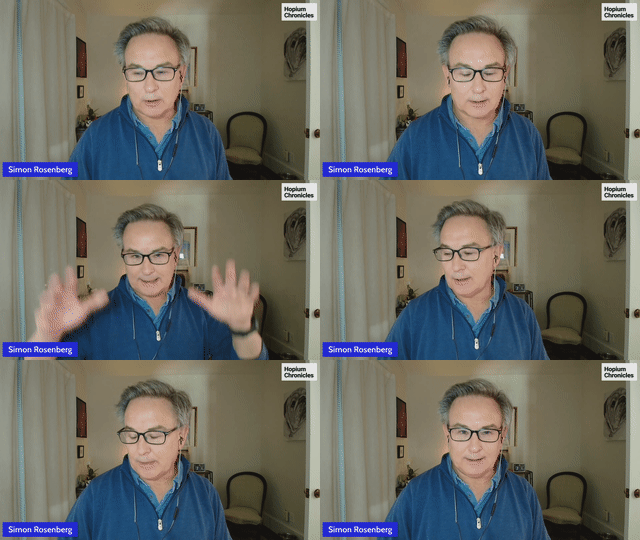
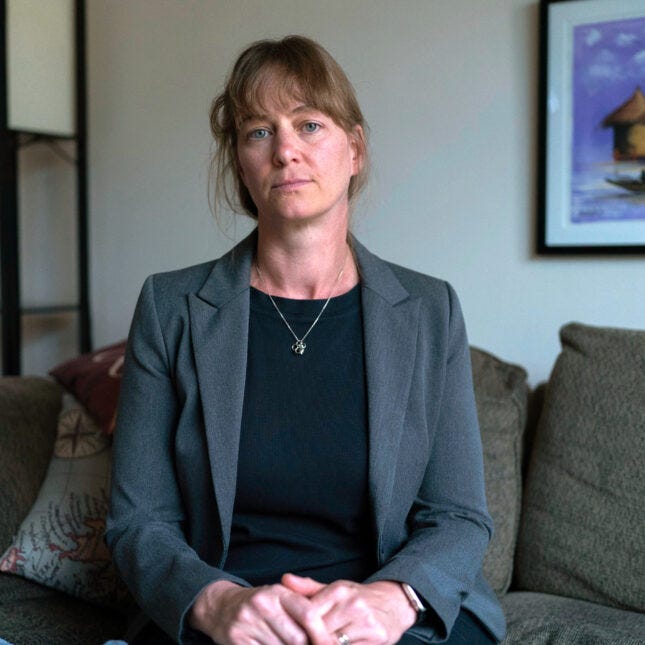
Happy Sunday everyone. Yesterday we discussed how the resistance to Trump is growing across the country, that the real State of the Union this year is that we are all tired of his bullshit. We’ve seen it in Minnesota, in Europe, in Congress, in No Kings, with farmers, and now even in the supine Supreme Court. A remarkably wide range of elements of our society - even pro-life groups, MAHA Moms, and Catholic organizations - are now organizing against this terrible regime. We are learning, in Hopium parlance, to not just focus on winning elections but to also mobilize against the material harm he is doing to the country. It’s an enormously important, and welcome, development. Of all the harm Trump is doing to the nation none may be as consequential as his multi-front assault on science, research, and academia. This barbaric assault will make us less prosperous, less healthy, less in control of our own destiny as a nation, and will deny our kids and grandkids the opportunities Americans have been long accustomed. This barbaric assault is weakening our nation in every way, which makes these efforts far more something that feels like sabotage than a strategy for greatness. It’s all why we must turn this fight against anti-science and MAGA’s medieval mysticism into one of our top areas of advocacy this year. To get a progress report on our critical fight against anti-science on Friday afternoon I sat down with two great warriors for American science - Dr. Jenna Norton and our friend Colette Delawalla of the advocacy organization Stand Up For Science. A video recording of our discussion is above and a transcript below. You can learn more about Dr. Norton’s courageous leadership in these recent NPR and NYT stories.
A few key takeaways from our discussion….. 1 - The regime knows they have a problem, and are starting to rein in the anti-science freaks and charlatans they’ve put into HHS/NIH/CDC. Here is how Colette described it in a new post, RFK Jr and MAHA’s horrible, terrible, no good, very bad week: Let’s summarize the events of the week, shall we?
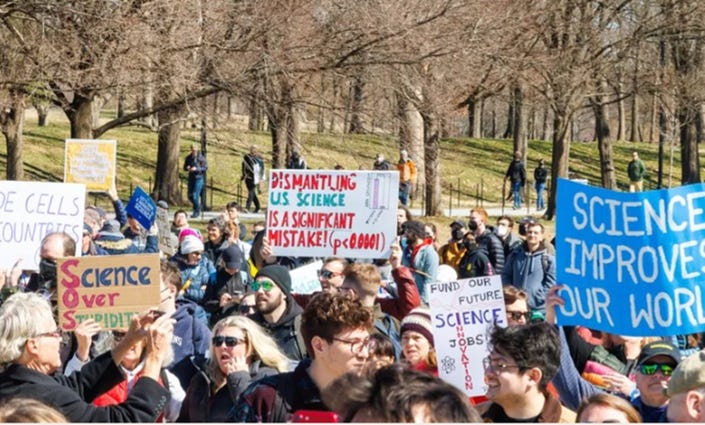
Like in some many other areas right now the regime understands they’ve gone too far and are working furiously to clean up the mess they’ve made. It’s why we need to be on offense now, and be working very hard to build on these recent gains. 2 - Democrats now have an opportunity to co-opt the growing public interest in wellness, combining it with our long commitment to expanding health care access, and not cede this ground to MAHA. There is an opportunity now to expand our coalition, particularly as “MAHA Moms” are becoming disillusioned with Trump. 3 - If you want to join the fight become part of Stand Up For Science’s National Day of Action Saturday, March 7. I will be speaking at their event on the Mall that day, as will Dr. Norton and Colette. More details on that soon.
Get to this discussion when you have the time, and let’s build on the growing momentum we have in fighting the regime’s reckless anti-science agenda and make March 7th another important moment in building the ferocious opposition movement required now - Simon Transcript - Simon Rosenberg, Colette Delawalla of Stand Up For Science, and Dr. Jenna Norton of the Bethesda Declaration (2/20/26)Simon Rosenberg: Colette Delawalla: Simon Rosenberg: I wanted to start, Dr. Norton, if you don't mind just trying to give us an overview of why you became an activist, and also what's happened just in the last few weeks because it feels like there's been an even higher level of chaos in the last few weeks… compared to the normal chaos, but just introduce yourself to our community and tell us about your fight and how you think it's going. Jenna Norton: And when this administration came in back in January of last year, they started terminating research studies, particularly in areas focused on health disparities, but also on vaccine hesitancy, on foreign research collaborations and on a whole wide variety of topics that they felt were politically impalatable. And as a result of these terminations, there was actually a huge amount of harm done… in terms of human tolls… so when these studies were being terminated, there was very little thought about what would happen to the research participants in those studies and the very real harms that happen when you pull somebody off of a study midstream. There were financial consequences, right? So when you terminate a study that has spent a few million dollars already four years in, you don't save the last million dollars, you waste the four million dollars that you've already invested. And so, just the damage that we were seeing and the thoughtlessness with which the policies were being implemented was extremely concerning. And so, of course, because I am a sane human being, I started by speaking up to my bosses and emailing folks inside the NIH saying this is very concerning. I don't think this is ethical. I don't think this is legal. And those concerns were ignored by the highest level of leadership. And when Jay Bhattacharya came in as NIH director in April of last year, we were all a little bit hopeful that things would get better, and they did not. And so we were left, I think, inside the NIH with the choice of being complicit in these harmful actions or speaking up and bringing them to the public. And so that's what a large group of us ultimately decided to do. We put out an open letter to Jay Bhattacharya, as well as two members of Congress, highlighting the harms that we had been seeing, asking for Jay to correct these harms. And I'm just really hoping that by bringing them public, we could get some of them addressed. And I wasn't immediately placed on administrative leave after that, but I've been continuing to speak up since then. We released it in June of last year. And I'm not sure what put me over the edge or caught their ire, but in November of last year, I was placed on administrative leave. I was given no reason officially, but anonymous members of HHS were quoted in the press saying I was a radical leftist who was put on leave because I was critical of the administration. That's my story. Simon Rosenberg: I have struggled to understand the goal, sort of the minimization of the extraordinary economic and physical harm and healthcare harm to the country. It just so obviously feels like sabotage as opposed to any kind of strategy. And I am dumbfounded and shocked that this is still happening and that Robert Kennedy continues to say such extraordinarily insane things. And we're supposed to be taking all this seriously. And I just wonder, reflecting back on the last year, what are we all witnessing here in your mind? When you explain this to your friends about what's going on, how do you explain it? Given that, to your point, the simple point you made about [how] cutting that last million means that you've just wasted four…you're not saving money. You're actually wasting money, which is like, why would you ever do that? Why would anybody ever do that? So how do you explain this in plain, simple words to friends? You're at a dinner. Let me tell you what's going on. Explain. Jenna Norton: I think there is another contingent within this administration because I think that's one thing that's very unique about this administration — it isn't very cohesive. There are actually sort of some separate sub-camps, right? And so MAHA is its own separate subcamp within the administration. And RFK is advancing wellness industry messages, right, and so I think there is this assumption that because things are “natural” or you know, from the wellness space, that there isn't an industry behind these things and that there isn't profit being made off of some of the disinformation that is being circulated in these science spaces. And so I think that's another part of this is that there are people who are benefiting financially from the anti-science agenda that is being advanced by this administration. And then the last thing that I will point to, and this may generate some feelings in people, but I think there is a racist component to some of these attacks that is quite blatant. I guess not so much me anymore…since since I was put on leave, but my colleagues, my program officer colleagues at the National Institutes of Health are still screening every single grant with a tool that searches for terms that are potentially misaligned with agency priorities — what we can see from the output that program staff receive, those terms include things like African American, Hispanic American. They notably do not include White American. And so there is definitely a discriminatory component to these processes that are being implemented that is deeply concerning. And Colette, you may have ideas to add to that. Simon Rosenberg: Colette Delawalla: But the thing that they all benefit from is a more formal hierarchical structure in the United States. And so one of the things that I mean…so much research, in just about every area that has to do with human subjects…has found that there are significant health disparities across just about every, you know, illness, disease, whatever. And when you sort of trace the line back, it's not because somebody is genetically superior or inferior to another group. It is because of access and it's because of differences in care. And so, you know, I keep coming back to in my mind there. We did this whole thing on the fact that RFK had canceled sudden infant death syndrome prevention programs, which has been enormously effective. And like if you're pro-life, I mean, there's no reason to cancel the SIDS prevention program. It is super effective. It is very inexpensive and it does a hell of a lot of good. I mean, it's just extraordinary. And he canceled it and we were we posted about it on Reddit and somebody left a comment on our Reddit saying why would you stop inferior people from dying just let them die off? And that comment says the quiet part out loud to me. And it's something that I think will stick with me forever because we're talking about infant children dying in their sleep. That is an egregious thing to say in any circumstances, particularly if you're talking about SIDS. And I think that it captures the driver of this, right? They want a hierarchical system. They want to expand inequities. They want [a] decrease in abilities for people to have like a more equal and vibrant life and enriched life. Simon Rosenberg: We ceded during the COVID period, our party…part of the reason we're in this mess, in my view, is we ceded the public health conversation to them. We ran away from COVID. We ran away. And even when we talk about health now as Democrats, we talk about subsidies, money and health insurance. We don't talk about outcomes. I wrote a piece in February of 2024 in the New Republic about what Biden should be running on. And one of the things I said is that it should be a central plank of his campaign that he's going to get life expectancy back, moving back up in the right direction as a national goal, and for us to own the healthcare conversation. And I think that now what's happening is that they've put this on the table, right? They've put the issues around health and public health and wellness on the table… all their solutions are insane, right? But this is now part of the discourse. And it's giving those of us who believe in a different path, I think, kind of a big opening to go back and seize control over this debate. And I know that Colette, part of the way you're doing that is you have a day of action coming up in March. Can you talk a little bit about that? Colette Delawalla: Because we do really view these things as intersecting. And the idea here is just to give people an outlet — together, to say no. You know, we're not doing this. We're not going back to the middle ages…we're not reversing our life expectancy because this quack has these fringe ideas that he's turning into policy. So you know, our idea here is just to give people the opportunity to come out, you know, hit the streets peacefully, come out together and rally for science and health and democracy. And Jenna, she'll actually be one of our speakers. So, you know, if you come by, gang's all here. Jenna Norton: And I just want to add, you know, it's been a really challenging year or so to keep up hope. And I think that a lot of times people think of hope as this sort of useless mindset, but hope is really built through action. And so it's things like this March 7th event and seeing the NIH folks that I work with organize and build up organizations. You guys are all familiar with Stand Up for Science. We also have 27 UNIHTED, who's come up from grassroots with inside the NIH — folks who are former and supported by former and current NIH staff, you know, CDC's got the National Public Health Coalition. And so we've got all of these amazing grassroots movements coming up and pushing to really just right the ship when it comes to biomedical science. And so I'm super excited to be there on March 7th and super excited to just see our committed colleagues really pushing for you know, a biomedical science ecosystem that really and truly serves the American people. Simon Rosenberg: The tariff decision is like one of the happiest things that has happened in my political career to see this happen. But let's just talk about that for a second. So the tariffs were…Trump comes out of the box roaring with their big, burly, insane agenda, and Congress has now voted prior to the Supreme Court decision, both the House and the Senate, voted to repeal the tariffs in an incredible rebuke of the president — including just last week the House voted. So you have the Republican-controlled Congress, both chambers, rebuking, repudiating the president on his central economic issue. Now, we have the Democrats pushing really hard to rein in ICE, to create reform in ICE, and to fix this kind of early stage Stephen Miller driven insanity that we've seen break out all across the country that is tanking Trump's poll numbers on his other central issue. I mean, if the two central issues he's offering, right, were you know, affordability, tariffs, prices, better life… rebuke, right? Now we have the country really turning on him on immigration. It seems like we should view this then as a period where that Trump 2025 is in retreat, that one of the things we should work on, and I'm sure you've got pieces of this already, is what should Congress be doing this year…in addition to, you know, getting rid of Robert Kennedy, but in terms of restoration of monies, in terms of us fighting to put in real people in positions of leadership and authority and clearing out all the lunatics that are in there, launching investigations into the corruption around the wellness industry, which could be easily launched, by the way, in the states. That even if we can't do it in Congress, there are state actors. We have this new coalition of the health groups on the West Coast and of the governors who are banding together… perhaps state legislators can start investigating the corruption. I think that my advice to us, as we as you get to the other side of the March 7th, is that we should try to put together kind of an ambitious, now-we-got-to-go-fix everything agenda you know because I think the country is sort of getting to a place where they think that Trump has dramatically overreached and they want to create balance. And we have to sell this agenda I think in that regard because they went way too far here. It was insane what's happened and the damage that's been done to the country has been so significant. So I just toss this out there that I think there is a political opening now, Colette, that I don't know that we really felt over the last year in our work together. And I don't know what your thought is on that. Colette Delawalla: There are places in this discovery pipeline where there are bottlenecks that we could design better. We've already started thinking about that, bringing thought leaders together, and not just to maintain the status quo. I never want to be somebody that maintains the status quo, but to protect institutions, to protect an establishment, but to also push an establishment forward. And so, you know, it's something that we've been thinking a lot about and it is the moment right now to leverage…..we're at this leverage point where there's weakness. We could sort of get our finger in there and, you know, poke the bruise. And I think that's critical in this moment. Jenna Norton: But as Colette said, nobody thought that we were doing things perfectly on January. You know, inside the NIH, we are constantly pushing for improvement, sometimes successfully, sometimes it takes a long time. But those changes do need to happen. And I think we need to give people the vision of the future that they're fighting for. Because you cannot fuel people just by giving them an opponent… you need to give them something that they're building toward. And I think these conversations, as Colette said, have been ongoing. And it's definitely something that we've been thinking a lot about in between, you know, putting out the fires of the past year. Colette Delawalla: Simon Rosenberg: And yet one of the reasons we know we lost the election was that for young people who broke against us, Trump had a message about COVID. It was an insane message. It was a stupid message, but he was directly addressing the trauma that people had felt. And you hear these guys…I don't watch them as closely as you do, but this whole idea that the country lost faith in the CDC or anything else — by the way, there's no polling data to back any of that up. When they talk about the country losing faith in the NIH or HHS, they're talking about the right wing crazy anti-COVID people. They're not talking about the public writ large. And we lost this debate because we didn't have it, right? They were having an argument and making an argument with the country, and we never responded, we ducked. When you duck a debate, you can pay a heavy price for it and we're paying that price now. I think part of the learning here is that we need organizations like Stand Up for Science and we need, frankly, the academic institutions of this country to band together to become a far more powerful force. Because Trump picked people off, right. He went one by one through the universities as opposed to him fighting him the entire system. We're going to need to organize and fight with much greater ferocity because we're right and they're wrong. But we lost this debate because we didn't have it and we didn't respond properly. I do think that I am going to be arguing in the family that the MAHA moms breaking with Trump…those should be our people. You know, if they care about the public health of the country and about the health of their kids, they should be with us and not with them. And, you know, we need to make that case. I want to just echo what both of you said because I think you're both right that we have to see this moment now as a moment of opportunity. And to really get out of a defensive crouch and start playing offense and being aggressive. And that's what you're doing on March 7th. And so Colette, how do people get plugged into March 7th? Colette Delawalla: And Simon can I add something about this situation — so I have been talking to folks in the biomedical industry who are like traditional John McCain style conservatives. OK, so like not not necessarily MAGA. Maybe they held their nose and voted for Trump, but like, you know, conservative. And one of the folks I've been talking to made the point that people on the right are still mad about COVID and Democrats digging their head in the sand, and not coming out to address anything, you know, even if it's imperfect, has still been frustrating people. And I don't know for whom that is true. Like I'm sure that's not a hundred percent the case on the right. But I do think there probably is to your point a segment of people who could benefit from there just even being discussion about it. I don't necessarily know what that discussion looks like…that's your area not mine, right… Simon Rosenberg: Because there are a lot of Republican women in the Moms Demand, it's very nonpartisan. The anti-vax propaganda escaped containment, right? Like it became a virus on its own. And I hope that as we go forward that one of the things that's very important for when you guys give talks about this, the first documented extensive social media campaign by the Russian government in the United States was promoting anti-vax abuse. When that was happening, Trump came out as an anti-vaxxer, right? And we have to realize that anti-vax sentiment, and I've written about this a lot, it is like burning…it's like lighting the country on fire. And it is like, if the Russians invested in two sets of groups in America to get ready for…the NRA, which you know, kills Americans through guns, and the anti-vax sentiment, which kills Americans by withdrawing vaccines. Was this accidental? I mean, was this like, oh, boy, they were fishing around? These were both things that could cause enormous harm to the people of America by our most significant global opponents. And there was something sort of vicious and mean about this, right? But the anti-vax stuff, it's metastasized in part because we never really, you know, pushed on it. And to your point, there are Republicans who've been in rooms with their friends who are anti-vaxxers, who are still have a distorted view about how, you know, there is sort of this elite opinion. Well, the shutting down of schools was a mistake. There's no polling data showing that any of that is true. A majority of the country supported the initiatives. And there is this kind of complete, I think, wild disinformation stuff around this that caught a lot of us by surprise, I think, right? Because what do you mean vaccines are bad? Anyway, I'm going on too long about this, but I do think that what I'm trying to do at Hopium is to make this fight over science one of the things that we just do as people in politics, that this is not on the periphery of our politics. It's at the center of it all. And we're not there yet, Colette. You're working hard to do it. And Dr. Norton, thank you for your leadership. You know, I do believe that Trump is in retreat on a lot of fronts. We have to make this area the next area of significant retreat. And so thank you for putting together March 7th and Dr. Norton, thank you for your continued bravery and courage and doing the right thing here. And listen, folks, sign up, right? Become part of this. And Colette, let me know if you've got a five minute window for me to speak because I'd love to bring Hopium people down to the mall. Colette Delawalla: Simon Rosenberg: Colette Delawalla: Jenna Norton: Simon Rosenberg: Colette Delawalla: Jenna Norton: Simon Rosenberg: The Republicans, if you look at polling, the major issue area where Democrats have the greatest advantage is on health care. Well, my God, we should build on that and become not just advocates for health access, but for better health outcomes, right? And that was a piece I worked on, you know, I'm dating myself here, but when Clinton won in 1992, we launched the national health care campaign to pass in that point, the Clinton Healthcare Plan. And even from those days and then through the ACA fight, we were always focused on the money, and insurance and access, and inadequately focused on outcomes and getting rid of chronic disease. There was this whole area that was there for us that we never really got to. And I think that it's hurt us, it's hurt the country. And we need to learn from that and expand, and try to bring in the MAHA moms and all these folks who have now committed themselves to public health as a major issue, but have probably, like people you know, may have been well intentioned, but misguided, and that we have to help them find a better path. And I think that this is something within our grasp. I think, politically, my assessment is this is doable. But somebody's got to do it. And now what you're doing is you're building some political muscle that we never had before. And now we've got to use it. And so that's my optimism about the go forward. I'm agreeing with both of you that. Colette Delawalla: Simon Rosenberg: March 7th, big day. Listen, thanks everybody. That was a fun conversation. I'm a little punchy today. We had this huge win on tariffs. Trump is in retreat. We need to understand that. And when you see your opponent struggling and failing to what do you do? You fight harder. You go on offense. You try to take more terrain. This issue of us taking back the public debate around science, around health, around climate is essential for us in the months to come. And I'm just grateful that we had Dr. Norton and Colette with us today. Sign up for March 7th. If you liked this discussion today, hit like, subscribe to Hopium. Keep fighting everybody. Invite your friends and earn rewardsIf you enjoy Hopium Chronicles By Simon Rosenberg, share it with your friends and earn rewards when they subscribe.
|
Sunday, February 22, 2026
Fighting Trump's Reckless Assault On Science - A Conversation With Dr. Jenna Norton And Colette Delawalla





Subscribe to:
Post Comments (Atom)
Controlled Chaos: Scale Faster By Balancing People and Process
Scaling requires doing a delicate dance between coordination and chaos. Spot the indicators to know when you're team has drifted out of...

-
Four Ohio cities ranked in the nation's top 100 best cities for single people, according to a WalletHub survey that considered fact...
-
Rising Electricity Prices And The Fight For A Better Energy Future - My Conversation With Jay InsleeWatch now (21 mins) | Afternoon everyone. ͏ ͏ ͏ ͏ ͏ ͏ ͏ ͏ ͏ ͏ ͏ ͏ ͏ ͏ ...


No comments:
Post a Comment