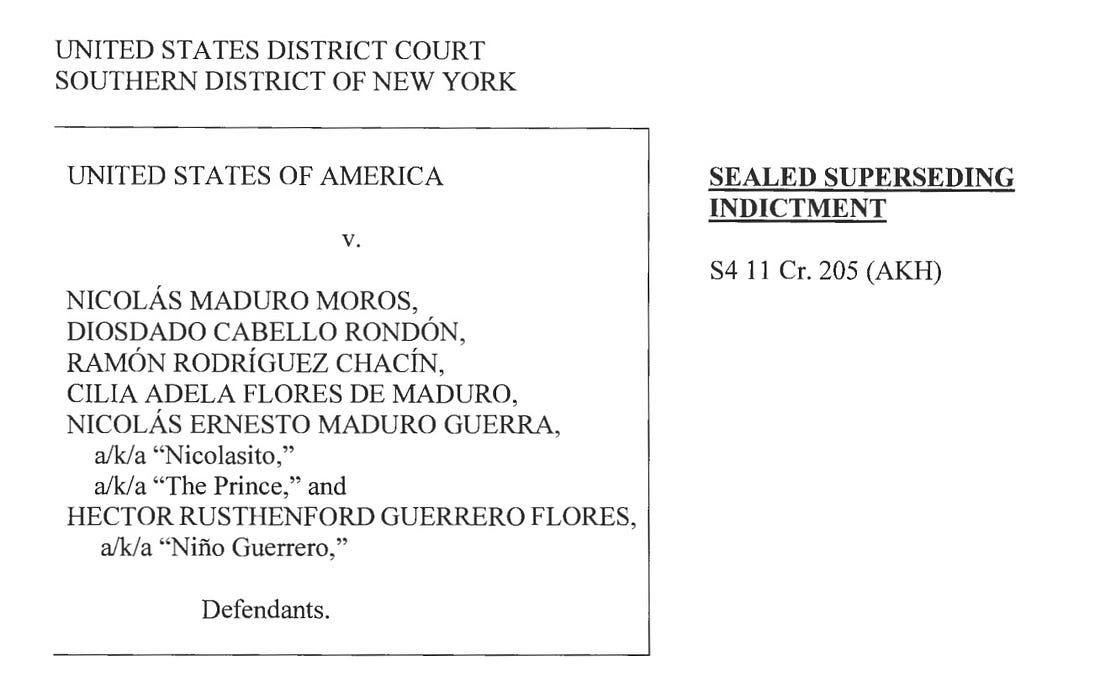
This morning, Donald Trump explained, in a rambling press conference along with others in his administration, that the overnight strike in Venezuela was executed to arrest President Maduro and his wife, Cilia Flores. In other words, it’s not the kind of new hostilities, if you buy the administration’s line, that would require notice to or a declaration from Congress. This approach, although it’s what I suggested in this morning’s post we should expect, leaves me with a major question: if the U.S. was just going in to Venezuela to arrest a defendant in a criminal case, which has now been done, why is it necessary to stick around to run the country? That is exactly what Trump said this morning that we’d be doing. “We're going to run the country until such time as we can do a safe, proper, and judicious transition,” the President said. Senator Chuck Schumer tweeted: “The idea that Trump plans to now run Venezuela should strike fear in the hearts of all Americans. The American people have seen this before and paid the devastating price.” Tomorrow morning at 11:30 a.m. ET, I’ll host a Substack Live with Jake Sullivan, who served as Joe Biden’s National Security Advisor from 2021 to 2025, and Jon Finer, Biden’s Deputy National Security Advisor. We’ll answer your questions about what comes next. Make sure you’re subscribed to Civil Discourse to get a notice when we go live—a free subscription will work for that. And leave any questions you have for us in the comments. Jake and Jon have a fantastic new podcast, The Long Game, that drops every Friday. The new indictment: The superseding indictment against Maduro, Flores, and four others was unsealed this morning. It contains three counts and a hefty amount of narrative. It is, as prosecutors say, a speaking indictment:
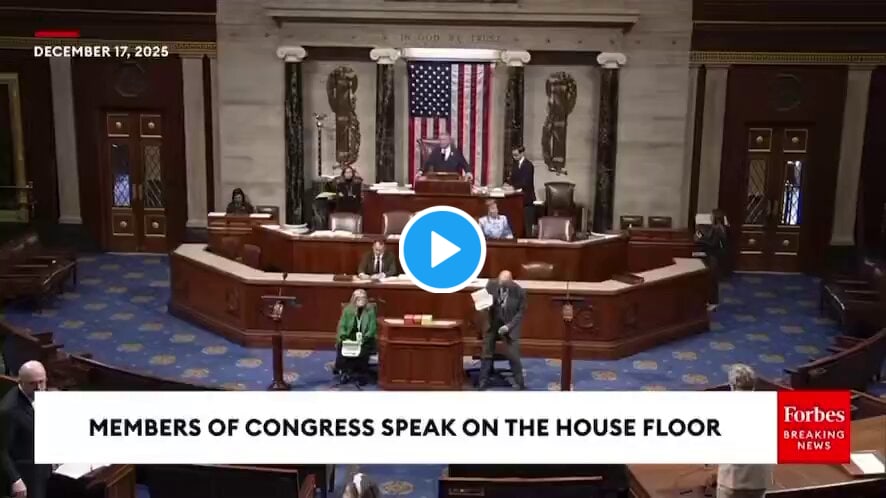
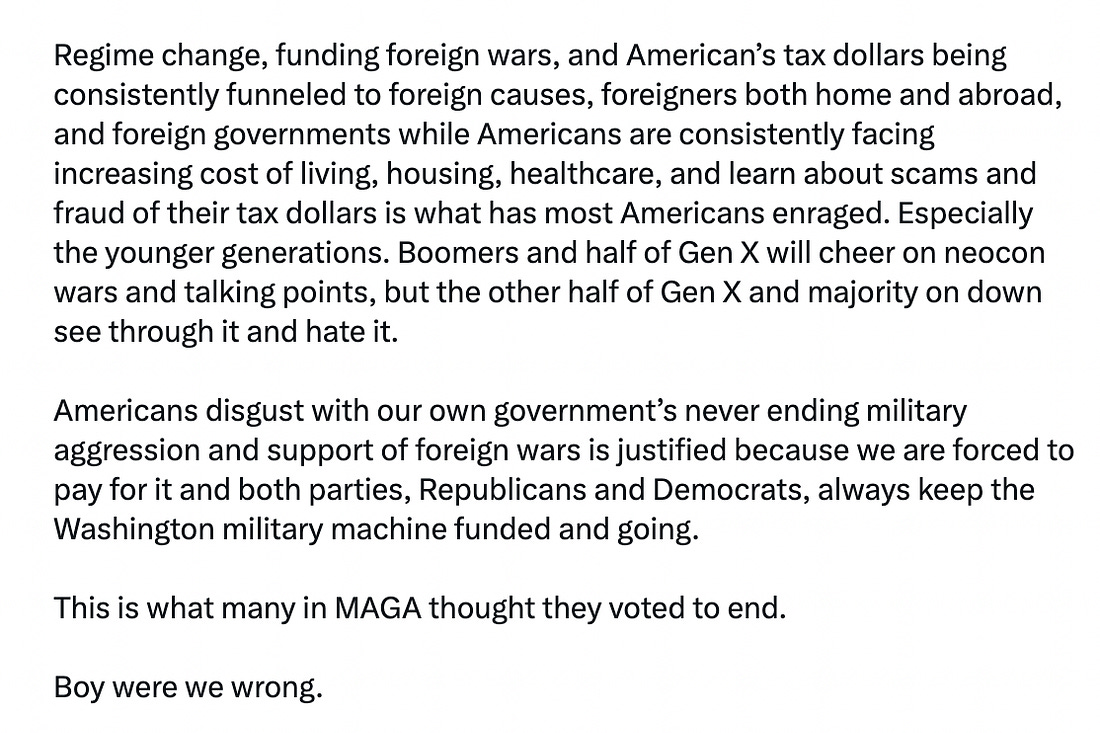
You can read the superseding indictment here. It’s signed by Trump’s new U.S. Attorney in the Southern District of New York, Jay Clayton, which means it was obtained no earlier than August of this year. It involves fewer defendants than the original 2020 indictment, which named 15 defendants, including Maduro. That could mean that some of the original defendants have become cooperators. We don’t know the details yet, but we will likely learn more in the course of detention hearings, which should follow shortly on the heels of the arraignment. The superseding indictment adds additional allegations against Maduro and names his wife as a defendant for the first time. The basis for the indictment remains the same: Maduro and his co-defendants used government power to protect and promote drug trafficking crimes. The government alleges that “This cycle of narcotics-based corruption lines the pockets of Venezuelan officials and their families while also benefiting violent narco-terrorists who operate with impunity on Venezuelan soil and who help produce, protect, and transport tons of cocaine to the United States.” To prevail on the “narcoterrorism” count (that label doesn’t appear in the statute), the government will have to prove that the defendants trafficked in illegal drugs, “knowing or intending to provide, directly or indirectly, anything of pecuniary value to any person or organization that has engaged or engages in terrorist activity.” This begs the same question raised by Trump’s earlier efforts to deport Venezuelans, who he claimed were part of the Tren de Aragua gang (it turned out many of them weren’t), and the justification for so-called kinetic strikes that have killed more than 100 people to date. The administration’s justification is that drug cartels are terrorist forces attacking the United States. Now we’ll see how that holds up in court. Even if the government prevails on the legal argument, the indictment doesn’t offer much insight into how the government intends to tie Maduro to Tren de Aragua and other cartels and gangs. It offers more detail about FARC activity from 2018 and 2019. But prosecutors aren’t required to reveal all of their evidence in an indictment, simply enough to put a defendant on notice of the charges they have to defend against. Assessment of the strength of the government’s case will have to wait until defense lawyers file preliminary motions. Maduro could be facing life in prison if he is convicted. The two drug counts carry a maximum sentence of life in prison, and mandatory minimum sentences of 20 years on Count One and 10 years on Count 2. The firearm charges carry a 30-year minimum prison term. Will Congress do anything? A Senate vote will take place next week on a bipartisan war powers resolution to block Trump from engaging in further hostilities against Venezuela. It was already in the works, but there will be an increased sense of urgency around it now. Along with Schumer, Virginia Senator Tim Kaine, and California Senator Adam Schiff, Kentucky Republican Rand Paul has signed on as a co-sponsor. The resolution is privileged, which means Senate Majority Leader John Thune will not be able to prevent it from coming to the floor. The resolution only needs a simple majority to pass the Senate. Delaware Democrat Chris Coons, the ranking member on the Senate Committee on Defense Appropriations, issued a statement that read, “This military action is the next stage in President Trump’s incoherent and arguably illegal Venezuela operation. In recent briefings to Congress, senior administration officials said they were focused on combatting (sic) drug trafficking, not regime change, and made clear they had no plan for what would happen if Maduro was removed or overthrown. This was clearly false, and furthermore, a military operation to capture and overthrow a president – even an illegitimate one – is an act of war that must be authorized by Congress. Not only has the Trump administration not sought congressional approval, they did not even notify members of either party in Congress until after the strike had concluded. Protecting democracy should not be done through illegal means.” Meanwhile, at least one Republican in the House seems to be less than sold on Trump’s Venezuela policy. Marjorie Taylor Greene had questions for the administration too. “If U.S. military action and regime change in Venezuela was really about saving American lives from deadly drugs then why hasn’t the Trump admin taken action against Mexican cartels?” she tweeted. She answered her own question, “The next obvious observation is that by removing Maduro this is a clear move for control over Venezuelan oil supplies that will ensure stability for the next obvious regime change war in Iran.”
The United Nations: The United Nations Security Council will meet on Monday, but with U.S. veto power, it’s unlikely anything of significance will come of it.
The Big Picture: As I wrote to you this morning, Trump’s recent pardon of former Honduran President Hernandez, who was convicted on serious drug trafficking charges, undercuts any claim he is serious about so-called narcoterrorism. As Virginia Democrat Mark Warner, vice chairman of the Senate Select Committee on Intelligence, noted, “You cannot credibly argue that drug trafficking charges demand invasion in one case, while issuing a pardon in another.” The hypocrisy raises questions about what Trump’s real goal is here.
Call me a skeptic, but Saturday was also the 15th day after DOJ’s deadline for complying with the Epstein Files Transparency Act, which means that the Attorney General was required to file a compliance report with Congress, as we discussed in last week’s The Week Ahead column. I haven’t seen that yet. And House Republicans tried to dump the release of the transcript of former Special Counsel Jack Smith’s closed-door testimony on the Hill on New Year’s Eve, hoping it would garner little attention. A foreign military strike and the arrest of that country’s president, however disgraceful he is (and Maduro is a dictator in everything but name), is quite a distraction. And Trump is ever the master of distraction and delay. So let’s make sure we don’t fall for it. I’m more interested than ever in learning what’s in the Epstein Files and seeing Volume II of Jack Smith’s report. They wouldn’t be trying so hard to distract us if it didn’t matter. Thank you for being here with me. I know you have lots of choices about where to get your news and analysis. I appreciate that you’re spending some of it with me. Your paid subscriptions make it possible for me to devote the time and resources it takes to write the newsletter. I’m proud that we’ve built a community together that’s dedicated to keeping the Republic. We’re in this together, Joyce You're currently a free subscriber to Civil Discourse with Joyce Vance . For the full experience, upgrade your subscription.
|
Saturday, January 3, 2026
Maduro & Venezuela: What Happens Next








Subscribe to:
Post Comments (Atom)
Protect Your Identity, Ukraine Military Shakeup, Auction House Horror Discovered
Stolen passwords drive record identity theft, Ukraine's military leadership faces a shakeup, and a foreclosure buyer makes a grisly di...

-
On Monday, Leon County Circuit Judge Angela Dempsey rejected Bear Warriors United's request for a temporary injunction to halt the s...
-
Police say information from a Reddit tipster who had a strange encounter with another man on a sidewalk outside Brown University provi...
-
The Trump administration has launched a new federal initiative called the U.S. Tech Force, aimed at hiring about 1,000 engineers and t...


No comments:
Post a Comment