It’s going to be another one of “those” weeks—but then you’ll already know that, which is probably why you’re reading the newsletter. One of the most important developments we’re going to see requires us to go back to events much earlier in this second Trump administration, events that we covered extensively at the time, but that may have faded a bit as they remained on hold in the courts.
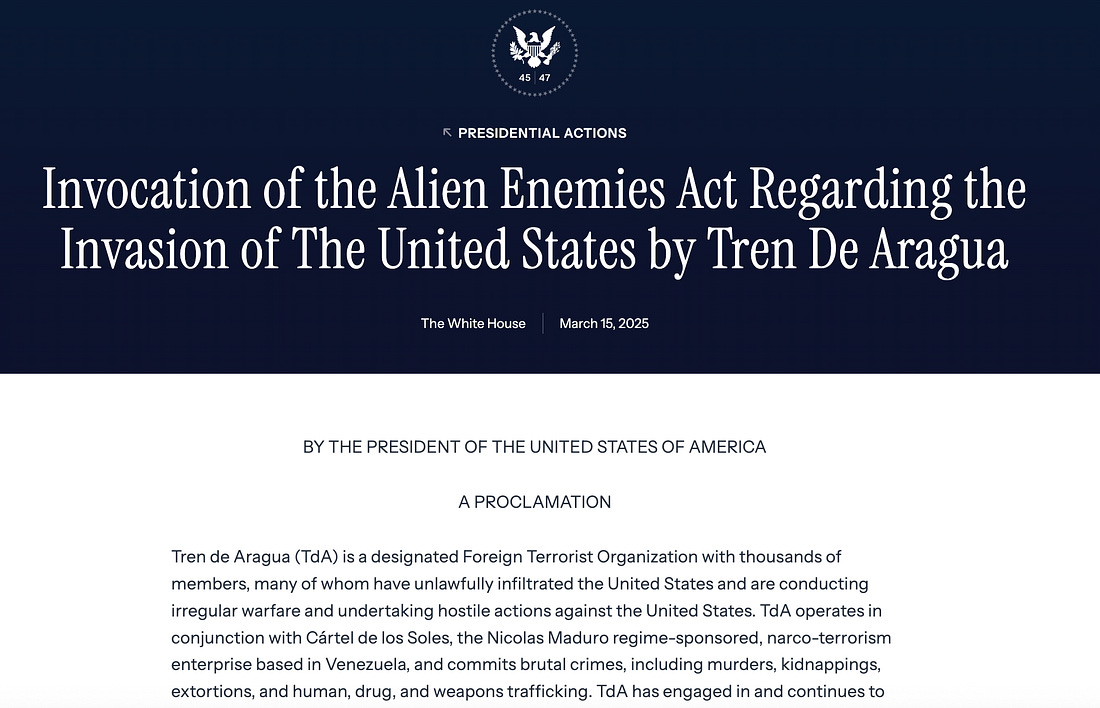
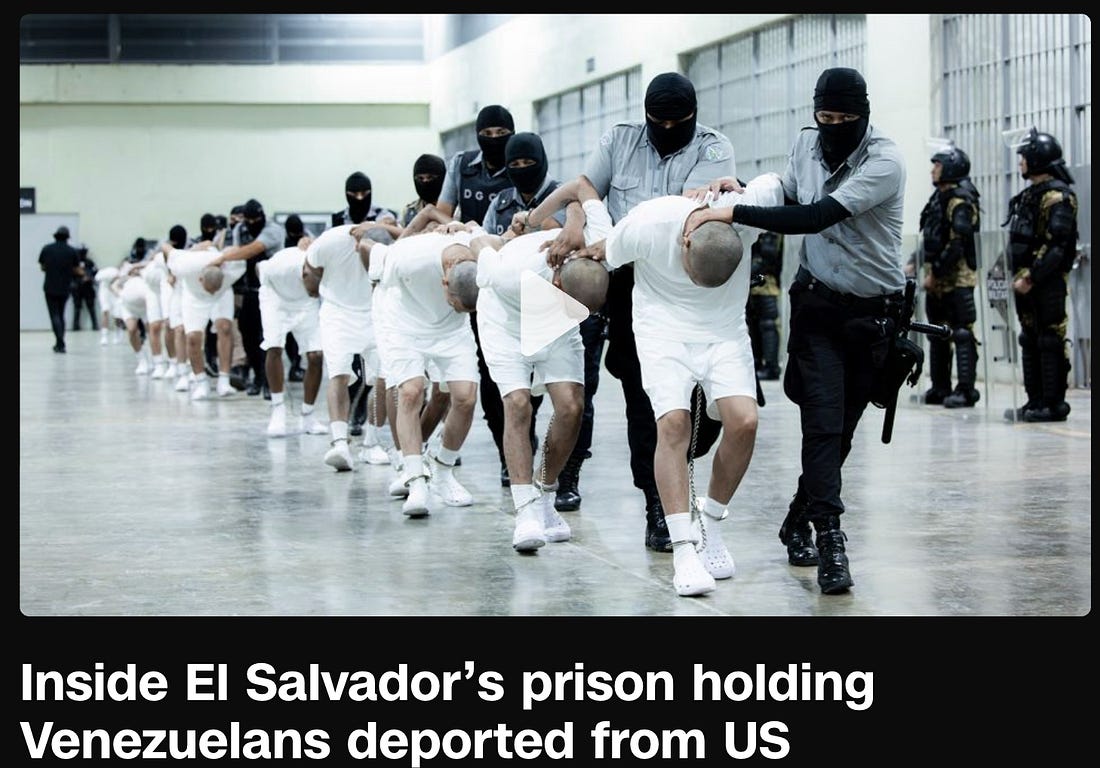
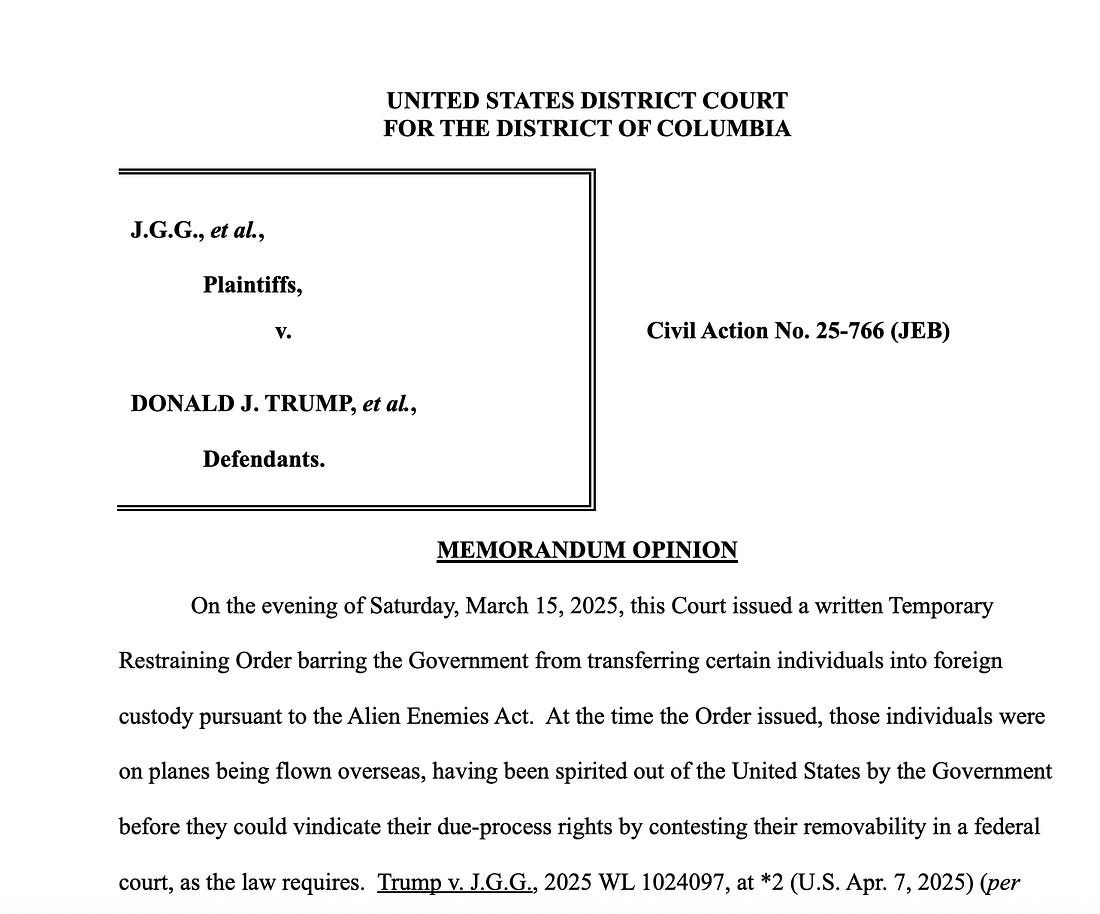
On March 15, 2025, a federal judge in the District of Columbia, James Boasberg, learned the administration had deportation flights in progress that likely violated the due process rights of the people on the planes, primarily noncitizens taken into custody in the U.S. who were Venezuelans. Donald Trump had taken an extraordinary step, invoking wartime powers under the 1798 Alien Enemies Act after claiming that the violent Tren de Aragua transnational gang was invading the U.S. The administration said (although in numerous documented cases this subsequently turned out to be untrue) that the men on the planes were members of Tren de Aragua. They were sent to the gulag-style El Salvadoran CECOT prison, with the U.S. footing the bill by paying El Salvador $6 million to imprison roughly 300 men. Americans saw video of the men being herded off the planes in stress positions and being forced to their knees before having the heads shaved.
One of those men, Kilmar Abrego Garcia, became the poster boy for the Trump administration’s cavalier violation of the men’s rights. DHS said he was a hardened criminal, publishing a piece in April, while he was still in custody in El Salvador, that claimed he was an MS-13 Gang member with a history of violence. The piece quotes DHS Secretary Kristi Noem as saying: “We hear far too much in the mainstream media about sob stories of gang members and criminal illegals and not enough about their victims.” It continues: “The mainstream media has peddled a sob story about Kilmar Abrego Garcia. The facts are he is an illegal alien from El Salvador, a MS-13 gang member, and has a history of violence.” But that was not the case. He was subsequently returned to the U.S. in June. The ensuing legal dispute took on dimensions well beyond Abrego Garcia’s personal situation and elevated over concerns that Justice Department lawyers had been less than forthcoming with the court. Judge Boasberg even contemplated contempt proceedings against the government. “The Constitution does not tolerate willful disobedience of judicial orders — especially by officials of a coordinate branch who have sworn an oath to uphold it,” he wrote in his opinion on April 16.
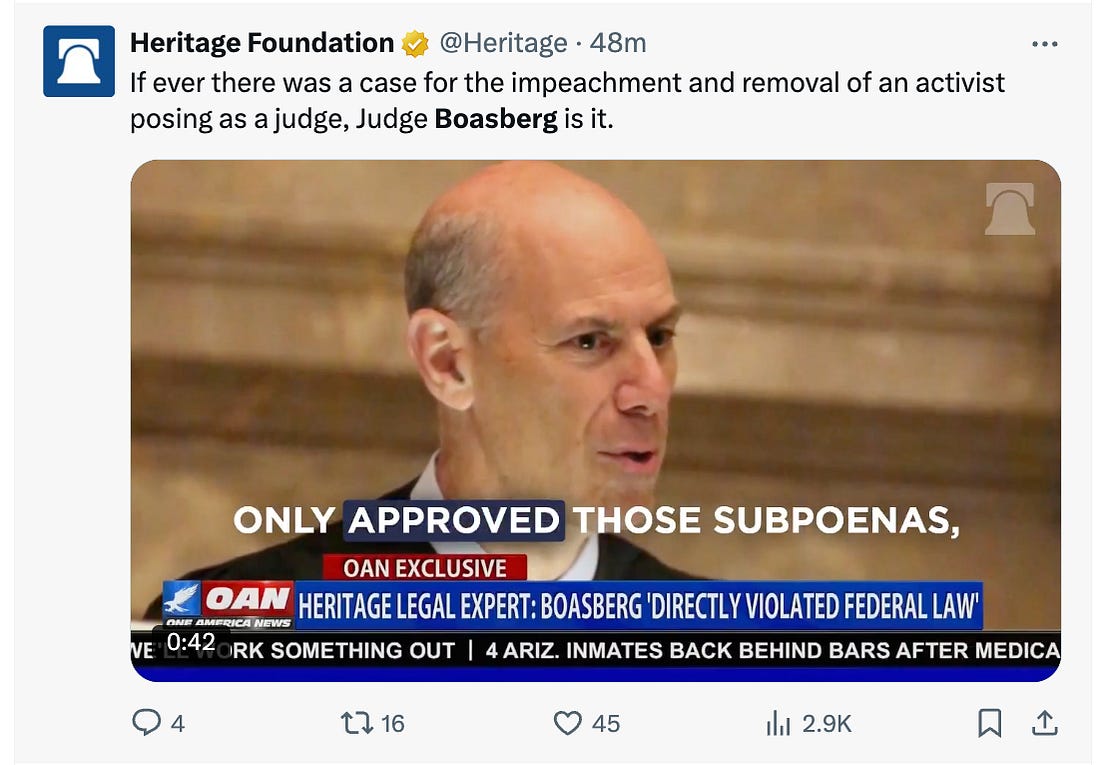
But those contempt proceedings were put on hold for seven months while the Court of Appeals for the District of Columbia considered the matter. After an original panel decision finding Judge Boasberg lacked the ability to initiate contempt was abruptly reversed, the full court declined to rehear the matter en banc. The court, rather obliquely, wrote, “no member of this court has taken the position that the panel’s disposition stands in the way of the district court proceeding just as it intended to do.” Judge Boasberg concluded last Wednesday that meant he was free to move forward on contempt, starting with a factual inquiry into what happened so he can determine whether it’s appropriate to make a criminal referral. That means witnesses, testifying under oath, to determine who issued the directive to defy the Judge’s order that prohibited sending the men to El Salvador. The Judge seemed inclined to make up for lost time: “Justice requires me to move promptly.” Judge Boasberg indicated he would issue an order advising the parties about how he wants to proceed on Monday. It’s likely he will require testimony from former DOJ lawyer turned whistleblower Erez Reuveni and DOJ lawyer Drew Ensign. DOJ’s likely response will be to raise all sorts of objections and re-challenge the legitimacy of the proceedings. The response from administration allies didn’t take long and predictably continued the president’s string of attacks on federal judges. Less than an hour after Judge Boasberg made his intentions clear, the Heritage Foundation tweeted that judges whose decisions it doesn’t like should be impeached.
Stay tuned: We’ll hear from the Lee Gelernt, the ACLU lawyer representing the deported men, in a Substack Live on Monday at 4:15 p.m. EST about his plans to go back before Judge Boasberg and present new evidence from the whistleblower that the government deliberately violated the court’s order not to hand over the Venezuelan men to El Salvador. If you have any questions you want me to ask Lee, please leave them in the comments. This case is critically important because it goes to the heart of this administration’s efforts to supplant the rule of law with the whims of a would-be dictator. Trump thought he could do away with due process. The courts and a few brave lawyers are trying to stand in his way. We’ll keep a close watch. There are other important issues we’ll be following this week as well.
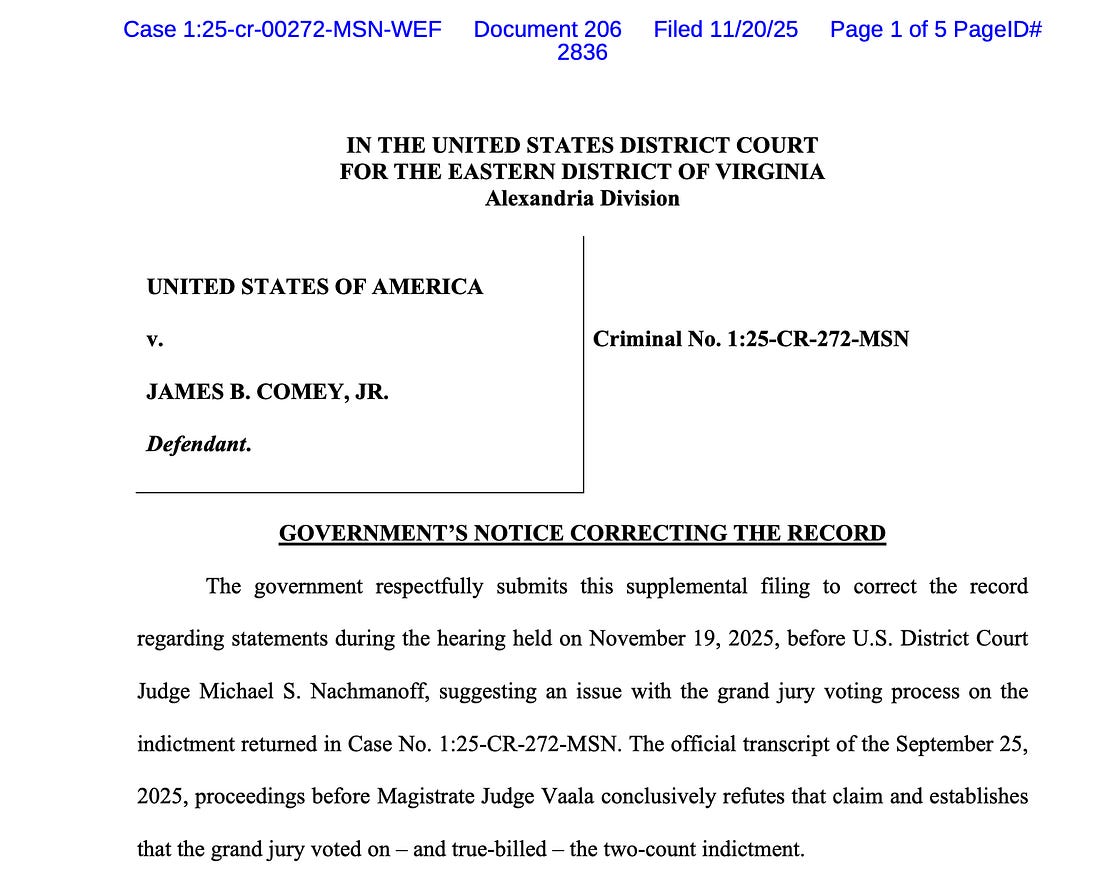
Late last week, MS NOW reported that a federal grand jury in Maryland is investigating whether Trump allies Bill Pulte and Ed Martin improperly assigned unauthorized people who were not DOJ employees to develop mortgage fraud claims against Trump critics. Pulte is the Trump-appointed Director of the Federal Housing Finance Agency (FHFA) and chairman of Fannie Mae and Freddie Mac, who seemed to publicly tip his hand about his involvement in cases of a sort normally referred to DOJ for investigation without comment, like the one against Fed Governor Lisa Cook and the case against New York Attorney General Letitia James. As we’ve discussed previously, there was also a referral against California Senator Adam Schiff to the U.S. Attorney’s Office in Maryland, which is still led by a career prosecutor. That seems to have resulted in an investigation against the investigators if the reporting is correct. Then there is the Comey case, where it appears that the Justice Department may have been less than forthcoming to the Court in the proceedings over Trump’s designated hitter for U.S. Attorney, Lindsey Halligan, and possible violations of the law during grand jury proceedings. The government changed its story after initially conceding that the full grand jury had not been shown and voted on an amended indictment (after they rejected one of the counts originally presented). The government’s unusual “Notice Correcting The Record” doesn’t seem to have done that. It leaned heavily on the grand jury foreman’s response to the magistrate judge’s question about whether “he” had voted on the two-count indictment the government presented. He responded, “Yes.” The government offered this as proof that the entire grand jury had voted on that version of the indictment, despite their earlier concession that they had not.
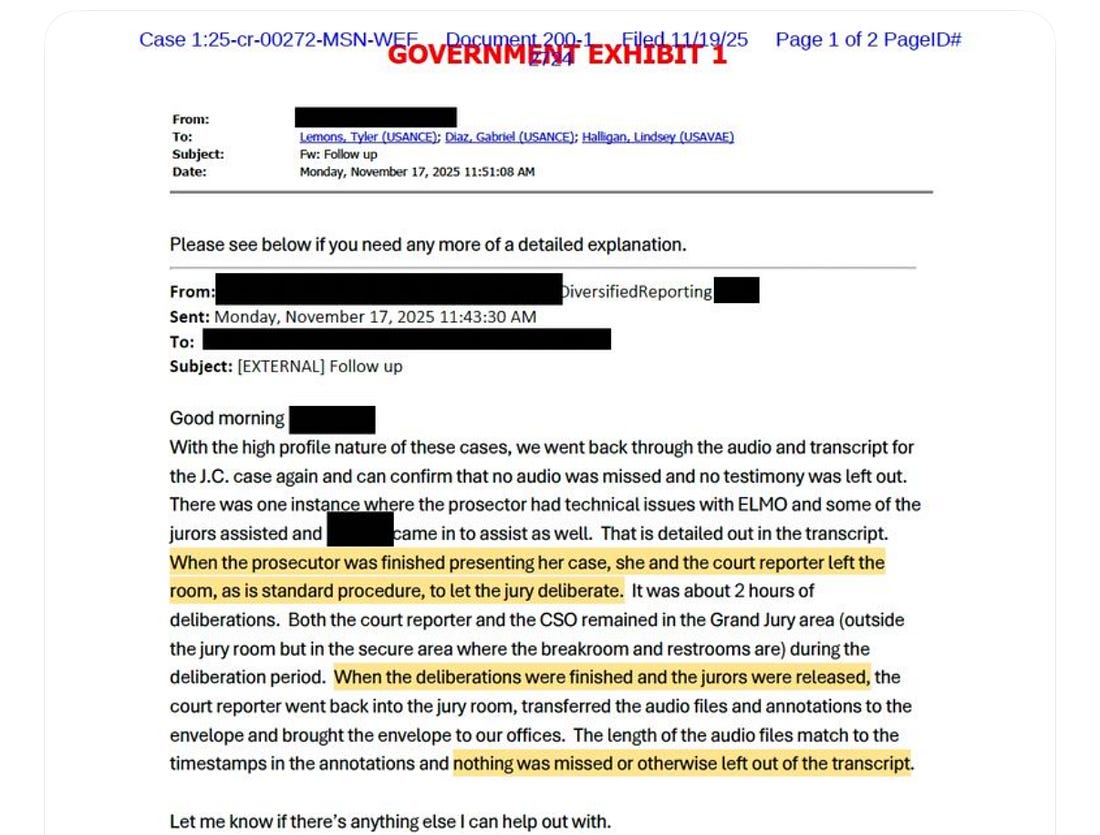
That “new position” seems to be directly in contradiction to the record of the grand jury’s work, with the court reporter’s minutes, which were submitted by the government, showing that the grand jury was dismissed when they concluded their deliberations, which was before the government created the new indictment that they ultimately submitted. It’s unlikely that the court is going to take this well.
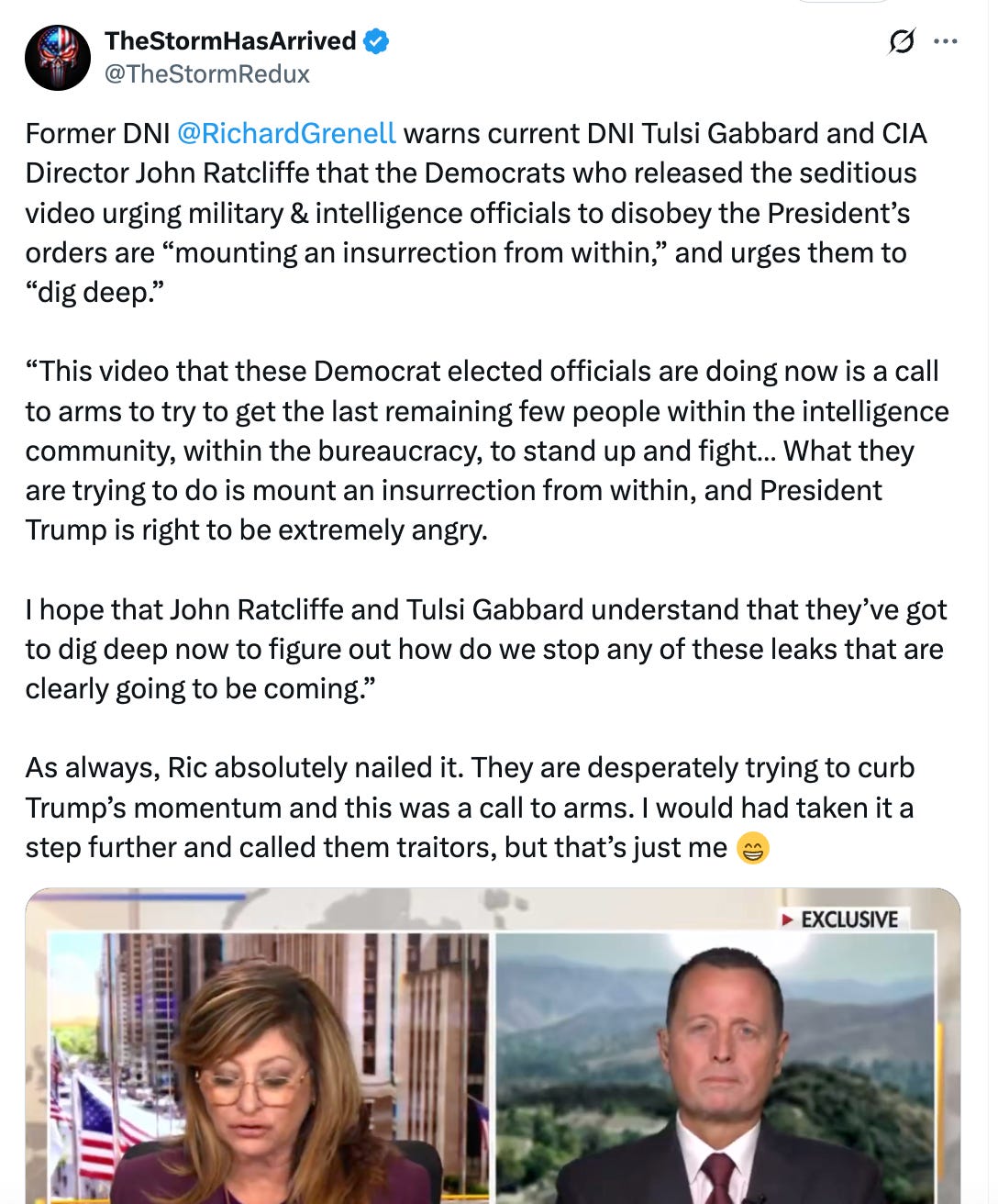
And we haven’t heard the last of Trump’s threats to congressional Democrats, which we discussed here, even after he tried to walk them back on Friday, saying he was “not threatening death.” Others in the president’s camp carried those threats forward.
The Vice President weighed in with this tweet, “If the president hasn’t issued illegal orders, them (sic) members of Congress telling the military to defy the president is by definition illegal.” But that doesn’t make any sense. Anyone with a Yale Law School education should be in a position to understand that a) members of the military have an obligation not to follow an illegal order, b) that reminding them of that obligation neither violates the law nor instructs them to defy a legal order, and c) that using those false statements to claim that members of Congress who made the video they object to so strongly is not “by definition” illegal, and certainly not for members of Congress who have speech and debate clause privilege even if there had been something incorrect about their statements. What is the administration’s point here? Do they contest that the military and the intelligence community should pursue concerns through their chain of command to prevent compliance with illegal orders? Do they want those public servants to believe they must follow any orders, no matter what? Because that is not the law. But it does take us full circle to where we started, a federal judge in the District of Columbia who will begin to take evidence, as soon as this week, on whether the administration flagrantly violated a court order. It’s another week where the administration will try to place itself above the rule of law and it will be our job to continue to educate ourselves and push back. If you appreciate this kind of ongoing coverage and analysis of key legal proceedings, and you aren’t already a Civil Discourse subscriber, I hope you’ll consider joining our community. Your subscriptions support this work and make it possible. We’re in this together, Joyce You're currently a free subscriber to Civil Discourse with Joyce Vance . For the full experience, upgrade your subscription.
|
Sunday, November 23, 2025
The Week Ahead







Subscribe to:
Post Comments (Atom)
New Valley Fever Treatment, Monsoon Flooding, and Wildlife Overpass
An experimental antifungal pill called olorofim showed promise for patients with severe valley fever , according to an Arizona-led study p...

-
On Monday, Leon County Circuit Judge Angela Dempsey rejected Bear Warriors United's request for a temporary injunction to halt the s...
-
Police say information from a Reddit tipster who had a strange encounter with another man on a sidewalk outside Brown University provi...
-
The Trump administration has launched a new federal initiative called the U.S. Tech Force, aimed at hiring about 1,000 engineers and t...


No comments:
Post a Comment