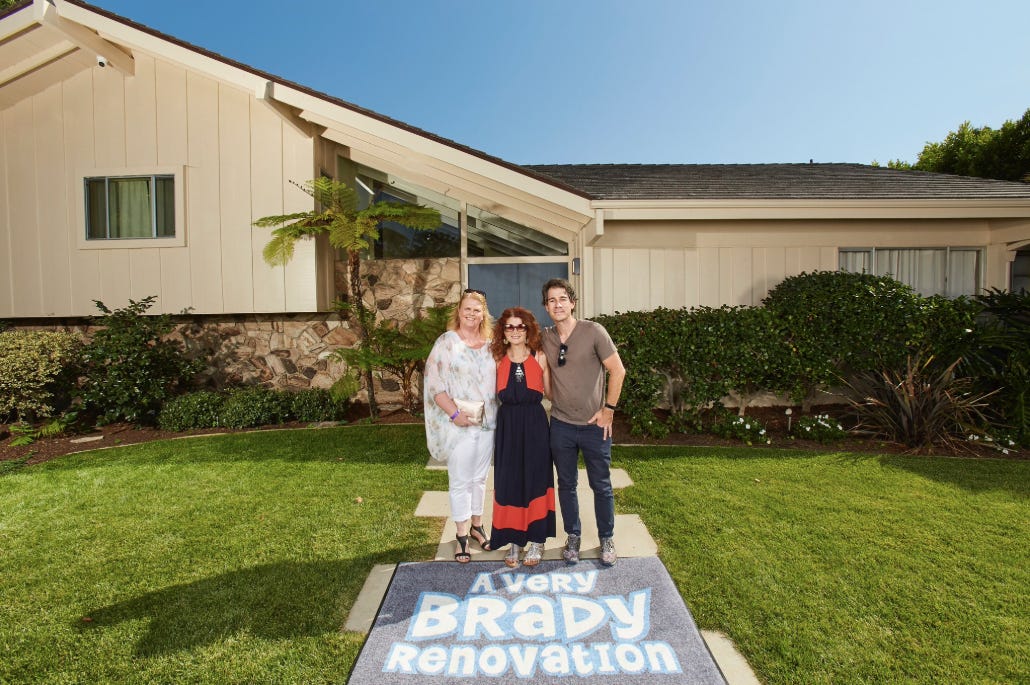
Twelve years ago, my mom and I drove by our old house, a 1961 suburban ranch my parents bought for $45,000 in 1971 when she was pregnant with me. We parked across the street and I stared at the new curved driveway that decimated the huge magnolia tree in the front yard. “Let’s go inside,” my mom said. She suggested it as a fun lark, but that’s not what it was for me. The only recurring dreams I’d ever had were of revisiting this house. “No,” I told her. We can’t just ring their doorbell, complete strangers, in the middle of the day… She got out of the car and started walking toward the front door. Eventually, I followed her, ten feet behind. The woman who owned the house remembered my mom, having bought the place from her nearly 20 years earlier. She offered us a tour. My room – which had been a whole world consisting of a bed, a desk, shelves of CDs, a bookshelf filled with tomes of presidential facts, an armoire packed with glass animals, and a black-light lamp that I honestly believed my girlfriend thought was cool – now fit nothing but a queen-sized bed with pink Playboy sheets. An etched glass panel with a dolphin on it now separated the dining room from the den, where I would sit and watch The Brady Bunch after school. I didn’t want to live on Gilligan’s Island or get into a tour bus with The Partridge Family, but I did want to be a Brady. I had great parents and a nice childhood, but I was a socially anxious kid who was an only child until I was nearly eight. I wanted to join the California-sunny Bradys, who were never lonely. Back in the car, my mom asked me how it felt to see the house. “Weird,” I kept repeating, unable to explain the emotions I had. Six years ago, I was able to finally explain them. Because I got a tour of The Brady Bunch house. For the first time ever, the public can tour the Brady House. On November 7-9, Alison Martino of Vintage L.A. Facebook page, and dauhter of the singer who played Johnny Fontane in The Godfather, is selling tours to benefit an animal organization. Part of the reason the public hasn’t been able to see the house before is that it’s not that new. Smarter children than I was surely noticed that for reasons that can only be laziness, the house that Brady Bunch creator Sherwood Schwartz chose for the exterior shots he showed upon return from every commercial was a ranch. Yet the inside of the house (the scenes were shot on a set at Paramount Studios) had stairs. And a groovy attic. This is even dumber when you consider that Schwartz made Mr. Brady an architect. There he was, scribbling designs in his home office every day and not noticing that his own stairs couldn’t exist. But the ranch house from the exteriors was very real. And very much someone’s house in Studio City, a town in the San Fernando Valley in Los Angeles. In 2018, the woman who owned the house died. She had lived there for 45 years. Her 1959 split-level ranch at 11222 Dilling Street (built just two years before my childhood home) was, at least according to the realtors who were selling the place, the second most photographed home in the country, after the White House. One day in 1998, Christopher Knight, the actor who played Peter Brady, decided to drive by the house — something he had never done before. He saw the owner walk out in a bathrobe, holding poster board in front of her face to avoid tourists. The house was listed at $1.885 million. NSYNC’s Lance Bass overbid, hoping to keep the house from being torn down, because the value of the large plot exceeded the value of the small house. Bass and his husband flip homes, and they planned to create the interior of the Brady home inside and rent it out for Brady-theme events. At the last second, he got outbid. Way outbid. For $3.5 million. HGTV had the same renovation idea as Bass, only their plan was to film it and create a four-episode series called A Very Brady Renovation. The network executives smartly figured they could lure 48-year-old Brady fans like me and transform us into HGTV-heads due to our innate middle-age interest in home renovation. Of course I was going to watch. I was going to watch anything Brady to nostalgically relive my alternative childhood. The Brady Bunch has been nostalgia my entire life. I only saw it in syndication, and it presented an idealized, squeaky-clean, lily-white, post-war past I never knew. A past that didn’t even exist when it first aired in primetime; the week The Brady Bunch premiered was the same week Abbey Road came out. As I got older, I consumed the nostalgia of the nostalgia, watching The Brady Brides, A Very Brady Christmas, The Bradys, and two Brady Bunch movies. The movies were explicitly about nostalgia, placing naïve Bradys stuck in the 1970s in tough 1990s Los Angeles. The Bradys, to me, were always about the past.
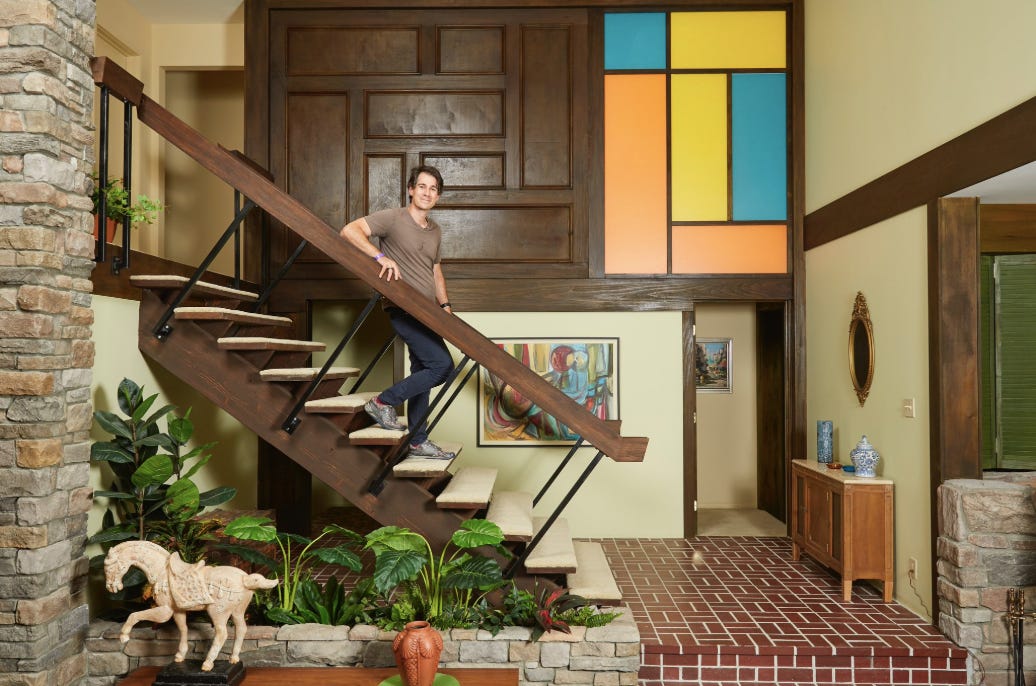
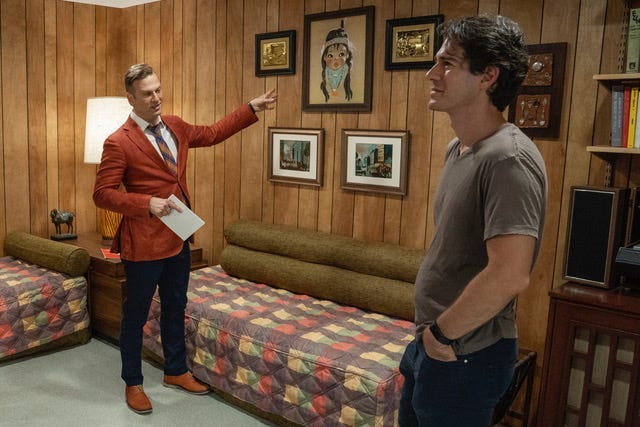
My tour guide was Brian Balthazar, a sometime host and producer at HGTV. Like me, he was 48 and like me, he watched The Brady Bunch from his suburban home at 4:30 pm on channel 5 out of New York City. He had seen the finished house the day before. “I didn’t think I would get super emotional,” he said. But he did. “I was not in a communicative family. Particularly my father. I thought, ‘Wow that’s how a family is supposed to communicate.’ Seeing the house made something I really connected to as a child seem real. It was an arrival.” This is not how I felt. He opened the dark wood doors and everything was perfect. Not just the layout — they basically tore it down, put on a second floor, and rebuilt a new house inside — but every detail. There were orange, plastic grapes on the table that the producers got from a Brady fan who happened to own them. The horse statue was found in a Paramount storage facility and repaired with a 3D printer. When you stand behind a rope looking into the bedroom of an 18th-century chateau, everything looks 300 years old. The Brady house didn’t look 50 years old. It looked new. Because it was. Time hadn’t been frozen. It was reversed. I walked around with my hands behind my back, like I did when I was given a late-night tour of Mark Twain’s Connecticut house. Which was stupid because nothing was irreplaceable. None of it was even here a month ago. Whatever I broke would instantly reappear via eBay. The first thing I felt, obviously, was old, due to the fact that I’m old. My childhood was longer ago than I thought: Rotary phones, tiny television sets, small bedrooms, Carol Brady’s negligees.
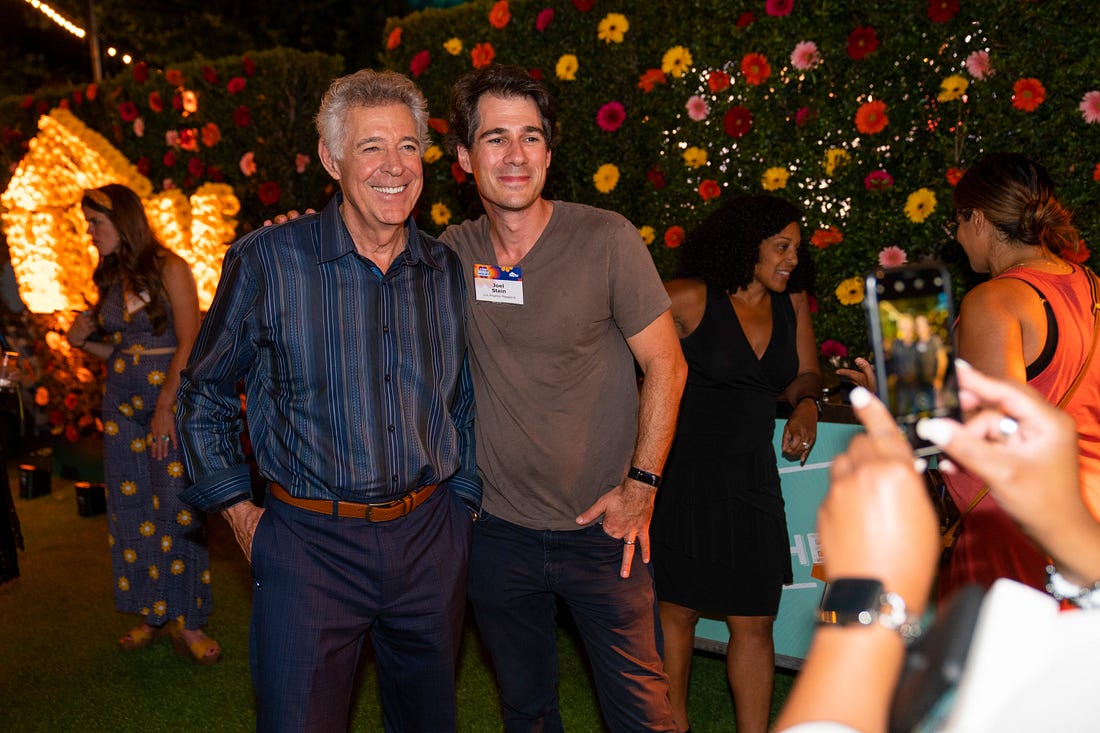
As I walked into each room, my anxiety-filled child brain started to stress out over the Bradys’ problems as though they were my own. Of course you’re going to play ball in the house even though you’re not supposed to, because days as a kid are long and there are only three things to do and one is to play ball in the house. I played ball in the house. And breaking my mom’s favorite vase would have been disastrous. Peter had the same existential crisis I did, fearing he had no personality. Bobby was named a safety patrol, just like I was, and the power went to his head, as someone said it had to mine. Although I did not start a band and call myself Johnny Bravo, I did act like an asshole as a teenager. The 1970s were sadder than I remembered. I stared at the sad clown paintings in the boys’ tiny bedroom, at first wondering why boys would want paintings of sad clowns and then wondering why my parents had a painting of a sad clown. The living room had a piece of art, presumably made by the kids, which was a framed wad of clay with keys pressed into it. This was somehow sadder than a clown painting. This family was rich enough to have a live-in housekeeper. The dad was an architect. This was their dream house. And they shoved three kids to a room? He attached stones to drywall in the entrance to make it look like a faux castle? The backyard was Astroturf and had a small wooden stage, which seemed like the kind of thing stage parents in the Valley build to force their kids to perform. And it was so plain. This was a family so white that, even though they lived in Southern California, they hired a white maid. This was a monument to a sad time. A time when stagflation was so bad that a man hit on Alice by giving her free meat. Barry Williams, the actor who played Greg, went to the Brady house the same day I had the tour. I asked him if he felt melancholy when he saw the house. This is not how he felt. “This was my turn at the nostalgia. At dissolving into my teenage years. It was like jumping into my teenage home movies,” he said. And it was joyous. Which makes sense, since when he was a teenager he was Johnny Bravo. I asked if wallowing in nostalgia was a way of avoiding the complications of the present. If banishing Barry Williams to a pretend saccharine childhood was a way for the United States to create a mythical past it will destroy itself to attain. “I’ve got to paddle the canoe in the direction the river is flowing,” he said. “I’m fine with it. I’m on the surfboard and dropping in on a great bottom turn for a great ride with a good luck tiki around my neck.” You should see the house. Nothing about it is real. But it’s more important than many monuments that are. Thank you for paying to read my column. Wait: This is for the people who didn’t pay? Then I owe you nothing. You are the ones contributing to the end of my career. If you want to pay an exorbitant amount of money to get one extra post a month – which often won’t even be that good – upgrade to a paid subscription here:
|
Monday, September 29, 2025
Now You, Too, Can Tour the Brady House






Subscribe to:
Post Comments (Atom)
Backlog January
Incremental improvement, a protest sign I can't stop thinking about, and newsletter changes for 2026 ͏ ͏ ͏ ͏ ͏ ...
-
17 Personal Finance Concepts – #5 Home Ownershippwsadmin, 31 Oct 02:36 AM If you find value in these articles, please share them with your ...


No comments:
Post a Comment