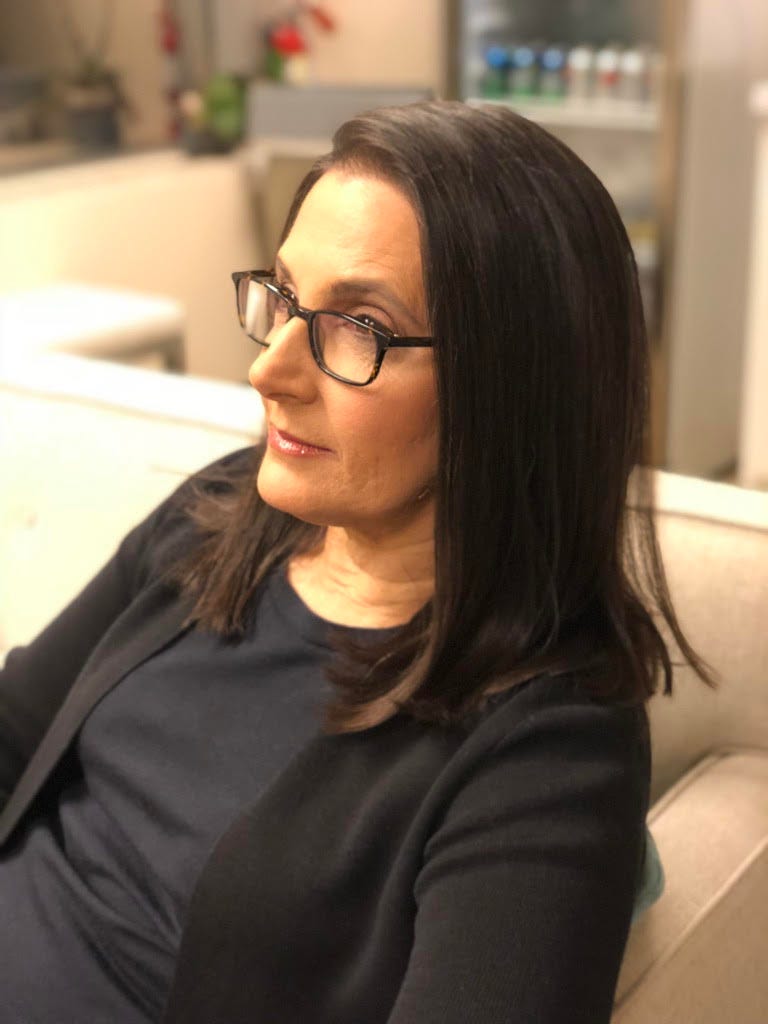
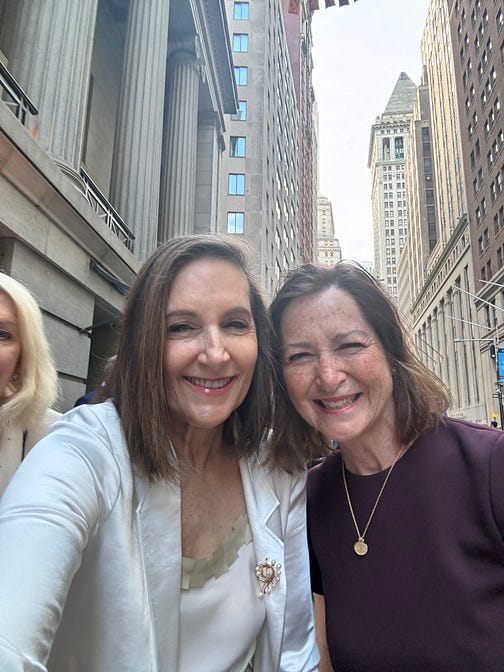
After my former U.S. Attorney colleague, current podcast host, and dear friend Barb McQuade came out with a book on disinformation, it was a no-brainer to have her join us for Five Questions. The book is "Attack from Within: How Disinformation Is Sabotaging America," and I know many of you read it when it was first published. Barb is out with a paperback version this week and it has some important updates. In an era where AI runs deep, her voice is more important than ever. I’m rerunning the earlier piece with no paywall and adding on Barb’s comments about her most recent, updated research in this area.
Barb explains it like this: President Donald Trump’s second term in office has highlighted that disinformation continues to pose a significant threat to our democracy and the rule of law. We have seen how the president uses tactics like fear-mongering and scapegoating to demonize immigrants and the transgender community. He has gaslighted America by referring to January 6 as a “day of love” and pardoning more than 1500 defendants, including those who assaulted police officers. Trump and his attorney general have made false allegations of “weaponization” by prior DOJ leadership to actually weaponize law enforcement against them, under the guise of holding them “accountable.” Add to this mix the growing sophistication of AI deepfakes, and disinformation is more dangerous than ever before You can get the new paperback edition of her book here. This is our previous interview: Joyce: Remind those of us for whom it has been a while since we read it, what are the ideas you present in your book, and what is the basic argument you make in it? And by the way, for those who didn’t read it when it was released last year, it will be out in paperback in June! Barb: I have been fascinated by information warfare since my days as a national security prosecutor. In my book, I explain the tactics, why they work, the role of technology, and how they are harming democracy, national security, and the rule of law. One aspect of disinformation that I think is new is that people who know that information is false nonetheless go along with the con because they care more about winning than about facts. They are, in effect, choosing tribe over truth. Joyce: You wrote your book during the Biden presidency, when many people believed Donald Trump was in the rearview mirror and wouldn’t return to our politics. Has his reelection caused you to reevaluate your previous observations about how disinformation is being used to fracture American society? In other words, is it the same old strategy, but more of it, or are there new nuances to how it’s operating this time? Barb: One thing that has struck me in recent months is that Trump and his allies have been working for 10 years now on the national stage to divide and conquer. They have used the debater's trick of the either/or fallacy, causing people to believe that there are only two sides in America, us versus them, red versus blue, good versus evil. They have trafficked in grievance and victimhood to convince an alarmingly large number of people that institutions that were once revered, like the FBI, are actually the "deep state," a cabal of elites who want to advance their own "globalist" agenda at the expense of ordinary Americans. They are turning people against science, research, universities, judges, federal workers, the free press, and anyone else who might get in their way as they dismantle government institutions. Joyce: Bill, who emailed me earlier this week, included a video that had persuaded his brother DOGE was finding fraud and waste in government, which consisted largely of claims being made in a cabinet meeting. How should we go about assessing whether something like this contains disinformation? Barb: Whenever trying to assess the accuracy of claims, there are a number of steps we can take, just as juries do in court, where truth still matters. First, is the source credible? Does the source have a history of lying? Is the source biased or motivated to favor a certain conclusion? Are there facts that can corroborate what they are telling us? Second, is there evidence to support the claim, or are we being asked just to take someone's word for something? Third, are there other sources that can confirm the claim? Are there differing accounts about the claim from other sources? Fourth, does the claim comport with our lived experiences and common sense? I think if you view the video in this light, a reasonable person would have some doubts. Joyce: It can be far easier for us to find disinformation than to convince other people that they are being exposed to it. What strategies do you think work best in those difficult conversations? Barb: Conversations with friends and family are the most important way to counter disinformation, but we need to be patient and respectful. No one is going to change their minds if all we do is tell them how stupid they are. I find a good approach is to show genuine curiosity. We have to be willing to change our own minds before we can hope to change others. Asking questions respectfully, asking about the source, asking about the evidence for a claim can help the other person see the weakness in the claim. Don't expect to change someone's mind in a single conversation. They may walk away without telling you they have changed their mind, but you may have planted a seed of doubt that can have long-term value in helping them to recognize and reject disinformation. Joyce: We are obviously in a difficult moment in our history, and a big part of that is this disinformation that we are being flooded with. Are you optimistic about what lies ahead and if so, why? Barb: The thing that gives me optimism is the way Trump backs down when he is confronted with resistance. One of his tactics is to exhaust us with conflicting claims. One day he says the president of Ukraine is a dictator and the next he denies saying that. Steve Bannon referred to this tactic as flooding the zone. This causes voters to become cynical and to disengage from politics altogether, a dangerous development in a democracy. But when citizens push back against Trump's ill-advised initiatives, whether it is the imposition of tariffs or erasing Jackie Robinson from the history of the Department of Defense, we have seen him change his mind. We need to remember the power we have as a democracy to shape our own future, and not to cower before the lies of a bully. I concluded the original piece with a discussion about how we combat disinformation when it skews the views of people we care about. That advice stays the same.
We’re in this together, Joyce You're currently a free subscriber to Civil Discourse with Joyce Vance . For the full experience, upgrade your subscription.
|
Wednesday, June 4, 2025
Barb McQuade With More On Disinformation






Subscribe to:
Post Comments (Atom)
want a $3M offer?
think BEYOND the online course ͏ ͏ ͏ ͏ ͏ ͏ ͏ ͏ ͏ ͏ ͏ ͏ ͏ ͏ ͏ ͏ ͏ ͏ ͏ ͏ ͏ ͏ ͏ ͏ ͏ ͏ ͏ ͏ ͏ ͏ ͏ ͏ ͏ ͏ ͏ ͏ ͏ ͏ ͏ ͏ ͏ ͏ ͏ ͏ ͏ ͏ ͏ ͏ ͏ ͏ ͏ ͏ ͏...
No comments:
Post a Comment