The four-day workweek was successful in global trials, but most companies aren't racing to implement it. Still, the average hybrid worker is starting their weekend an hour early, reports the Wall Street Journal. Fridays have the least-congested a.m. rush hour and most-congested spas and salons. Interestingly, managers aren't sweating it (perhaps because they're sweating in the spa?). Productivity is up, and many employees seem more refreshed with a de facto compressed work schedule. Albert CEO Luke Liu even told WSJ that officially making Friday a half day increased staff retention by 20%, which "gives back a lot of time to our managers." |
Employee-owned companies: Are they the ultimate shareholders? Stress interventions: Best practices to keep your workplace chill Wetzel's Pretzels: Co-founder sold his Harley to fund doughy dream |
|
|
Are Employee-Owned Companies Staffed By the Ultimate Shareholders? |
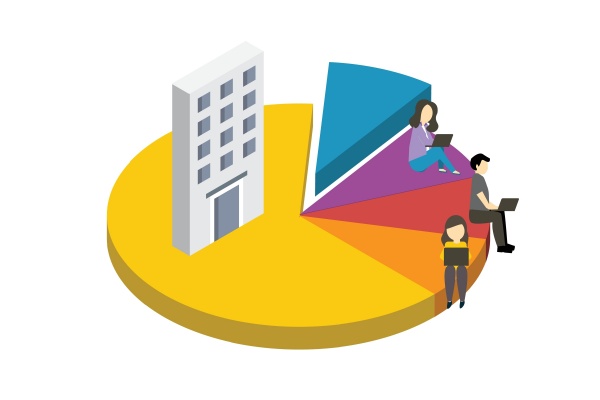
It's normal for cash-strapped startups to offer equity compensation. Plenty of major corporations allow workers to purchase shares at a discount; approximately 15 million Americans participate in an employee stock ownership plan (ESOP), which Eastman Kodak pioneered in 1919. So, what's unusual about an entirely employee-owned company (EOC)? Via this model, employees share in the financial stakes and make decisions democratically, which might sound a little like "workers of the world, unite!" except that it's more like a business partnership with a lot of partners (and a lot of shareholder votes). Publix Super Markets is the most famous example, and before Bob's Red Mill founder Bob Moore died last month, he transferred ownership of his crunchy food empire to his loyal staff. Being more invested (literally) in your company's success might sound great on paper. But how does this model tend to work out? Employees at EOCs have, on average, more than double the retirement savings of non-EOC counterparts, according to the National Center for Employee Ownership. During COVID, companies with majority employee ownership retained more staff by a 4-to-1 margin, a Rutgers study found. Despite the popularity of stock discount programs at major employers, full co-ops remain slow to catch on in the U.S., with only about 6,000 workers at 600 firms. So, it's not exactly a revolution … but as the Bureau of Labor Statistics itself says, employee ownership — even if simply the humble ESOP — is "a quiet yet enduring aspect of capitalism" that "increases both firm and employment stability." |
|
|
Manage your team and pay your employees with Gusto |
When it comes to taking care of your employees, you should be doing it with gusto. And thanks to Gusto's HR software, you can! It centralizes helpful features, allowing you to manage your payroll and administer employee benefits in one place, as well as track professional development progress and extend your employees the growth opportunities they want. Look to the future, too, with hiring and onboarding tools that make it easy to select the right candidate and grow your team with purpose. See the difference that a comprehensive HR management software can make in your business, when you sign up for Gusto today. |
|
|
Stress Interventions to Keep Your Workplace Chill |
Dr. Steven Rogelberg is a chancellor's professor at UNC Charlotte, former president of the Society for Industrial and Organizational Psychology, and author of Glad We Met: The Art and Science of 1:1 Meetings. Although stress is not necessarily a bad thing, too much of it can be harmful to productivity, teamwork, health, and well-being. As a result, organizations often consider stress management interventions. A number of approaches are helpful, according to dozens of research studies. These include primary interventions and secondary interventions: - Primary interventions concentrate on making changes in the workplace itself to foster a less stressful environment, such as job redesign to enhance employee control, improve work processes, and foster peer support.
- Secondary interventions are designed to teach individuals how to soothe their thoughts and recognize tension (e.g., meditation, deep breathing, and progressive muscle relaxation). Although these approaches typically don't eliminate the root cause of workplace stress, they assist individuals in maintaining a calmer and more focused demeanor when confronted with it.
But what works best? Stress at work is most effectively addressed through cognitive-behavioral interventions, which guide employees to reassess their perspectives on challenging situations. They acquire the ability to identify and understand how negative and distorted thoughts contribute to stress. They also learn to substitute pessimistic thoughts with more realistic or optimistic ones, potentially leading to problem-solving rather than merely coping passively. The outcome is a reduction in stress levels. Such interventions are typically accomplished through training programs carried out by a professional. This does take time and expense to carry out, but it works and should be considered by managers and organizations in an effort to keep stress levels manageable and healthy for their people. |
|
|
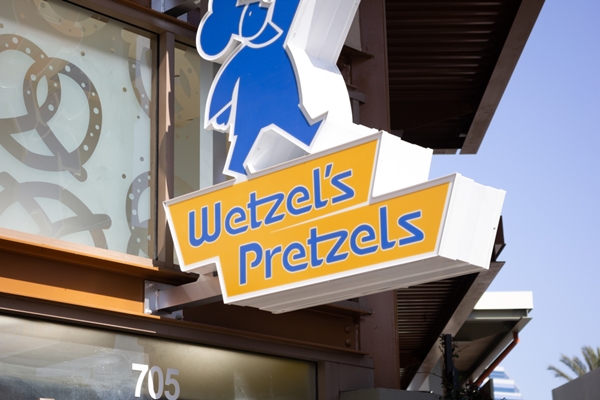
That old trope about writing a great idea on a napkin if you have one? It totally happened to Bill Phelps and Rick Wetzel in 1994. The idea was "be the Ben & Jerry's of the pretzel business," Phelps reminisced to CNBC. At the time of that napkin doodling, the duo were marketing execs at Nestle. They both ditched their jobs; Wetzel sold his Harley to help fund their startup, and Phelps offered up his garage as a test kitchen, where they'd invite mall owners to come taste test the innovative, junk-food-inspired creations. Like their one-time slogan said, "Moderation has a time and place. This isn't it." Not with all these salty, buttery carbs! By 1996, things came full circle (full pretzel?) when Nestle offered Phelps and Wetzel a partnership, allowing them to expand and franchise. In 2022, Wetzel's Pretzels sold to Canada's MTY Food Group for $207 million. With 340 locations and 21 million customers annually, Wetzel's Pretzels has plenty of butter-soaked napkins awaiting your next big business idea. |
|
|
Written by Dan Ketchum. Comic by John McNamee. |
|
| 200 5th Ave., 2nd Floor Waltham, Massachusetts 02451 ©️ 2023 business.com. All Rights Reserved |
| |
|
|








No comments:
Post a Comment