In America The Law Is King - My Conversation With Michael Waldman Of The Brennan CenterThis is the first in a series of conversations we'll be holding about protecting our elections in 2026 and the broader fight to preserve the rule of law and our Constitutional order
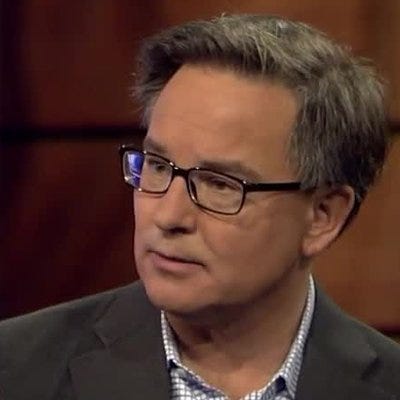
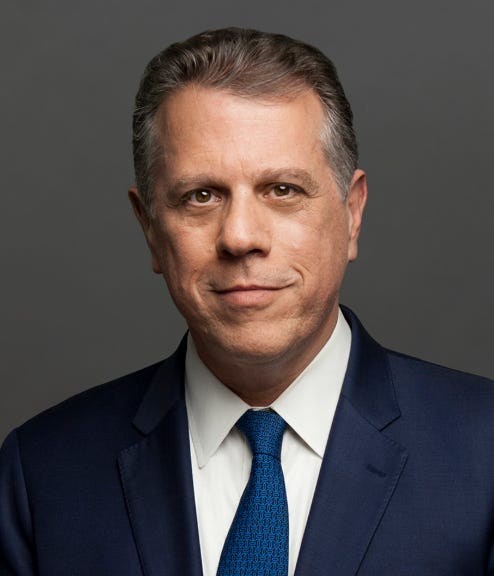
Greetings all. Sending along a new conversation with Michael Waldman, the President and CEO of the Brennan Center for Justice at NYU School of Law. The Brennan Center has become one of most important institutions in the broader pro-democracy movement here in the United States, and I’m pleased that Michael, an old friend, was able to stop by and share his insights with us. Here’s a bit more about the Brennan Center from its website:
While we cover a lot of ground in our discussion the part that will be of most interest to many in our community is Michael’s response to my questions about how we can ensure that we have free and fair elections this November. Here is some of what he said:
And…..
This is an important and timely conversation with one of our moment’s great warriors in the fight to preserve rule of rule and our Constitutional order. Get it when you can and keep working hard all - Simon Biography - Michael WaldmanMichael Waldman is president and CEO of the Brennan Center for Justice at NYU School of Law. A nonpartisan law and policy institute that focuses on improving systems of democracy and justice, the Brennan Center is a leading national voice on voting rights, money in politics, criminal justice reform, and constitutional law. Waldman, a constitutional lawyer and writer who is an expert on the presidency and American democracy, has led the center since 2005. He was a member of the Presidential Commission on the Supreme Court of the United States in 2021. Waldman was director of speechwriting for President Bill Clinton from 1995 to 1999, serving as assistant to the president. He was responsible for writing or editing nearly two thousand speeches, including four State of the Union and two inaugural addresses. He was special assistant to the president for policy coordination from 1993 to 1995. Waldman is the author of The Supermajority: How the Supreme Court Divided America (Simon & Schuster, 2023). The Supreme Court’s 2022–2023 term, he argues, was the most consequential in decades, with decisions such as Dobbs, Bruen, and West Virginia v. EPA reshaping American politics. Waldman explains how the Court has gained so much power over Americans’ lives with so little connection to the public will. He shows the supermajority’s dangerous reliance on a newfound, radical “originalism.” He traces the similarities between this Court and its most activist and controversial predecessors. And he offers a path forward. Kirkus Reviews called it “a damning account of a Supreme Court gone wildly activist in shredding the Constitution.” Jane Mayer of the New Yorker called The Supermajority “nothing less than a public service.”
Transcript - Simon Rosenberg And Michael Waldman (2/11/26)Simon Rosenberg: Michael Waldman: Simon Rosenberg: Michael Waldman: Simon Rosenberg: Michael Waldman: Along comes, of course, Donald Trump, who flagrantly and with abandon, chooses the illegal route when he has legal routes available to him. I mean, the tariffs is just one example. There are many lawful ways a president can impose tariffs if they think it's a good idea. He chose the illegal route, which is claiming it's a national emergency and that he has unilateral power to act. One of the real points of hope this past year has been the extent to which the courts, and especially the trial courts, judges appointed by Democrats and by Republicans, have stood up. There have been something like 160 separate rulings, probably more now, blocking or blunting or in some way repudiating the illegal power grabs from the administration. The challenge, as you know, is the higher up in the federal court system you get, the Supreme Court being the most obvious example, the more ideological it is, in a lot of ways, the more partisan it is, and we're going to see whether they are willing to stand up too. But the rule of law, and our shared commitment to it, is actually one of the guardrails that still is standing strong. Simon Rosenberg: Michael Waldman: Simon Rosenberg: Michael Waldman: Simon Rosenberg: Michael Waldman: Now, of course, what's new is for the first time in American history… the federal government itself and the president is waging a concerted campaign to undermine the elections. That's just never happened before. We know what Trump is trying to do. He has his plan. We have our plan. We have ways to push back and stop the things. And part of what we need to do is not get overly alarmed and scared by things that just aren't going to happen. Simon Rosenberg: Michael Waldman: Simon Rosenberg: Michael Waldman: Simon Rosenberg: Michael Waldman: And that's going to be a theme over and over again. We have a federalist system, but presidents are not really part of it. And so he's tried to use these executive orders. They're also pushing Congress to pass this legislation that you know about called the SAVE Act. It's actually coming up for a vote, you know, as we're speaking this week. Again, it passed the House of Representatives a year ago, and now it's being brought up in a slightly different form this time. That would require people to produce a passport or a birth certificate to register and thus to vote. And the Brennan Center's research shows that at least 21 million Americans don't have ready access to those documents. And that doesn't even count married women who changed their name and it might be different than on the birth certificate, or their voter rolls and all that other kind of stuff. Again, remember, the Senate blocked the SAVE Act, and Senator Schumer has said once again, it is dead on arrival and it's going to take work. But again, we're urging people to speak out and let their lawmakers know they need to block the SAVE Act again. It would be the most egregious restriction on voting we've ever had from Congress in our country's history. Usually Congress, when it acts, it acts to protect voting rights around the country… so there's all of that. There are threats to election officials that we're seeing as a real risk. These are unsung heroes, as you know, all over the country. These are not glamour jobs. They're facing all kinds of threats uh and and intimidation and quite honestly the use of the justice department in a bunch of different ways including the the unconscionable raid on the Fulton County, Atlanta, Georgia election office, and we now know that the basis for it was a collection of debunked conspiracy theories, which some magistrate judge thought was a good idea to issue a warrant. I think that's as much to intimidate election officials in other places, too, to say, if you run the election and we don't like how it comes out, we will come after you with badges and guns. So there's things to do there. We're doing everything at the Brennan Center from trainings for lawyers for state governments and counties all over the country on how to deal with demands from the federal government for information that might or might not be appropriate. Law enforcement actually can play an important role here. There's a group that we created along with the R Street Institute, which is a conservative group, and others called the Committee for Safe and Secure Elections. It's half law enforcement and half election officials because, you know, law enforcement, even a lot of them are politically very conservative, but they don't want disorder. And so on Election Day in 2024, beat cops in all fifty states were carrying pocket guides. One hundred thousand were printed — state by state, saying how to protect elections, how how to protect the polls and to stop intimidation. It's an interesting thing — if you think about it, so much of the conspiracy theories, but so much of the debate then was around vote-by-mail, which was expanded so greatly because of COVID. It doubled in the number of people who were doing it because they needed to for safety, and then they liked it because it was more convenient. But it was vote by mail. And in 2024, our worry was that there would be challenges to the certification of elections when somebody had had won, and there would be officials who refused to certify, which didn't happen, but that was the worry. This time it's all about data. You've got the federal government hoovering up data from the states. The Justice Department has asked I think 48 states to produce data with the sensitive voter information, their entire voter files, to go to the Justice Department. They've sued a bunch of states. A bunch of courts have ruled against them, have said, no, states, you don't have to do this. Why do they want all this data? It's not entirely clear, but at least part of what they're doing is they're going to try to use it to say, look here, there really are all these people on the rolls who shouldn't be on the rolls, and push states to purge their voter rolls. That's going to include purging a lot of eligible voters, so all of these and courts have said no and states have said no. So in each one of these strategies there's a pushback. Some will be more successful than others, but emphatically, there is every reason to think that when the election is done, that we will say, oh, you know, that went better than we feared. It was a normal election in terms of how it ran, but not thanks to Donald Trump, who's doing it to make sure that doesn't happen. Simon Rosenberg: And we also know that Trump is capable of having irrational fantasies about his power and his capacity to do things. He imagined himself now to be the acting president of Venezuela, for example. Some of this stuff… Michael, and I’d love your reaction to this, as Timothy Snyder called it, to get people to obey in advance, meaning that if they believe the elections are not going to be free and fair, then there isn't any reason to work on them, participate in them, vote on them. It creates a vicious cycle where people lose faith in the election process and therefore turnout goes down and our democracy is weakened. And it certainly seems like that was part of the intent of the Bannon statement last week, which was to sort of freak everybody out so that everyone's saying, there aren't going to be elections and what do we do? Part of your argument is, well, of course that's going to be part of their strategy. But we have to remember just how resilient this has all been. Michael Waldman: The risk, of course, as you say, is that they throw up so many dust clouds of doubt to undermine people's faith in the process, to demobilize people so they don't vote, or to make people not really sure who won or what the outcome is. And it's an interesting question because, as you know, Simon, as a political strategist, it's always a question in every election of, well, does calling attention to the risk of voter suppression demobilize people? Does it become its own form of voter suppression? And usually, there's kind of a balance. And the closer you get… you really don't want to overdo it because you just don't want people who are low proclivity voters or you don't want people to get scared unnecessarily. I think it's quite interesting right now. People are so angry about what they see happening… in the last two weeks, especially… you know, last summer, the Brennan Center put out a report that we said we were connecting the dots and made the case that there was a systematic effort by Trump and the administration to undermine the elections. And, you know, there's always a question of, well, are you over exaggerating? Now they're just saying it out loud and they're doing it on all these fronts. It's like he's like a villain in a James Bond movie. Now I'm going to do this. Now I'm going to do that, Mr. Bond. Trump says he wants to, quote, nationalize the elections to help his political party. Steve Bannon, as you said, said we're going to surround the polls with ICE, you know, masked ICE agents. All these things are happening and they're being articulated by the people doing them. Nakedly partisan and nakedly political in an effort to help themselves politically. And that becomes a mobilizing thing for voters. So it may be that this is a different year in the same way… that some communities who have had the experience of having to fight for their voting rights don't get demobilized because they know what’s at stake and they know they're being targeted. I mean, that's a much broader group of the electorate now than just, you know, Black voters in the South or something like that. Simon Rosenberg: Michael Waldman: Simon Rosenberg: Michael Waldman: And I think vote by mail or in drop boxes, too. I mean, the real challenge, as you know, is that in so many immigrant communities, citizens are afraid, as well as everybody else. And people are not going out. They're not going shopping, not congregating in ways that are really sad and really crushing. And and you don't want that to happen as a group phenomenon around the election Simon Rosenberg: In a way that has not really been promoted. I mean, in 2024, we had this vote-on-day-one campaign all across the country. And, you know, the national Democratic Party did not have an early vote message. They were not telling people to vote early as a strategy, as a way of preventing making it harder for them to manipulate the election on Election Day, because, as you know, historically, a lot of the people who've studied election interference, the core scenario was something that would happen on Election Day in large urban areas that would distort the vote. Well, if that's the case, then we have an obligation both from your side… you just want elections to work well, but also from my side to encourage, you know, large early vote in this election. And I think what's happened is that we have seen people getting used to now using these other mechanisms to vote. So this is pushing against an open door, right? To your point, what we learned in 2022, 2023 and 2024 is the story of large early vote then becomes this virtuous cycle where people see other people voting. It's giving them permission structure and social pressure to vote too. In a midterm election, that's going to matter when there's lower turnout. We need to have a robust vote in this country as a matter of a strategic intent for the good of our democracy. Regardless of what party you're in. I'll just say one last thing… on your point [that] the elections have taken place. We just had in Minnesota last week, 4,000 precinct caucuses happened all across Minnesota. The first step of the endorsement process in a caucus state. It’s this obscure process that is not common in the US, but it is still around. There was no interference from any outside organization. They had record participation even in the freezing cold in the middle of all the trauma that has happened in Minnesota. So we just had an early test of 2026 election, the very early stages of people participating, very high turnout, no interference. Everything came off without a hitch. And, you know, that's a good sign to your point… even in those conditions with ICE roaming around, there was no interference with the early stage parts of the 2026 election. Michael Waldman: Simon Rosenberg: Michael Waldman: Simon Rosenberg: Michael Waldman: There's a tremendous discontent in the country. There's an urgent need for a new, modern, revived agenda of reform. It's after moments like this that you get the opportunity to have reform. It doesn't always happen, but that's when it happens. And we need to be thinking now and talking now about what we do to strengthen democracy as well as all the other things that need to happen. Because I do think that to the public… what matters is not only what you're against, but what you're for. And so we at the Brennan Center have a series of agendas and solutions that we've begun to develop and put out. We did one a couple of weeks ago on corruption, which is a very top issue, as you know. Everything from campaign finance reform, which, as you know, has been a long time hobby–– Simon Rosenberg: Michael Waldman: Simon Rosenberg: And I agree with you. I mean, speaking as a partisan, one of the things I'm about to put out is, and it's interesting for you to hear what I'm about to say, is that there's a lot of talk about affordability in health care and how these are the issues really driving things. But there's now an enormous amount of polling data showing that threats to democracy and corruption are of equal import to voters and particularly for Democratic voters — for the audience that's available to the Democratic Party. And I think that one of the things we have to continue to work on, or I want to continue to work on, on my side, Michael, as you speak to everybody, is that we have not leaned hard enough into this idea. I mean, the way I talk about it is that we can be warriors for the middle class and proud patriots who are defending our democracy, liberties, and freedoms. These are not at odds with one another. And it's not a distraction. It’s an “and” not an “or.” And I want the Democratic Party to be seen as a party of proud patriots who in a time of challenge for their country have risen up, as we've seen millions and millions of people do all across the country, to fight for this country and for our foundational liberties and freedoms. And I'll send you some of the stuff I've written — that I hope our aspiration over the next ten years is to create a new birth of freedom here and everywhere around the world. That we have to connect the pro-democracy movement to this foundational value of freedom and liberty in a way that gets us out of the kind of consultant speak around, you know, ACA subsidies and affordability. And there’s a huge opportunity here, I think, that is nonpartisan, frankly, around this pro democracy frame for us to develop very muscular language a muscular agenda for what that would look like. And so I’d love to have you back, as you guys flesh this out, I’d love to have you back in a few months to give us an update on that because I’m with you a hundred percent. We're in total agreement that this is an enormous opportunity — also for younger Americans to reconnect to sort of the founding principles of this country. To relearn them. As Jefferson always said that every generation would have to relearn these fundamental values for themselves and interpret them themselves. It's come under duress and under a terrible tragic moment. But our goal now is to take this tragic moment and turn it into something far better in the years to come. And so we'd love to have you back to talk about that in a few months. Michael Waldman: Simon Rosenberg: Michael Waldman: Simon Rosenberg: You're currently a free subscriber to Hopium Chronicles By Simon Rosenberg. For the full experience, upgrade your subscription.
|
Friday, February 13, 2026
In America The Law Is King - My Conversation With Michael Waldman Of The Brennan Center






Subscribe to:
Post Comments (Atom)
In America The Law Is King - My Conversation With Michael Waldman Of The Brennan Center
Watch now (35 mins) | This is the first in a series of conversations we'll be holding about protecting our elections in 2026 and the bro...
-
Four Ohio cities ranked in the nation's top 100 best cities for single people, according to a WalletHub survey that considered fact...
-
The Trump administration has launched a new federal initiative called the U.S. Tech Force, aimed at hiring about 1,000 engineers and t...


No comments:
Post a Comment