Good morning! Since finding out billing rates at law firm Susman Godfrey have topped $4,000 an hour — or nearly $70 every minute — we've been left asking ourselves: What, like it's hard? Today we're exploring: |
- Insta plus: Meta is trialing premium subscriptions for its biggest social media apps.
- La costly vita: Which European cities are the most affordable for solo renters?
- Discount Yale: The Ivy League university is expanding its financial aid program.
|
Have feedback for us? Just hit reply - we'd love to hear from you! |
Meta is testing out premium subscriptions on Instagram, Facebook, and WhatsApp |
The list of monthly charges granting entry to much of the essential watching, listening, and even tasting that modern life demands might now be getting one subscription service longer. On Monday, Meta told TechCrunch that it plans to trial new premium subscriptions on Instagram, Facebook, and WhatsApp in the coming months. According to the company, the paid offerings will give users access to exclusive features such as expanded AI capabilities, though the "core experiences" will remain the same for users in the ad-supported tier. |
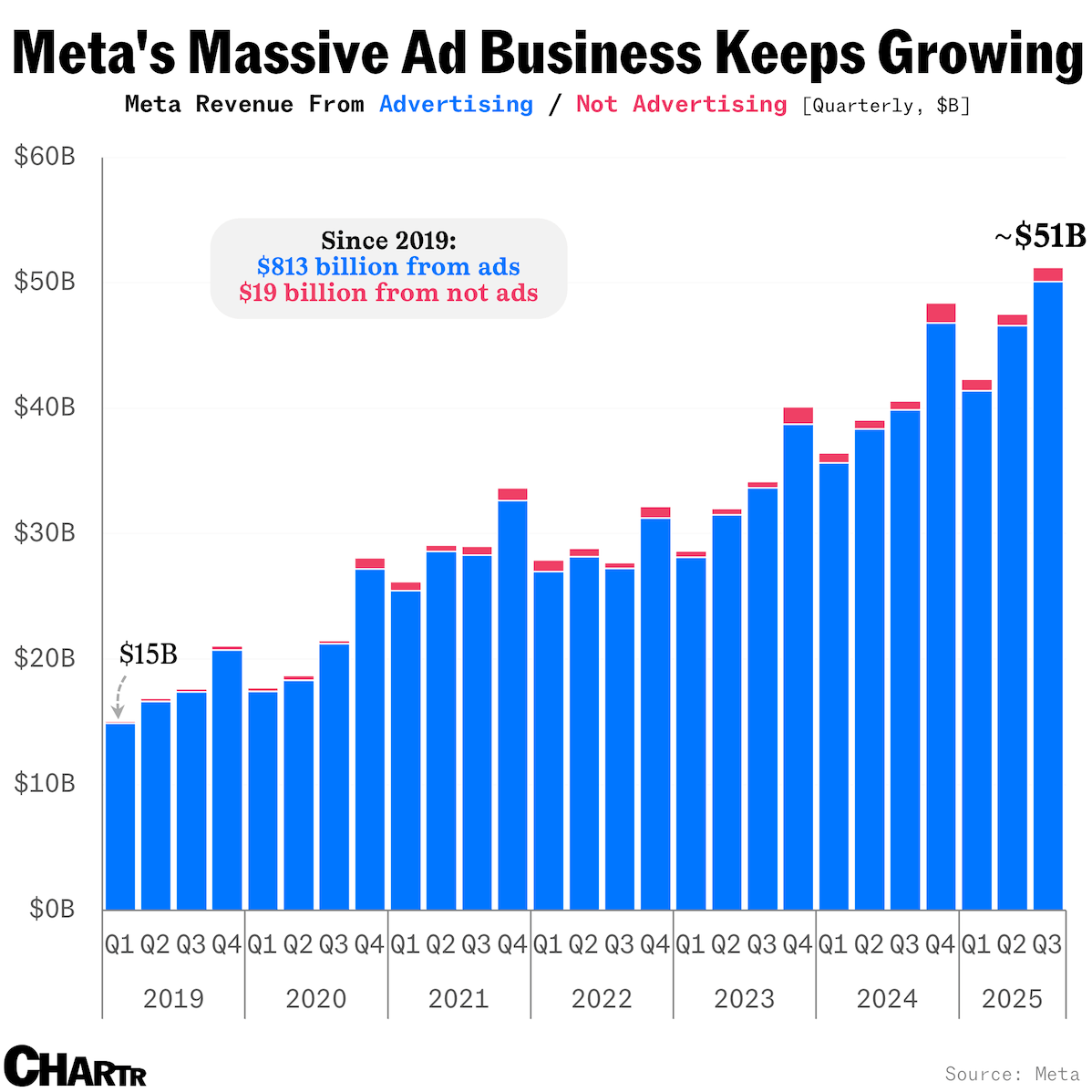
Still, unlike Spotify and Netflix, which actually pay for the content on their platforms and are only incrementally looking to advertising to juice up their bottom lines, Meta is already squeezing plenty of revenue from users without a paid subscriber model. In its third-quarter results back in October, the company reported total revenues of $51.2 billion — about $50 billion (~98%) of which came directly from advertising. |
Meta's ability to turn eyeballs into cash has seen it rake in a cumulative $813 billion from ads since 2019. And, having put ads in WhatsApp for the first time last June, this figure is only expected to get larger when the tech behemoth reports its quarterly earnings later today. Indeed, Meta's only division in which consumers pay up rather than advertisers — Reality Labs — is also the only one that continues to light billions of dollars on fire. |
The new tiered model comes as Meta looks to expand its AI offering, with the tech giant outlining plans to scale Manus — the web-browsing, content-producing AI agent it acquired right at the end of 2025 — and short-form video generator Vibes as part of the subscription plans. But what might convince some more social media-savvy users to start paying up are additional features designed to give "more control" over Instagram accounts in particular, including creating unlimited audience lists, seeing which followers don't follow them back, and viewing a Story without the poster seeing that they viewed it. |
More Americans dream of the European idyll — but the housing costs are less romantic |
For many Americans, the idea of starting over in Europe has long hovered on the outskirts of their imagination — from lazy mornings in Parisian cafes to coastal life in Lisbon, or long nights enjoying tapas in Barcelona. Lately, that daydream has started to look more like a serious plan. In a November Gallup poll, one in five Americans said they wanted to move permanently to another country — the highest share recorded in the past two decades — and a recent Bloomberg report suggests that Europe has increasingly become the go-to. Official immigration records show rising citizenship applications across the continent, as political fatigue and high living costs at home make life on the other side of the Atlantic look more appealing. |
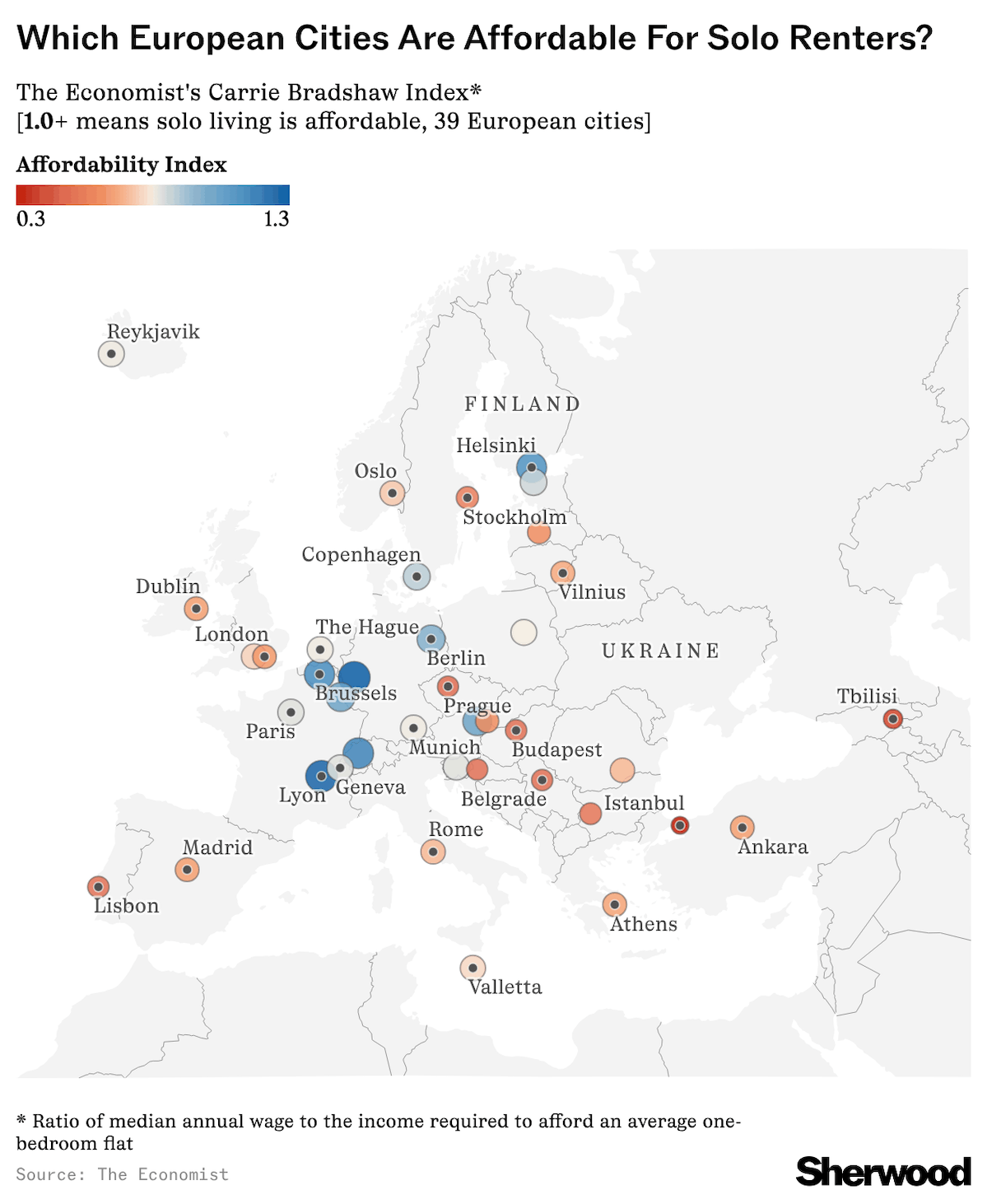
But while the continental lifestyle is often framed as calmer and cheaper than in the US, the reality is more complicated. Higher taxes and stricter residency rules are straining the math, while housing costs, especially for solo renters, can quickly puncture the fantasy too, per new analysis from The Economist. |
The Economist's European Carrie Bradshaw Index (named after the solo-living protagonist in "Sex and the City") which we've mapped above, asks a simple question: can a median wage earner afford a one-bedroom flat while keeping rent at or below 30% of their income? A score over 1 means yes; below means no. The answer doesn't make great reading for US-based Europhiles. Across 39 cities on the continent, only eight passed the affordability test. Cities that have perhaps come to embody the European fantasy for many, like London, Madrid, and Rome, ranked among the less affordable end of the spectrum, with broadly unfavorable rent-to-wages ratios. On the brighter side, the eight affordable cities included two from Germany — Berlin (ranked No. 8) and Bonn (the most affordable overall) — along with Bern, Brussels, Helsinki, Luxembourg, Lyon, and Vienna. |
|
|
Yale, like other elite colleges, is expanding its financial aid program |
Yesterday, Yale University announced that it would be expanding its current financial aid program to waive tuition fees for new students from families earning below $200,000 and cover all costs for those from sub-$100,000-earning households, opening access to its hallowed halls for a broader spectrum of prospective grads. The college joins fellow elite institutions like Harvard, which made identical changes last year, as well as MIT and the University of Pennsylvania, where aid programs were expanded even earlier, in late 2024. Lower-income students starting at the Ivy League university, which was founded in 1701, in the next academic year would be the first to benefit from the wider financial parameters... if they can fend off the increasing academic competition. |
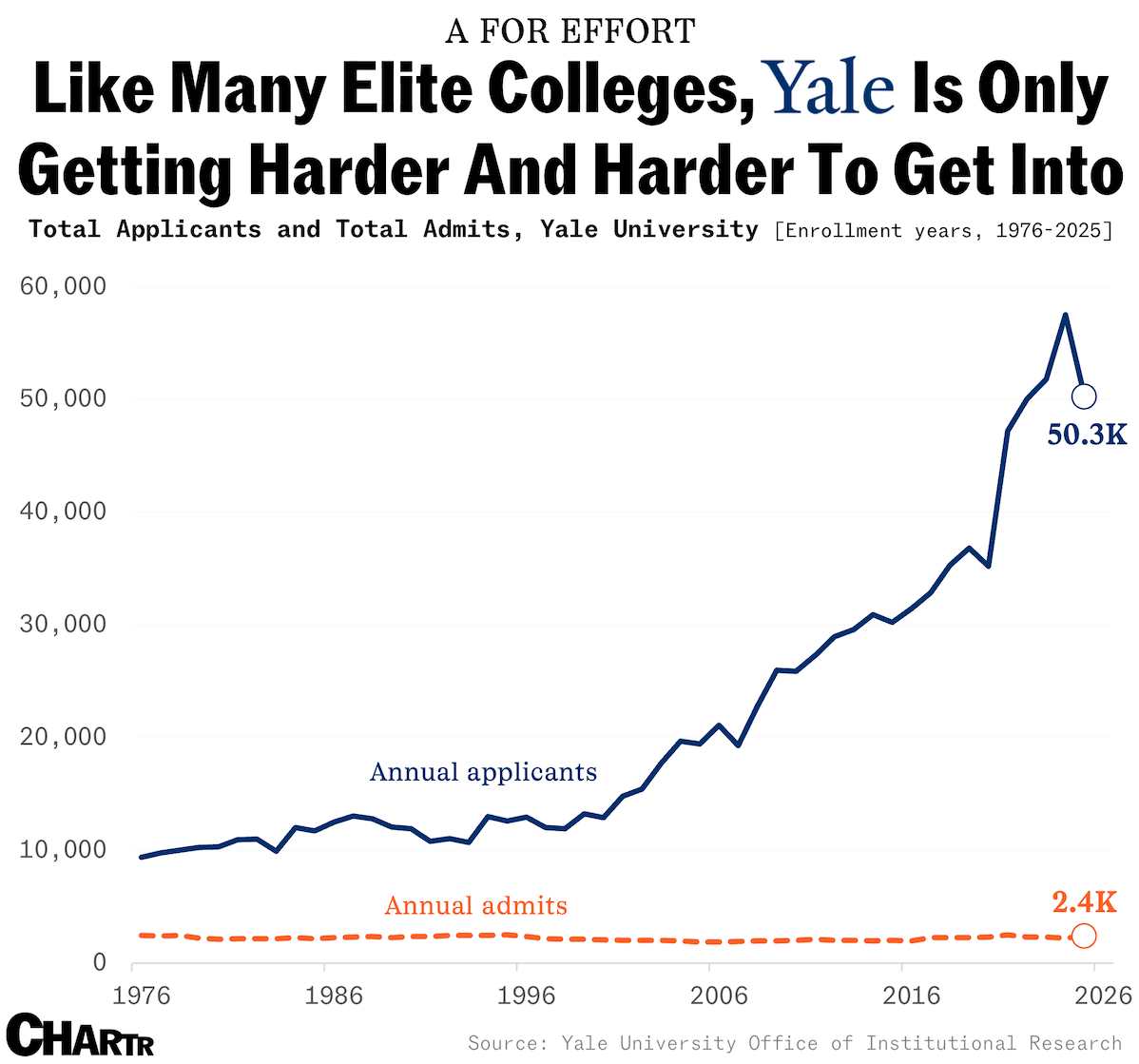
Though the total number of applicants dropped by more than 7,000 last year, as international applications plummeted 26% from the year before, it was still the third-biggest pool of hopefuls that the 325-year-old university had ever seen. Indeed, if you were gifted (and/or fortunate) enough to get in ahead of the 2025-26 academic year, you were part of a considerably more exclusive cohort than those who applied 30 years earlier — with roughly 1 in 20 applicants admitted in 2025, compared to one in five in 1995, per admissions data. While the aforementioned international student applicant slump, and the slew of data that suggests the decline isn't just hitting the most prestigious of America's universities, will displease deans across the country, it might come as some small relief to aspiring Yalies — particularly those whose parents earned $199,999 last year. |
|
|
- Venti, vidi, vici: While Starbucks sees sales surge, its CEO Brian Niccol reportedly made nearly $31 million in 2025, including ~$997K in expenses related to using the company's private jet.
- UnitedHealth forecast its first annual revenue decline since the end of the Cold War on Tuesday, expecting a 2% year-over-year drop in 2026.
- Google has agreed to pay $68 million to settle a privacy lawsuit claiming that its voice assistant spied on smartphone users.
- One BAFTA After Another: Paul Thomas Anderson's political thriller led the nominations at this year's British Academy Film Awards, scooping 14 nods.
- Amazon just announced that it's laying off another 16,000 workers, bringing its total job cuts to 30,000 in only four months.
|
|
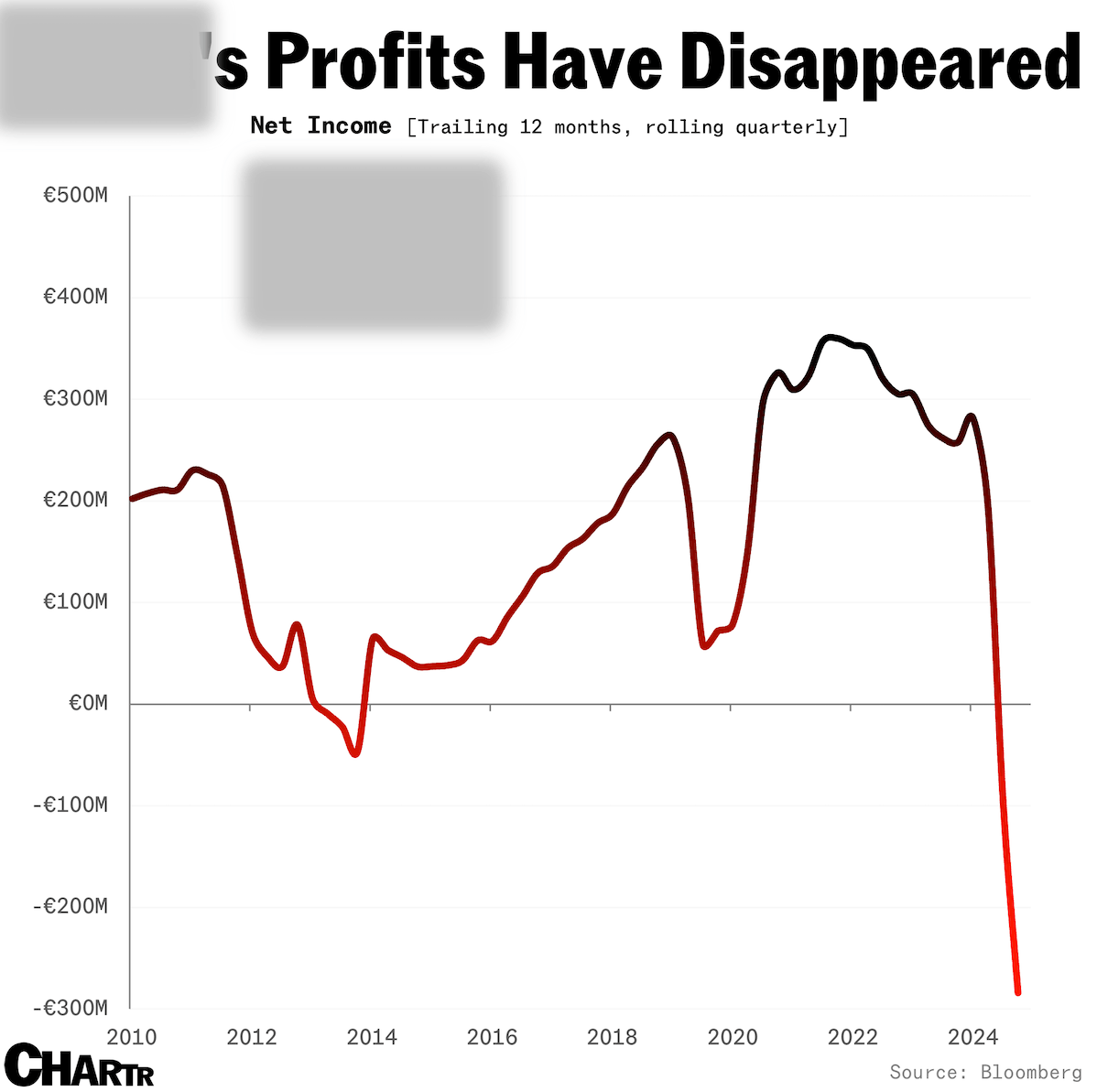
| Off the charts: Which struggling sportswear brand with a feline logo welcomed Chinese group Anta Sports as its new biggest shareholder on Tuesday? [Answer below]. |
Not a subscriber? Sign up for free below. |
Sherwood Media, LLC produces fresh and unique perspectives on topical financial news and is a fully owned subsidiary of Robinhood Markets, Inc., and any views expressed here do not necessarily reflect the views of any other Robinhood affiliate... See more |
|
|
SHERWOOD MEDIA, LLC, 85 Willow Road, Menlo Park, CA 94025 |
|
|
|




No comments:
Post a Comment