Dr. Robert Shapiro On How Trump Is Pushing America Towards Economic And Geopolitical RuinWhatever pathetic about-face Trump did today in Davos America is going to pay a very steep economic and security cost for his rancid betrayal of Europe
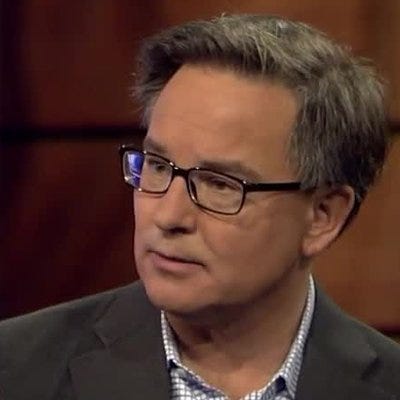
Greetings all. Sending along a new conversation with noted economist Rob Shapiro. The video is above and a rough transcript is below. I asked Rob to come by and talk to us before Trump’s humiliating climb-down today in Davos. As Rob explains in this sober discussion Trump’s retreat cannot undo what has been done these past few weeks, and the costs now to our economy and security are going to be extraordinary. Here’s how Politico described today’s dramatic events in a new article, Trump steps back from the bring on Greenland. But the damage has been done:
Here is how Rob describes the incredibly dangerous position our addled, idiotic, reckless, vainglorious leader has put America in:
What has Trump has done these last few weeks may be the most dangerous and destructive actions taken by an American leader in our history. It should be leading to a very serious discussion about him needing to step down and turn things over to J.D. Vance. Not for he is addled, or a criminal, or corrupt, but because he just may have made the single greatest policy mistake in our history, one that would in a parliamentary system cause his government to collapse. Whatever he was a few weeks ago today Trump is an historic, titanic fuck up now, an object of global scorn, and the only way we as a nation can lessen the extraordinary damage he’s done to the country is forcing him to walk away. Here is something I wrote in November in an essay, Is It Time For Trump To Go? …….I think we have to start visualizing, and socializing, the idea that it just might be time for him to go. I’ve put together this initial working list for why it just might be time:
Let’s here at Hopium lead this visualization and socialization of the idea that it is just time now for him to go. For the good of country, our democracy, our freedoms, and our future it is something we must work towards now. Keep working hard all. We often talk about there being good days and bad days here. Let’s work to make tomorrow a good one - Simon Transcript - Simon Rosenberg and Dr. Robert Shapiro (1/21/26)Simon Rosenberg: Dr. Robert Shapiro: Simon: In the last few minutes, and you can see this was posted at 12:17 Eastern time in the US, Gavin Newsom was supposed to speak at an event inside what's called the USA House which is where all the American companies are in Davos. And it was a Fortune hosted event. Gavin was going to use this as a response to Trump's disastrous speech a little bit earlier. And he was denied entry to the House by whomever, by the White House, by the government… you know, clearly the White House put pressure. So there would have been a formal response from Newsom to Trump's speech today. And because the desperate, addled, pathetic, weak, cowardly leader of our country couldn't handle somebody responding to him, they shut it down. It's just a sign of the gravity of everything that's happening right now in Europe and here in America. And Rob, going back to our regularly scheduled programming… what I wanted you to talk about is this idea that as a way of the Europeans pushing back on Trump's economic aggression, political aggression, potentially military aggression, that they are threatening to dump U.S. Treasurys and stocks. Can you just talk a little bit about that and what it means? Rob: Well, the reason is that they believe that the U.S. economy has been and consequently will continue to be stronger than other advanced economies, more stable than other advanced economies, and more secure than other advanced economies. So they want to invest here. And the attack on Greenland and the potential breakup of the alliance directly attacks those three pillars of European and foreign investment of the United States. You know, a trade war between the United States and Europe and all of the uncertainty associated with a breakdown in that relationship would weaken the U.S. economy. But more important, it would destabilize the U.S. economy. If only because a trade war and the tariffs, which could then go both ways, would weaken the dollar. And that means higher inflation. But the most important effect is the security of investments in the United States. If you have a government that says we will no longer respect the most fundamental international alliance the United States has had since World War II… that is the NATO alliance… if the NATO treaty is not secure, then what commitment by the United States is secure? If the independence of the Federal Reserve is not secure, then what basis is there to believe, first of all, that U.S. inflation isn't going to increase and reduce the value of all those holdings? And that any institution is not secure? What this does is it creates significant reasons for European investors to question the future value of their investments in the United States. And keep in mind that, you know, when we say European investors, it includes government as well as private investors. But private investors account for 90% of all European holdings of U.S. stocks. They account for 50% of all European holdings of U.S. Treasury securities. You know, we might be able to kind of calm the governments and say, look, this is really going to hurt you as much as it hurts us, and you need to hold back in response. But that won't work with private investors. That won't work with hedge funds. That won't work with European insurance companies, European pension funds. These are the holders of U.S. stock, U.S. corporate debt and U.S. Treasurys. And if those private investors decided to sell off one third of their U.S. holdings, we'd be looking at a market crash that would recall 1929, not 2020 or 2008. Simon:
So, they're now raising something that we talked about the last time you were on… there are a couple of things I want to say to what you just said. Number one is that we already started to see this sell-off and that's part of what, you know, spooked the markets yesterday and probably created Trump to slightly back down from the confrontation, but it's not a full back down there. They didn't say he was going to pull back the tariffs. He said he wasn't going to strike militarily, but there's also no reason to believe anything that he says. He plays deception. He's a pathological liar. There's no reason to believe anything he's doing. He's already activated 1,500 of our Arctic troops that go and specialize in the coldest areas of the world, which seem like he's on the verge of invading. We already started seeing yesterday the market react to the sell-off in Denmark. We saw another pension fund in another Scandinavian country today drop, selling tens of billions of dollars of American Treasurys. They’re dancing around now and letting people know. And I think that, you know, two things I would say. One is, you know, there are a lot of ways to describe Trump. But one of them that I like to use is that he's a titanic idiot. And he actually doesn't really understand how a lot of things work. And he's also intellectually uncurious. And isn't interested in learning more. And the arrogance and the puffery and the bluster and the bullshit coming from these guys over the last month in particular, as he's escalated domestically in Minnesota and he's escalated globally in Venezuela and now in Europe… he said in that New York Times interview that the only limit to his power is his own mind. Like, literally, that's what he said. At that moment, there should have been movement to remove him from office because it's so, you know, textbook, holy shit, a this-guy's-crazy kind of remark. Rob: Simon: And what do you think happens now, Rob? I mean, what should people, who perhaps aren't as schooled in all of this as you are, watch for in the coming days? And how much of an economic threat… because now let's just be clear about what's been established. To your point, what the Danish pension fund argued is that we were an unsafe investment. Not that Trump was an asshole and they wanted to get out. By the way for the first time in modern history, all three credit agencies have downgraded U.S. debt to the second level down for the first time ever… so talk a little bit about their raising the question about will he obligate contracts and agreements… and all these things… what does it mean that we're now putting on the table the fiscal integrity of the United States as something that's going to be debated? Rob: Will this happen? We don't know. But we do know that there is now a meaningful risk. And the risk is based entirely on the decisions of Donald Trump and his administration. You know, Scott Bessent is smart enough to know that his dismissal of Denmark only exacerbates the anxiety and the anxiety of European governments. And the anger of European business and populations. So why does he do it? Because Trump demands it… and we have seen that the people around him will not tell him the truth. Or if they do, he won't listen, as opposed to his first administration, which was largely kind of a caretaker administration from the point of view of the economy. It also, of course, made wealthy people wealthier through tax policy and everybody else relatively a little poorer, but, you know, that's fairly standard Republican policy. And all of these risks. These new dangers to people's jobs, to people's pensions, to the value of their homes. This kind of meltdown, the kind of meltdown that is now possible, is not limited to stocks and bonds. It terrifies everybody. People stop buying houses. People stop buying cars. People stop buying everything. Because you need precaution. You know, they are saving in the event that they lose their jobs. And the fact that a lot of their savings has evaporated. And that pushes the economy further down. And, you know, the controllable part of this is the Trump administration's policies. But what you can't control is the fact that European investors and foreign investors who would follow them, and U.S. hedge funds that would follow them, own a significant enough share of the U.S. economy to tank it. If they lost confidence in U.S. policy and in the security and stability of assets of the United States. Simon:
And the reason that is an extraordinary statement is the implication is that she's green lighting more aggressive action, economic response against the United States that had begun yesterday. Caution… abandoning caution. Because the Europeans feel betrayed by us, having been in this alliance with us for 80 years. I think that one of the things that's important for everyone watching and listening to realize is… we talk about this all the time in Hopium… is there is no version of Trumpism and Trump's vision of the world where America comes out of this more prosperous, more safe, and more free. It is a question of how much our prosperity is damaged, how much freedom we lose, how much our security is compromised. And that's why this vision that Trump has had, of him breaking the world into pieces and there being great powers again… this great power theory… was always a form of surrender as opposed to a grand strategy. And I think that what we're seeing now is this may be the first real manifestation of what's happened, in the last 24 hours, of how dangerous this new world is going to be to us. Because as you pointed out, Rob, with the additional risks that you're describing, the other part of the world that has now new leverage over us is China. Rob: And that means inflation goes up fairly sharply. And how do we deal with inflation? Well, we raise interest rates. So you get caught in a downward spiral where the responses to each part of the crisis exacerbate other parts of the crisis and the overall crisis. And what happens… we've only seen this frankly happen in modern times once, and that was the early 1930s… what happens is the Federal Reserve can't do anything because they cut interest rates to zero, but everybody goes to cash. That is… nobody wants to invest… regardless of the fact that there are, in real terms, negative interest rates. And the economy stabilizes at a much lower level. That's what happened in the 1930s. That's what creates a depression as opposed to a recession. In a recession, you go down, measures are taken, and you go up. In a depression, you go down, and no matter what you do, you don't go up for some time. You know, the notion that the U.S. would find itself in this kind of economic danger… when as the Economist said it just over a year ago… that the U.S. economy was the envy of the world… takes really unprecedented mismanagement and actively destructive policies. That's what we have right now. Simon: And I'm going to read this because it doesn't even include everything we've been talking about, or disintegrating the NATO alliance, or all the things he's done in the last few days.
I mean, the case for his removal is extraordinary and powerful. And what I’m pleased by is that the socializing part of maybe it’s time for him to go has started vigorously in the national discourse in the last 24 hours. And I think this is part of how we have to respond to this because, look, it was important that Gavin Newsom was in Davos raising the flag. It was important that Chris Coons led this bipartisan trip to both… for people who don't know… both to Denmark, but also many of those people stayed over and went to Davos… earlier days of Davos. They're not there now because Congress is back in session. To sort of raise the American flag. But the Europeans, and we heard this from Mark Carney this week, Rob, the Europeans, the Canadians, our traditional allies, are wondering where is the opposition in America? Where is the Democratic Party? Where are those sane voices reigning in Trump and trying to reestablish and maintain this relationship? And I think the thing we all have to recognize, and really in the last 48 hours, the Europeans have declared independence and have accepted that the Western Alliance, the 80-year-old Western Alliance, is now no longer. And it is a dramatic moment. You and I are, you know, very traditional liberals, and this is a world that we imagined, and helped maintain and grow. You helped extend as a visionary economist… helped extend the American economic system to the rest of the world after the Cold War ended. And all of this is unraveling at unbelievable speed leaving America less secure, less prosperous, less than we've been in many generations with the worst leader that we've ever had who is not mentally capable of running the country anymore. And I do think that as part of what do we do now… the question like in any other enterprise, if the leader makes catastrophic errors, the question of whether or not he should continue needs to be put on the table, I think, in a far more aggressive manner. Rob: The one thought I'd like to leave everyone with on our discussion today about the economics of this is that breaking the political alliance… the political alliance between the United States and Europe is accompanied by an economic alliance. That the interrelationships and interdependencies that occur on a political level are replicated on the economic level. And you cannot break one without breaking the other. Simon: What we've talked about at Hopium is that I describe his agenda as one of sabotage, plunder, and betrayal. That's the line that I use. The sabotage is becoming a little bit clearer today than it had been. The sabotage began with the attacking of our research institutions, and our academic institutions, and starting to burn down one of the chief engines of our prosperity. That was a sabotage. He's in the process of breaking the health care system in the United States. He's obviously destroying our labor mobility and the labor force in the United States, which is gonna retard growth and make it more difficult for us to proceed. And now he's burning down the American brand all around the world, which will have profound consequences for all of our companies trying to sell in countries where instead of the American goods being cool and everybody wanting them, they're going to be stuff that's going to get burned in central squares all across the world. I mean, we're facing an unprecedented moment here where, as opposed to being the good guy of the world, we're being led by a Bond villain that is turning the world against us in a very profound way. And so part of our job, Rob, is that in our response to this, people need to see vocal aggressive opposition coming from the pro-democracy movement, or they're going to further believe that America has been permanently altered. And that there is no reason to believe that we're going to sort of snap back to any earlier version of what we were. And that's what would generate more aggressive disinvestment… right, this conclusion that there aren’t any forces in the US that can derail or change the current direction… like, if it's going to be this way for the next three to five years, we got to get out of here, right? Rob: Simon: Rob: Simon: Rob: Simon: Rob, thank you as always for your insights. Folks, I won't say like this discussion because I'm not sure it's possible to like this discussion. But this is real-world talk here. I mean, we knew that Trump represented a danger. And now that danger between what he's doing in the escalation that we've seen in Minneapolis and the lawlessness of ICE… now the threat to our security and our economy that's coming from his reckless leadership on the global stage, the threat that he represents to the country, are becoming more clear. And I'll just tell you, Rob, if you read Hopium today, what's been interesting is that you started seeing movement in polls that came out late last week. The Greenland stuff only really started in earnest early last week. But by the end of the week, the polls that came out towards the end of the week were showing their biggest gaps, wherever they were starting from… then today, in the last two days or the last three days, we've seen three polls that have confirmed this trend that he's eroding. And that his standing is eroding. And the thing that I showed in Hopium today… the chart that they all look at every day… the White House and the Republicans in Congress and the Republican senators… they go to RealClearPolitics and they look at Trump's job approval. And in that graph, he's gone from -8 to -13 in the last two weeks. It's dramatic movement against him, the most dramatic movement of his time in office. So what Republicans are looking at, who are already looking at a very hard 2026… these guys that are going to be running competitive races… [is that] Trump's position in the country has eroded dramatically. Or it has eroded, I won't say dramatically, but it’s eroded significantly in the last week to a week and a half. So that's the other part of the dynamic that we're going to be facing as Congress comes back, is that this stuff is being rejected by the country. They understand what's going on. His approval rating on immigration has plummeted, you know, in all polling. And he's now even weaker than he was before. And so we're entering a very challenging period for politics. Rob: Simon: Rob: Simon: Rob, thank you again, as always. And thanks, everybody, for being here today. Rob:
You're currently a free subscriber to Hopium Chronicles By Simon Rosenberg. For the full experience, upgrade your subscription.
|
Wednesday, January 21, 2026
Dr. Robert Shapiro On How Trump Is Pushing America Towards Economic And Geopolitical Ruin






Subscribe to:
Post Comments (Atom)
7 skills you must UNLEARN to scale
A stage-by-stage map of what actually changes as you move from founder to CEO...and from $0 to $100M. ...

-
17 Personal Finance Concepts – #5 Home Ownershippwsadmin, 31 Oct 02:36 AM If you find value in these articles, please share them with your ...


No comments:
Post a Comment