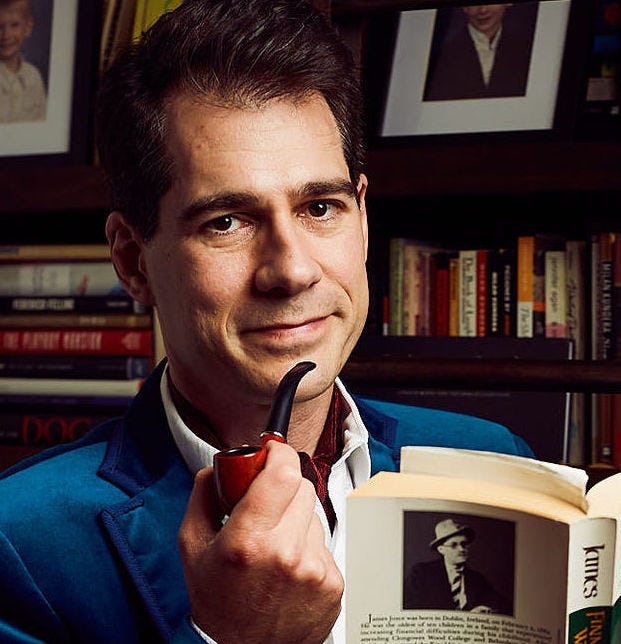
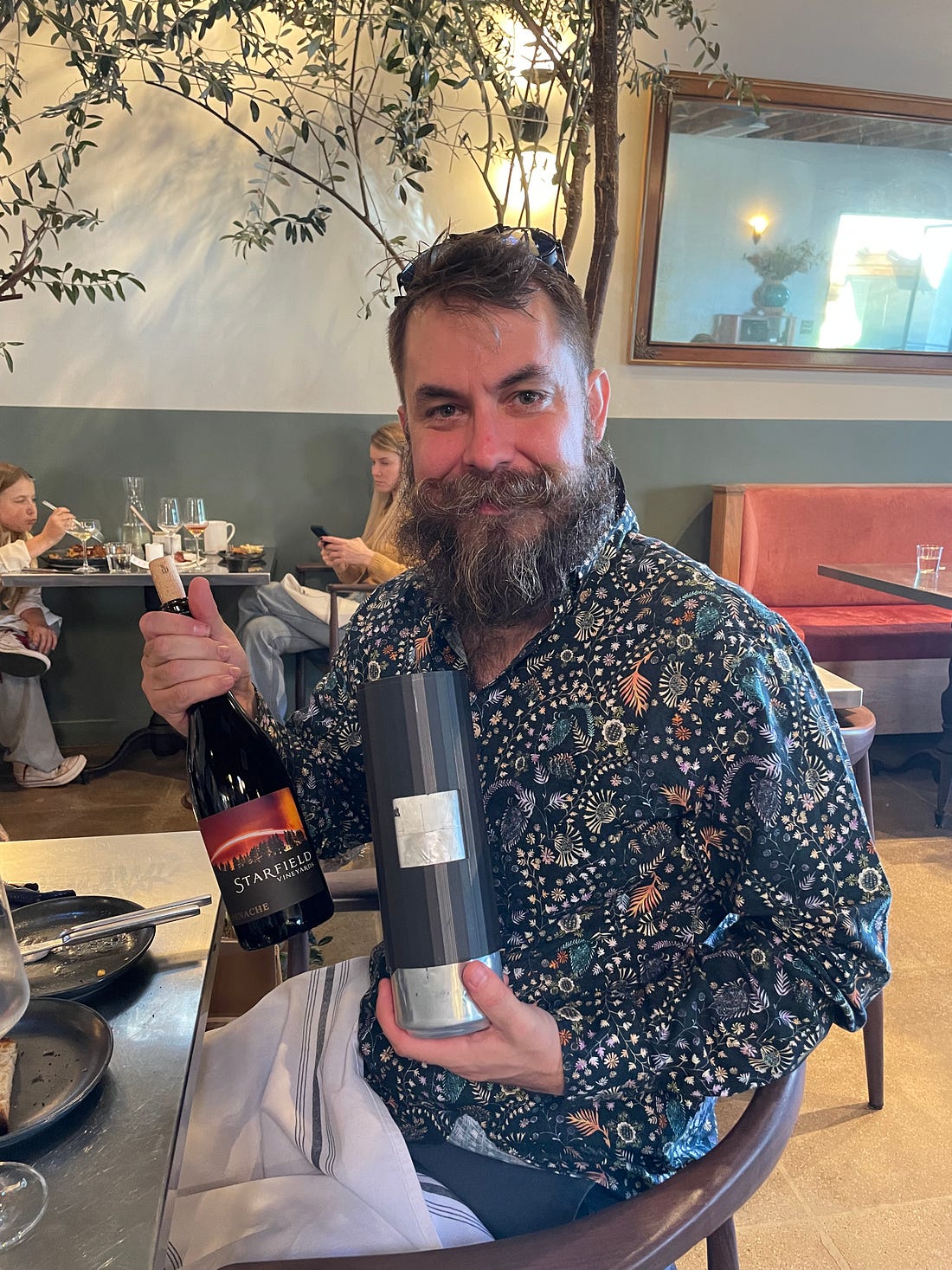
When you meet someone for the first time and discover they have a handlebar mustache, you ask yourself some questions. How far does his mustache lifestyle go? Does he play the banjo? Ride a unicycle? Take photos with a homemade pinhole camera? Practice Ikebana, the ancient art of Japanese flower arranging? Wear a shirt that looks like a William Morris wallpaper print? Rob Sinton does all of those things. So when he opened his Starfield Vineyards bottles, I was ready for some real hipster wine. Cloudy, volatile, funky, fresh, kombucha-light. I prepared to take a sip and tell him it was “interesting” and “cool.” But Starfield belies Rob’s handlebar mustache. His wines are classic. And very good. When Rob asked me to take me out to brunch when he was visiting L.A. for the day, I thought, “Brunch? Some people really overestimate what it takes to bribe the Corrupt Wine Writer.” We ordered scrambled eggs with caviar on top, and he put five of his wines on our table. Rob comes by the wine trade honestly, by which I mean that his great-grandfather sold it during Prohibition. Dee Sinton had found a loophole in the 18th Amendment. He grew grapes, dehydrated them into bricks, and sold these purple bricks with a warning note that you should be careful because if you added water and waited, they could ferment into alcohol. He hired Louis M. Martini to help him with his project. Mr. Martini told Mr. Sinton that he was an idiot. No consumer would want to go through all of that effort to make crappy bathtub wine. Instead, he should grease some officials and get a legal exception for sacramental wine. But Dee believed in himself and his wacky brick idea, and like so many bold entrepreneurs in American history, he failed. But his grandson, Tom Sinton, wanted to make wine. He built a winery on his family’s ranch in the 1970s, sold it a few years later, and started a computer payroll business that he sold for so much money he now looks like this:
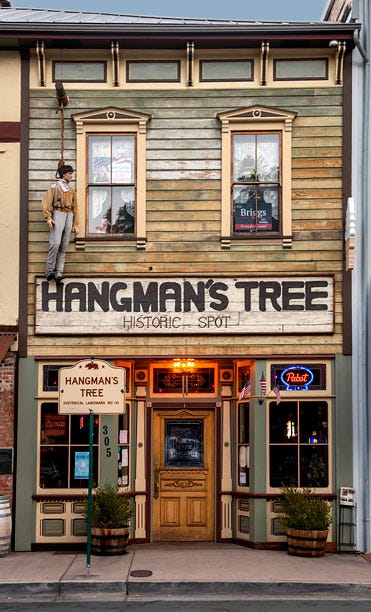
Tom talked his mustachioed son into switching his major at U.C. Davis from pre-med to winemaking. Napa, Tom thought, was too expensive. So he bought land in… Placerville. For those of you unfamiliar with Placerville, that’s because you’ve never driven from Sacramento to Lake Tahoe and asked, “Is there anywhere to stop for lunch? Oh, I guess there isn’t.” Placerville was a gold rush town called Hangtown, because that’s how they settled legal issues there. It’s also a great place to bring kids for apple picking, as long as you don’t mind explaining this to them:
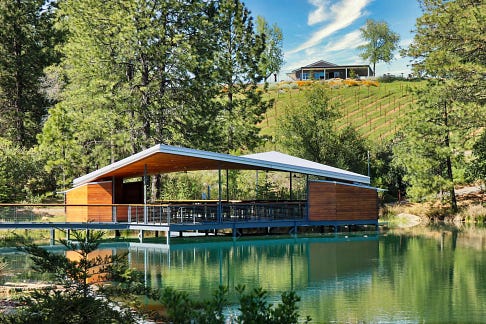
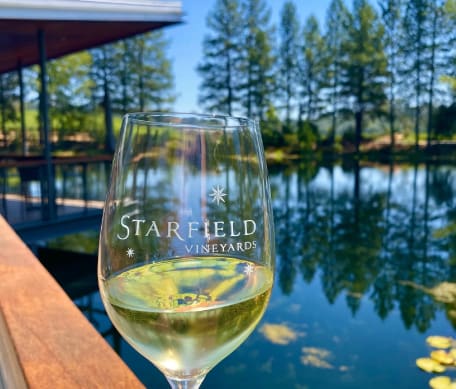
But it’s becoming a wine region. There are more than 30 wineries in what is now an official federal American Viticultural Area called El Dorado. Starfield’s winery, which has an amphitheater, looks especially beautiful.
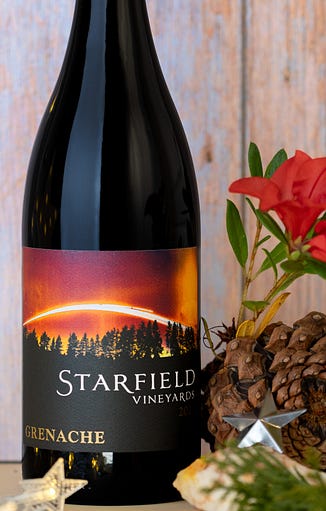
Rob started me with the wine he drinks the most, the Sparkling Brut Rosé ($42). It’s a fun, strawberry-toned, Grenache-based wine that went down way too easily for a guy who had four more open bottles in front of him at 11:30 a.m. Starfield’s website offers a recipe for mixing it with vermouth and grapefruit that, at $42 a bottle, I believe should result in hanging. I later served this wine at a party, and it also disappeared very quickly. My lovely wife Cassandra wants me to buy more of it, forgetting that the whole point of this is to not buy wines anymore. Starfield divides its vineyards into so many plots that it produces just about every kind of grape. “We’re bad at marketing, so we just grew whatever we liked to drink,” Rob explained. He even makes a Tannat ($50), the wine that’s so tannic they named it that way. It’s the grape in France’s Madiran wines, and the classic pairing for cassoulet, which I like to make. Rob later sent me one, along with a pinhole camera, and a gorgeous book about the Port of Los Angeles that mentions another of his great-great-grandfathers. He ran a Ponzi scheme involving petroleum, which I must have shown some interest in. There were five bottles of wine. Although I haven’t made cassoulet since getting it, I’m 100 percent sure, based on the gifts, that the tannat is amazing. The Viognier ($36) is delicious in its own American way. Though it’s not sweet, the staff isn’t wrong when it calls it “the banana cream pie wine. Because it’s colder in Placerville than in Napa, the wines don’t get big and goopy, which you can see right away with their lighter color. I particularly liked the Grenache ($42) and Mourvedre ($42).
When I mentioned how great they’d be with dinner, Rob gave me some bottles to take home. My lovely wife Cassandra asked where we could get more of the Grenache. Which isn’t easy to find, so I’ll have to buy it from the Starfield website. Or drive up to Placerville. I hope there’s a place for lunch by now. You're currently a free subscriber to The Corrupt Wine Writer. For the full experience, upgrade your subscription.
|
Thursday, December 18, 2025
Corrupt Wine Review: Starfield Vineyards





Subscribe to:
Post Comments (Atom)

-
On Monday, Leon County Circuit Judge Angela Dempsey rejected Bear Warriors United's request for a temporary injunction to halt the s...
-
Police say information from a Reddit tipster who had a strange encounter with another man on a sidewalk outside Brown University provi...
-
Four Ohio cities ranked in the nation's top 100 best cities for single people, according to a WalletHub survey that considered fact...


No comments:
Post a Comment