On Friday evening, the Wall Street Journal published an article about the Trump administration’s negotiations with Russia over Ukraine that illuminated the administration’s approach to the world at home, as well as overseas. Authors Drew Hinshaw, Benoit Faucon, Rebecca Ballhaus, Thomas Grove, and Joe Parkinson explained that the administration’s plan for peace was a Russian-led blueprint for joint U.S.-Russia economic cooperation that would funnel contracts for rebuilding Ukraine, extracting the valuable minerals in the Arctic, and even space exploration to a few favored U.S. and Russian businessmen. Many of those business leaders have close ties to the White House. “Russia has so many vast resources, vast expanses of land,” Trump envoy Steve Witkoff told the journalists. “If we do all that, and everybody’s prospering and they’re all a part of it, and there’s upside for everybody, that’s going to naturally be a bulwark against future conflicts there. Because everybody’s thriving.” On ABC’s This Week this morning, Representative Don Bacon (R-NE), who sits on the House Armed Services Committee, said to host Jonathan Karl: “Putin’s the invader, he’s the dictator, he’s murdered all his opponents. But I just don’t see that moral clarity coming from the White House. We saw that Wall Street Journal article yesterday that many people around the president are hoping to make billions of dollars—these are all billionaires in their own right—from…Russia, if they get a favorable agreement with Ukraine. That alarms me tremendously. I want to see America being the leader of the free world, standing up for what’s right, not for who can make a buck…. I don’t want to see a foreign policy based on greed. I want to see it based on doing the right thing.” There is far more at stake here than morality, although that is clearly on the table. The Trump administration is replacing American democracy with a kleptocracy, a system of corruption in which a network of ruling elites use the institutions of government to steal public assets for their own private gain. It permits virtually unlimited theft while the head of state provides cover for his cronies through pardons and the uneven application of the law. It is the system Russia’s president Vladimir Putin exploits in Russia, and President Donald J. Trump is working to establish it in the United States of America. In the New York Times today, Cecilia Kang, Tripp Mickle, Ryan Mac, David Yaffe-Bellany, and Theodore Schleifer explored the story of David Sacks, an early technology entrepreneur with Peter Thiel and Elon Musk who now advises the White House on AI and cryptocurrency policy while investing in the companies that benefit from those policies. Sacks has brought Silicon Valley leaders, including the chief executive of Nvidia, into contact with White House officials. Shortly after, the government got rid of restrictions on Nvidia’s chip sales to foreign countries, a change that could net Nvidia as much as $200 billion. Tom Burgis of The Guardian explained today how the Trump family is using its position in the federal government to advance its personal interests and enrich itself. Trump’s sons Don Jr. and Eric have thrown themselves into cryptocurrency, broken ground on new golf courses, and rushed through permissions for new buildings in foreign countries at the same time U.S. government policies over tariffs, cryptocurrency, and pardons, for example, seem to advance those interests. “The Trumps’ most natural allies,” Burgis wrote, “first in business, now also in politics—have long been the rulers of the Gulf’s petro-monarchies, who see no distinction between their states’ interests and their families’.” When New York Times reporters Ken Bensinger and David Fahrenthold published an article about Trump disclosing the donors who funded his transition to his second term a full year after promising to do so, they noted that the 46 individuals on the released list included billionaires and others who were later appointed to office. White House spokesperson Danielle Alvarez said: “President Trump greatly appreciates his supporters and donors; however, unlike politicians of the past, he is not bought by anyone and does what’s in the best interest of the country. Any suggestion otherwise is simply false.” As wealth and power flow through the executive branch, Trump is overriding the rule of law that is designed to protect the rest of us from self-dealing by unscrupulous individuals. On Wednesday he commuted the sentence of private equity executive David Gentile, convicted in August 2024 of defrauding 10,000 investors in a $1.6 billion scheme that included securities and wire fraud. According to Kenneth P. Vogel of the New York Times, prosecutors said the victims were small business owners, teachers, nurses, farmers, and veterans: “hardworking, everyday people.” “I lost my whole life savings,” one victim wrote about his losses. “I am living from check to check.” A judge sentenced Gentile to seven years in prison. He reported to authorities on November 14, was incarcerated, and was released less than two weeks later after Trump commuted his sentence. There is a growing sense that an elite group of wealthy people is running the world without accountability to the law, and that the Trump administration is protecting and even advancing the people in that group. That sense is key to popular anger at the administration’s refusal to release the FBI files about its investigation into sex offender Jeffrey Epstein. The documents from the Epstein estate released by the House Oversight Committee on November 12 showed a chummy friendship between Epstein and political, academic, and economic leaders eager to retain access to Epstein’s money, information, and connections even after he pleaded guilty to procuring a minor for prostitution. MAGA voters backed Trump in the belief that he would hold such people to account, but it is now clear he is protecting them instead. Indeed, as Mona Charon of The Bulwark noted today, Trump’s ally Steve Bannon, whom Charon describes as “Trump’s consigliere, strategist, propagandist, and former senior counselor at the White House,” was on such friendly terms with Epstein that it was to him Epstein turned to scrub his public image after his initial guilty plea. The realization that Trump is bolstering and protecting an entitled elite rather than defending everyday Americans victimized by them has dovetailed with this administration’s undermining of the economy, firing of civil servants, attacks on public health, and destruction of the nation’s social safety net to create angry references to “the Epstein class.” Representative Ro Khanna (D-CA) explained to NPR’s Scott Detrow earlier this month: “[T]he Epstein class is a group of people with extreme wealth who have donated to politicians and been part of a system where they think the rules don’t apply to them, and they have created a system that has shafted a lot of forgotten Americans. That’s why Donald Trump ran and was central to his campaign. And many people, like Marjorie Taylor Greene and others, believe he’s become part of the swamp that he said he would drain. He’s forgotten the forgotten Americans he said he would stand up for.” Unlike the robber barons of the late nineteenth century, today’s power elite is, as Anand Giridharadas of The Ink wrote on November 23 in the New York Times, a borderless network of people connected not to nations or their fellow citizens but to each other. They exchange nonpublic information and capital to enable the members of that group to control events, disregarding the effects of their decisions on those outside their network. Josh Marshall of Talking Points Memo suggested Friday that the deep unpopularity of AI comes in part from the fact that it has become a symbol “of a society in which all the big decisions get made by the tech lords, for their own benefit and for a future society that doesn’t really seem to have a place for most of the rest of us.” Popular anger at this “Epstein class” is sparking a political realignment. Democratic leaders have been hammering on how Republican policies benefit the wealthy at the same time that Trump’s tariffs send household costs upward and the Republicans’ budget reconciliation bill of July—the one Republicans call the “One Big Beautiful Bill Act”—slashes the social safety net and drives up the cost of health care premiums. The extraordinary demand for energy caused by the massive data centers AI requires has sent energy costs skyrocketing. In November, voters turned away from the Republicans and toward the Democrats, expressing concerns about the economy and “affordability.” Chris Stein of The Guardian explained today how 33-year-old John McAuliff flipped a Republican seat in the Virginia House of Delegates in those elections. McAuliff attracted Republican voters by going door to door, talking with voters about data centers and the infrastructure they require and noting voters’ own rising electricity costs. McAuliff told Stein that the rising prices are “essentially an artificial tax on everyday Virginians to benefit Amazon, Google, some of the companies with the biggest market [capitalizations] in human history. Which is not to say they don’t provide benefits to those communities, but we need to do a much, much better job of extracting those benefits, because the companies can afford them.” Voters’ anger at the administration’s support for the Epstein class is now so palpable it has inspired some MAGA leaders to try to cast themselves as populist leaders standing against the wealthy who control the government, a stand that puts them at odds with the White House. “I’ve always represented the common American man and woman as a member of the House of Representatives which is why I’ve always been despised in Washington DC and never fit in,” Representative Marjorie Taylor Greene (R-GA) began her resignation letter. In 1932, in a similar time of political realignment, New York governor Franklin Delano Roosevelt attracted voters across the political spectrum when he promised “a new deal for the American people,” with “more equitable opportunity to share in the distribution of national wealth.” “Let us…constitute ourselves prophets of a new order of competence and of courage,” he told the delegates to the Democratic National Convention when he accepted its nomination for president. “This is more than a political campaign; it is a call to arms. Give me your help, not to win votes alone, but to win in this crusade to restore America to its own people.” — Notes: https://www.wsj.com/world/russia/russia-u-s-peace-business-ties-4db9b290 https://www.politico.com/news/2025/11/30/don-bacon-moral-clarity-ukraine-00670982 https://www.chathamhouse.org/2022/07/what-kleptocracy-and-how-does-it-work https://www.nytimes.com/2025/11/30/technology/david-sacks-white-house-profits.html https://www.nytimes.com/2025/11/29/us/politics/trump-david-gentile-commutation.html  https://www.nytimes.com/2025/11/26/us/politics/trump-transition-donors.html https://www.nytimes.com/2025/11/23/opinion/meaning-epstein-emails.html https://talkingpointsmemo.com/edblog/ai-populism-and-the-centibillionaire-shangri-la https://www.theguardian.com/us-news/2025/nov/30/virginia-democrat-state-legislature-datacenters X: mtgreenee/status/1992037226415554642 Bluesky: You’re currently a free subscriber to Letters from an American. If you need help receiving Letters, changing your email address, or unsubscribing, please visit our Support FAQ. You can also submit a help request directly. For the full experience, upgrade your subscription.
|
Sunday, November 30, 2025
November 30, 2025


The Week Ahead
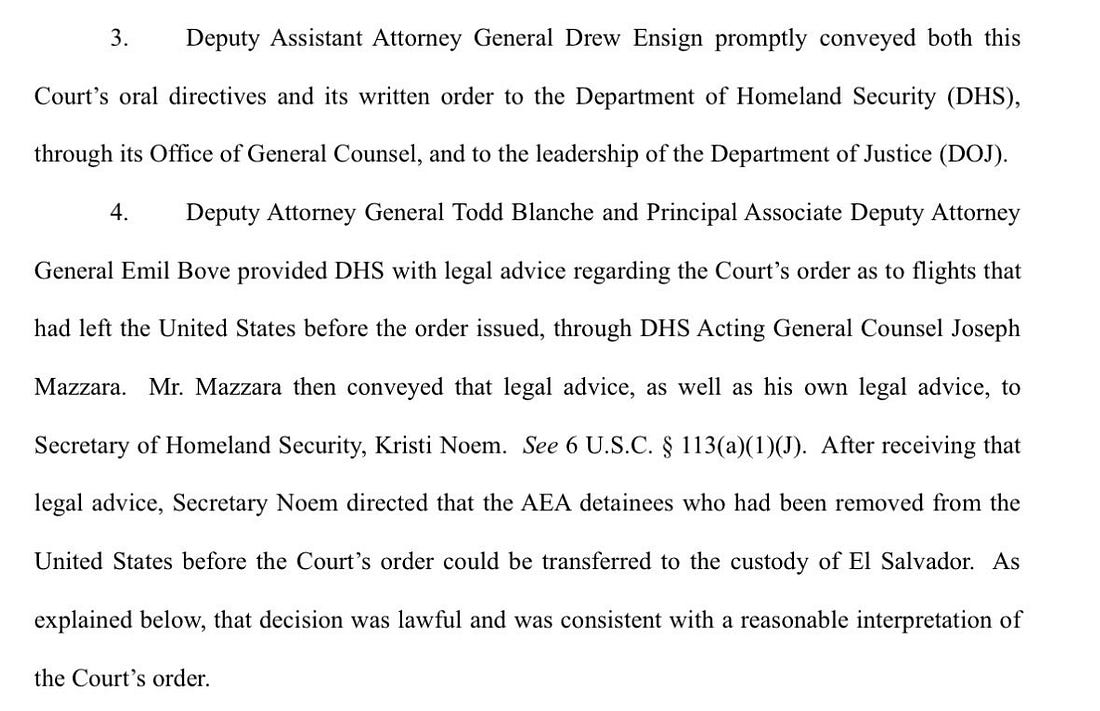
The news gods didn’t give us Thanksgiving week off, and there’s no reason to believe this week will be any different (and apologies for the length of tonight’s post. There was more to write about, but this got too long as is). But there is room for cautious optimism about some trends we’re seeing. Donald Trump is losing ground. It started with the Epstein files. It continued with the elections that saw Democrats make unexpected, and in some cases historic, gains. Friday’s revelation that the administration deliberately killed two people who survived the initial attack on an alleged Tren de Aragua drug smuggling boat in September, people who were clinging to the remains of the boat for survival, will only fuel the fire. Change happens because we make it happen. Because we understand and use our power as citizens. We’ve protested. We’ve contacted our elected officials, even when it didn’t seem like they were listening. We’ve educated our friends, neighbors, and families. It’s cumulative, and progress, even when it’s slow, can happen when Americans understand the importance of fighting for democracy, which is what we’re doing right now. As I wrote in my book, we are not fighting on battlefields in Europe. Instead, our fight will most likely be at ballot boxes and polling places across the country. I also wrote that our institutions are nimble, and that even ones that seem to have sidelined themselves can return to the fray, like Congress did on Friday, when bipartisan membership in both bodies called for investigation into the boat attack. Just over a month ago, when my book came out and I was first traveling around the country to speak about it, there was so much hopelessness about where we were. In the past month, there is renewed understanding and belief that we can move past Trump and MAGA. It may not be easy, and our progress most likely won’t be linear. There will be moments where it will be frustrating. But we can do this. I wasn’t joking when I wrote Giving Up Is Unforgivable. We have a lot of work to do. Here is what you need to know to be ready for the week ahead: Contempt Proceedings Against the Government Before Judge Boasberg: Last Tuesday, in a late-night pleading, DOJ advised the court that DHS Secretary Kristi Noem was responsible for the decision to disobey Judge Boasberg’s order requiring planes carrying hundreds of Venezuelan men to El Salvador’s notorious CECOT prison to return to the U.S. DOJ characterized the Secretary’s decision as “lawful and consistent with a reasonable interpretation of the Court’s order.” Deputy Attorney General Todd Blanche and then-Principal Associate Deputy Attorney General (now, Third Circuit Court of Appeals Judge) Emil Bove worked with DHS Acting General Counsel Joseph Mazzara to provide advice that was conveyed to the Secretary before Judge Boasberg issued his order.
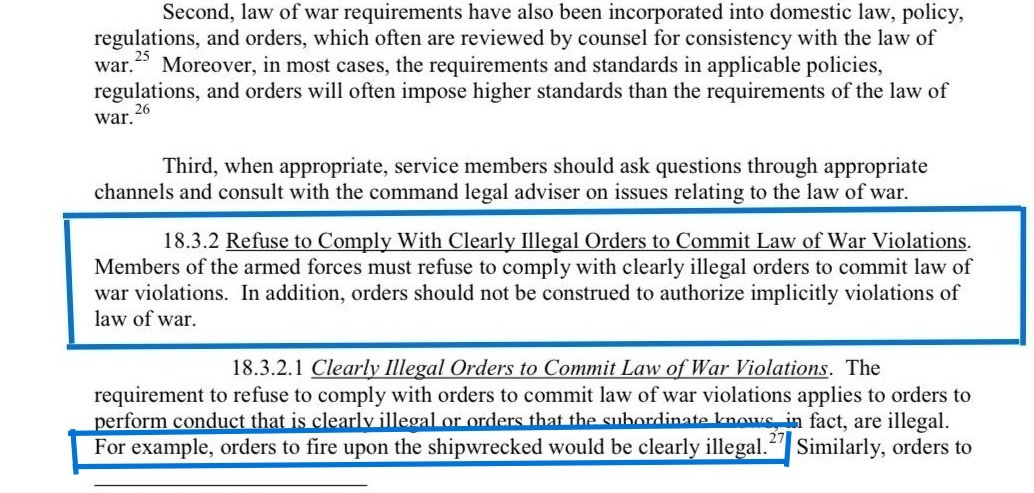
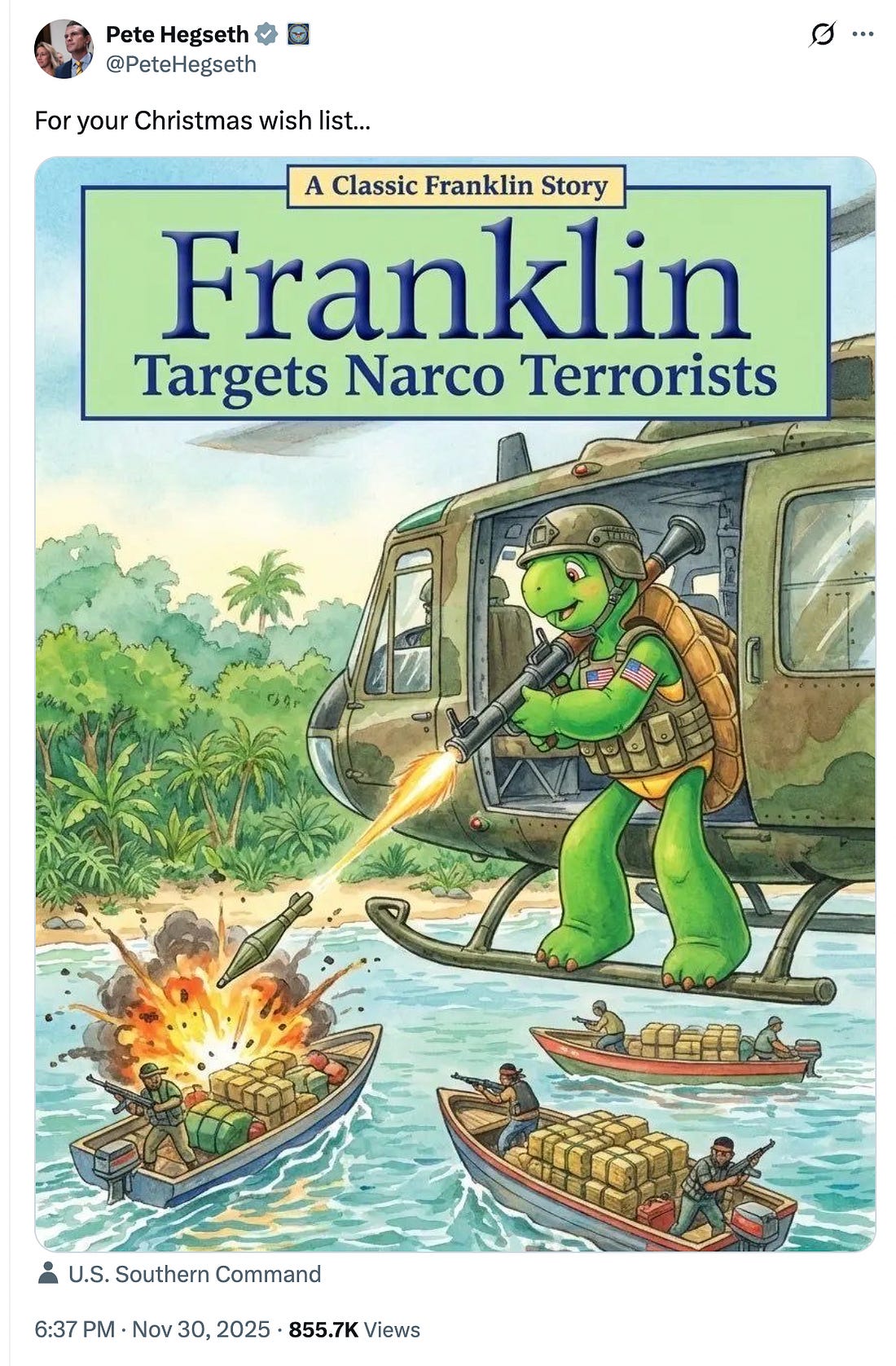
The unspoken component of this revelation—it’s the first time Noem has been identified as the decision-maker—is that she determined “the AEA detainees who had been removed from the United States before the Court’s order could be transferred to the custody of El Salvador.” That argument relies on the contention that one of the D.C. Circuit judges wrote that Judge Boasberg’s order was “inapplicable to those who had already been removed” from the country, and the government maintains they were out of U.S. airspace before the order was entered. The government continues with an outright insult to the Judge, couched in a quotation, “As Judge Katsas further explained, this Court’s oral directives at the TRO hearing were inconsistent, ‘garbl[ed],’ and, if read in isolation, ‘indefensible,’ to the point that this Court ‘itself disclaimed’ at least two of its own oral commands in later opinions,” perhaps an acknowledgment that the government expects to lose before the district court and is hoping to set up a reversal when the case reaches higher courts. This week, we may learn more about whether Judge Boasberg agrees with the government. The disclosure was made because the Judge had ordered both sides in the case to “propose next steps for its inquiry into potential referral for criminal contempt.” The government told the court nothing further was required, which is unlikely to be a compelling stance with the court. Finally, the government makes this interesting suggestion, “Defendants do not believe any further facts are relevant to the Court’s potential referral, but if the Court determines otherwise, Defendants request an opportunity to provide any such information by way of declarations in the first instance—as even Plaintiffs appear to agree would be a necessary first step … No live testimony is warranted at this time.” Might the Secretary have had conversations with others, perhaps even those in the White House, along the way? If the government has its way, we won’t find out. The Secretary of Defense’s Attack on “Narcoterrorists”: The Department of Defense Law of War Manual provides that members of the armed forces “must refuse to comply with clearly illegal orders to commit law of war violations.” It offers an example of a clearly illegal order that hits home: “For example, orders to fire upon the shipwrecked would be clearly illegal.” All that’s left for the government to try and do this week is to claim that The Washington Post’s report that says it did just that in the Caribbean in September is factually erroneous.
The Manual, at 18.3.2.1, goes on to clarify that “Similarly, orders to kill defenseless persons who have submitted to and are under effective physical control would also be clearly illegal. On the other hand, the duty not to comply with orders that are clearly illegal would be limited in its application when the subordinate is not competent to evaluate whether the rule has been violated.” Given that this situation presents the example the manual uses to teach members of the military about when it’s clear an order should be questioned, it will be difficult, if not impossible, for anyone, especially at the command level, to claim ignorance and say they were not obligated to inquire into the legality of an order to do what the manual prohibits.
Congressional investigation will be essential to pin down the details. Most importantly, we don’t know for certain whether any part of the decision to strike people who survived the initial attack was predicated on direction from people outside of DoD. We don’t know if any of it went upstream of Secretary of Defense Hegseth. But there is some interesting backstory for Congress to flesh out.
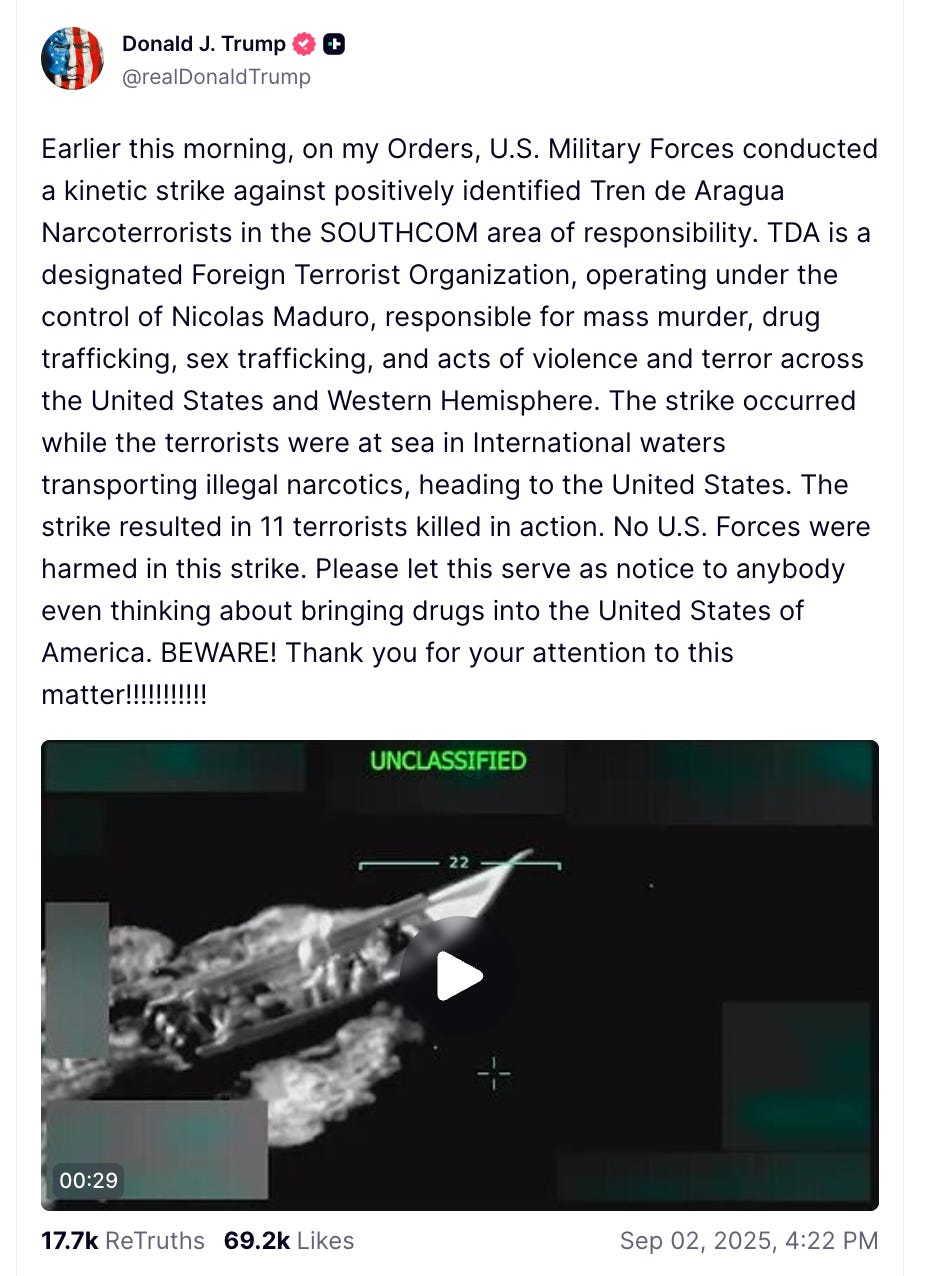
Rubio discussed the strike while in foreign countries, suggesting that Trump was, as one would expect, involved, but never saying he gave an order to kill survivors. Of course, the government has never acknowledged that it happened and continues to deny it after the Washington Post’s Friday report. Rubio said at the time that: “Instead of interdicting [the ship], on the president’s orders, we blew it up. And it’ll happen again. Maybe it’s happening right now.” Rubio said. In Mexico City he told reporters: “U.S. forces could have stopped the boat that officials say was carrying illegal drugs from Venezuela to the United States on Tuesday, Secretary of State Marco Rubio said, but President Donald Trump chose instead to destroy it, killing 11 people on board, to send a deterrent message to traffickers.” … “Instead of interdicting it, on the president’s orders, we blew it up — and it’ll happen again.” Asked about whether the boat was a threat to the U.S., Rubio responded, “The president has a right to eliminate immediate threats to the United States … This president is not a talker; he’s a doer — he’s going to do it.”
Again, He’s not explicitly linked to the decision to kill survivors. But he does say, “On my order,” instead of distancing himself from the strikes—surely Trump would have known what happened and seen unedited video. If not, heads would have rolled on Friday at the revelation in The Post. It’s not clear whether Trump knew of, approved of, or consulted on Hegseth’s order. That’s what Congress needs to sort out as quickly as possible—as well as who else in the White House and other agencies might have been involved. Sunday night, Trump said Hegseth told him he didn’t give a kill order and Trump believed him “100 percent.” Asked about the second strike, Trump told reporters, “I wouldn’t have wanted that. Not a second strike. The first strike was very lethal. It was fine.” Trump claimed that the amount of drugs entering the U.S. is “infinitesimal” compared to a few months ago. Hegseth tweeted this Sunday evening:
The National Guard Shooting in Washington, D.C. Before the West Virginia Mountaineers played Texas Tech in Morgantown on Saturday, there was a moment of silence for the two West Virginia National Guard soldiers shot in Washington, D.C., on Wednesday. Instead of focusing on them, Donald Trump’s reaction to the horrific shooting that left one dead and another in serious condition has been to discontinue immigration proceedings for Afghans and others. ABC’s Selina Wang reported on Saturday that in the wake of the shooting, the administration was pausing all asylum decisions, ending visa issuance to people from Afghanistan, and ordering immigration authorities to review green cards from people from 19 countries of concern, including Afghanistan, Somalia, Venezuela, Cuba, Haiti, and Iran. Donald Trump threatened to end migration from “third world countries” and to revoke citizenship from some naturalized citizens. He said he would “permanently pause migration from all Third World Countries.” Armed with a new excuse, it’s the Muslim ban from Trump’s first administration on steroids. But it’s ludicrous to use a crime committed by one individual, a heinous crime, as grounds to exclude an entire nationality or region from entry into the U.S., especially when many of those from Afghanistan either served alongside U.S. troops or would face retaliation if forced to return to their country of origin. On Sunday, DHS Secretary Noem said that the motive behind the shooting was still unknown. She said that the shooter was “radicalized” after he came to the U.S., but declined to shoulder any of the blame, even though the decision to grant him asylum came in April of this year after Trump was back in office. “The vetting process all happened under Joe Biden’s administration,” Noem said. The shooter worked with the CIA alongside American forces fighting the Taliban for more than a decade. He had to undergo repeated background checks in that capacity. NBC reported Sunday that the shooter was part of “a secret unit of Afghans who operated under CIA direction and hunted down Taliban commanders in highly dangerous missions,” called “Zero Units.” NBC characterized the people in the units as among those who were most carefully vetted and who were prioritized for resettlement in the U.S. when Kabul fell because they would have been targeted by the new regime had they remained. The story of their resettlement appears to be one of broken promises. The NBC report reflected that “Two years ago, a former Afghan commander with the Zero Units, Mohammad Shah, wrote a letter warning lawmakers that his former troops are in ‘urgent crisis’ and that Congress needed to act to resolve their legal status. That was the case because the Afghan fighters have been without legal status and work permits, and have struggled to care for their families. CIA and military colleagues of the soldiers “appealed to both the Biden and Trump administrations and to Congress to take action to resolve their legal status,” and warned that some of the men were falling into despair. Congress failed to pass a bipartisan measure that would have provided a measure of protection. The report concluded that “As of July, about 3,000 members of the Zero Units still had no work permits and no certainty about their legal status, according to advocates who work with the veterans. Returning to Afghanistan is not an option for them, advocates say, because of the threat of being hunted down by the Taliban for working with Americans.” It’s a moment that calls for compassion for victims, accountability in the criminal justice system for the shooter, and a real solution for people who gave our country a helping hand when we needed it. If for no reason other than America’s inevitable need for future help from foreign allies, the moment requires more than political rhetoric and condemning a broad swath of immigrants because of one man’s crimes. Tuesday’s Election in Tennessee On Tuesday, there is a special Congressional election for Tennessee’s 7th District. It’s the last of five special elections for House seats this year. In the four previous elections, in Virginia, Arizona, and Florida (where two seats were up for grabs), Democrats improved their margins—even where they lost the race—by an average of 16 points. This Tuesday’s election is in Tennessee, where Republican Mark Green, who resigned, won in 2024 by just over 20 points. Democratic candidate Aftyn Behn is running against Republican Matt Van Epps. Tennessee is not friendly territory for Democrats. Tennessee has no statewide elected Democrats. Recent polls show Van Epps up by anywhere from 2 to 8 points, a remarkable run for Behn. Off-year election turnout can be wonky. Anything can happen. In the meantime, remind your friends in Tennessee to vote if they haven’t already! Democrats continue to run on affordability, which is a solid message. But they still haven’t learned that we live in times that call for them to evolve beyond the exclusive “it’s the economy” style messaging that pervades American politics. Yes, of course, it’s the economy. It’s also the democracy. And due process. And the rule of law. Democrats need to stop thinking Americans can’t grasp these concepts after millions of them marched and protested for them. Tennessee is about as deep red as they get. But with Trump conducting a revenge presidency focused on accumulating power in his hands, Democrats are fighting for every last vote in the House, as they should be. Democracy deserves center stage as a significant part of what they stand for.  So I’ve made it official folks: I’ve filed the paperwork to run for Governor of Alabama. It’s time to remind this state of who we are and what we can accomplish together. #DougForAlabama  Mon, 24 Nov 2025 20:54:45 GMT View on BlueskyAlabama gubernatorial candidate Doug Jones told me, “I know that pundits are saying the Aftyn Behn can’t win a district that Trump carried by 22 points just a year ago. But guess what? Those pundits said that two Republican incumbents on the Georgia Public Service Commission wouldn’t get trounced in their re-election bids or that three legislative seats in the Mississippi House wouldn’t flip to break the Republican supermajority and look what happened. The mere fact that we are having these discussions means it can happen again in the 7th Congressional District of Tennessee. And it can happen because Aftyn has been laser focused on making a positive impact on the lives of the folks in that District and laser focused on making their lives more affordable rather than trying to rile them up with pretend outrage that does nothing.” What might Tuesday hold in store for us? And maybe, Virginia, if there really is a Santa Claus, it can happen in Alabama, too, next year? You’ve just read today’s breakdown without a paywall because paid subscribers make that possible. If you want to help me keep this work available to everyone—and get extra benefits along the way—please join us. Your paid subscriptions make sure I can devote the time and resources necessary to write Civil Discourse. We’re in this together, Joyce You're currently a free subscriber to Civil Discourse with Joyce Vance . For the full experience, upgrade your subscription.
|



Growth Newsletter #325
How to engineer your AI search flywheel ͏ ͏ ͏ ͏ ͏ ͏ ͏ ͏ ͏ ͏ ͏ ͏ ͏ ͏ ͏ ͏ ͏ ͏ ͏ ͏ ͏ ͏ ͏ ͏ ͏ ͏ ͏ ͏ ͏ ͏ ͏ ͏ ͏ ͏ ͏ ͏ ͏ ͏ ͏ ͏ ͏ ͏ ͏ ͏ ͏ ͏ ͏ ͏ ...

-
On Monday, Leon County Circuit Judge Angela Dempsey rejected Bear Warriors United's request for a temporary injunction to halt the s...
-
Police say information from a Reddit tipster who had a strange encounter with another man on a sidewalk outside Brown University provi...
-
The Trump administration has launched a new federal initiative called the U.S. Tech Force, aimed at hiring about 1,000 engineers and t...


