When it comes to things the government can’t do without violating the First Amendment, imposing prior restraints on what the media can report is near the top of the list, absent a compelling rationale. That’s what the Vietnam-era Pentagon Papers case, New York Times v. U.S., was about.
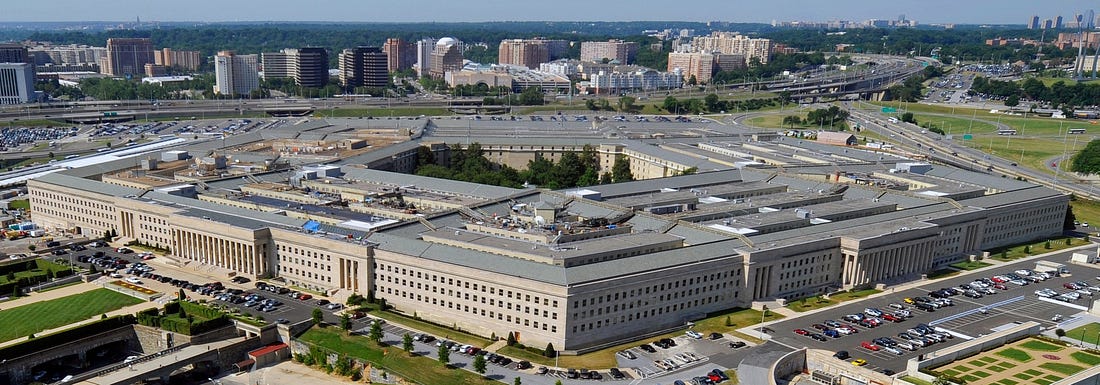
But that’s exactly what the Trump administration is doing at the Pentagon. Under a new policy, journalists could be required to sign a document pledging that they will not gather or use any information that has not been formally authorized for release—even if it isn’t classified. The long-standing practice at the Pentagon permitted journalists to move freely through the hallways, gathering unclassified information from both military and civilian sources. The new policy restricts their movement, confining them to a specific space and requiring them to be escorted to other parts of the building. Pete Hegseth’s Department of Defense has said that journalists who violate the new policy are at risk of losing their press credentials. It’s not difficult to see what’s going on here. The administration wants to control what does and doesn’t get reported on, violating the tradition of journalism in this country that comes to us directly from the Founding Fathers and the Constitution. They’re also shutting down criminal investigations like the one reportedly looking into a $50,000 cash bribe to immigration czar Tom Homan and indefinitely suspending annual reports on food insecurity. It’s the tightest control on information the country has experienced in peacetime in the modern era. Because it involves placing a prior restraint on what journalists can report, it looks like a clear violation of the First Amendment. By now, we know how this administration works. In their search to expand presidential power, they seize upon a time-honored norm and then try to challenge it in the courts. Just today, the Supreme Court took another step towards burying Humphrey’s Executor, the FDR administration case that until now has prevented presidents from firing appointees to quasi-independent boards like the Federal Trade Commission. There is no reason to believe the administration isn’t prepared to take this to the Supreme Court—perhaps arguing that the scope of information should be protected because it’s intrinsic to national security. The First Amendment protects the press's right to expose government deception and hold officials accountable, sometimes even when dealing with classified or controversial information. In other words, when Donald Trump objects to reporting about him that is negative, when he sues media outlets that are critical of him, he’s infringing on speech that is plainly protected by the First Amendment. That’s what has made it so disturbing to watch some news outlets voluntarily cave in to his demands before litigation can even get underway. Bending the knee may have made business deals that required government approval possible, but it is contrary to what the First Amendment requires of them, and at least arguably, contrary to their obligation to the public. Understanding the situation that resulted in the Pentagon Papers case helps us see just how important it is for the press to vigorously exercise its rights. It’s how government abuses come to light. During the Vietnam War, a whistleblower named Daniel Ellsberg leaked a top-secret study of U.S. involvement in the conflict, titled History of U.S. Decision-Making Process on Viet Nam Policy, to The New York Times. In June 1971, the Times started publishing it in installments. The Nixon administration went to court to stop publication. They alleged it was harmful to national security. Both the trial court and the court of appeals ruled against them. When the case reached the Supreme Court, they agreed, ruling 6 to 3. The per curiam opinion was brief: We granted certiorari in these cases in which the United States seeks to enjoin the New York Times and the Washington Post from publishing the contents of a classified study entitled "History of U.S. Decision-Making Process on Viet Nam Policy." Post, pp. 942, 943. "Any system of prior restraints of expression comes to this Court bearing a heavy presumption against its constitutional validity." Bantam Books, Inc. v. Sullivan, 372 U. S. 58, 372 U. S. 70 (1963); see also Near v. Minnesota, 283 U. S. 697 (1931). The Government "thus carries a heavy burden of showing justification for the imposition of such a restraint." Organization for a Better Austin v. Keefe, 402 U. S. 415, 402 U. S. 419 (1971). The District Court for the Southern District of New York, in the New York Times case, and the District Court for the District of Columbia and the Court of Appeals for the District of Columbia Circuit, in the Washington Post case, held that the Government had not met that burden. We agree. The judgment of the Court of Appeals for the District of Columbia Circuit is therefore affirmed. The order of the Court of Appeals for the Second Circuit is reversed, and the case is remanded with directions to enter a judgment affirming the judgment of the District Court for the Southern District of New York. The stays entered June 25, 1971, by the Court are vacated. The judgments shall issue forthwith. So ordered. The key point is that the government must meet a “heavy burden of showing justification for the imposition of such a restraint.” That’s what we can expect to see here. Burdening free speech in this context could prevent stories like the Pete Hegseth Signal chat reporting from coming to light. There is no telling what would remain concealed from the American people if this method of operating receives the imprimatur of the Roberts Court. But we know what happened as a result of the Pentagon Papers ruling. Publishing the papers ultimately revealed that multiple presidential administrations misled both the public and Congress about what was happening in Vietnam and the extent of our involvement in the war. The revelations included secret bombing campaigns in Cambodia and Laos. Concerns about government integrity intensified opposition to the war. There were marches and calls for the U.S. to withdraw, which we did in 1973. The First Amendment is essential to American democracy. But there’s a footnote. While all of this was going on, the Nixon White House wanted to discredit Daniel Ellsberg and deter future leaks, so they created a secret White House unit called “the Plumbers.” We all know how that story ends. The Plumbers broke into Ellsberg's psychiatrist’s office, searching for evidence they could use to discredit him. That same White House unit went on to commit the 1972 DNC Headquarters break-in at the Watergate Hotel. Nixon’s criminal bent was exposed, and he was finally forced out of the White House in 1974. Again, because of the free press. What’s happening at the Pentagon is wrong. But it doesn’t have to stay that way. Pressure works. Lawsuits work. The press doing its job works. Today, the outlook for the First Amendment isn’t entirely bleak. Jimmy Kimmel’s late-night show will return to ABC on Tuesday. Disney, ABC’s parent company, came as close as a company like that can to acknowledging it was wrong: “Last Wednesday, we made the decision to suspend production on the show to avoid further inflaming a tense situation at an emotional moment for our country. It is a decision we made because we felt some of the comments were ill-timed and thus insensitive … We have spent the last days having thoughtful conversations with Jimmy, and after those conversations, we reached the decision to return the show on Tuesday.” Anti-Disney protests certainly didn’t hurt, and calls on social media to cancel Disney-owned Disney+, Hulu, and ESPN subscriptions made their mark. Protest and engagement work. Not all ABC stations will air Kimmel, but the public knows and understands what is happening. People who live in Sinclair territory should bombard that company with demands that they air the show. And Kimmel’s ratings are almost certain to be astronomical. I hope that he’ll have all the hosts who stood up for him—David Letterman, Jon Stewart, Stephen Colbert—on as guests to mark what happens when we stand up against this administration in support of constitutional rights. We win. “Welcome, one and all, to The Late Show. I’m your host Stephen Colbert,” Colbert began his program last Thursday night, “but tonight, we are all Jimmy Kimmel.” Indeed. Thanks for reading and sharing Civil Discourse. Your subscriptions make it possible for me to devote the time and resources necessary to write the newsletter. I’m very grateful. We’re in this together, Joyce You're currently a free subscriber to Civil Discourse with Joyce Vance . For the full experience, upgrade your subscription.
|
Monday, September 22, 2025
The Pentagon's Attack on Free Speech Doesn't Have To Work





Subscribe to:
Post Comments (Atom)
Rebecca Cooke (WI-03) Checks In With The Hopium Community
Watch now (15 mins) | “That’s what is different… we’ve had leaders really emerge that have lived these failed policies and they want to f...

-
On Monday, Leon County Circuit Judge Angela Dempsey rejected Bear Warriors United's request for a temporary injunction to halt the s...
-
Police say information from a Reddit tipster who had a strange encounter with another man on a sidewalk outside Brown University provi...
-
Four Ohio cities ranked in the nation's top 100 best cities for single people, according to a WalletHub survey that considered fact...


No comments:
Post a Comment