I am asking for your support Donald Trump is attacking our democracy—arresting his opponents, ignoring court orders, and shredding the rule of law. At the same time, CBS, ABC, and The Washington Post are bending to his pressure. The corporate media is failing us. And Trump’s allies—like Elon Musk and Mark Zuckerberg—control the platforms that shape what people see and believe. The right wing is winning the information war. Message Box exists to help progressives fight back—with clear messaging, sharp analysis, and the tools to take on Trump, Fox News, and the rest. If you value this work, please consider becoming a paid subscriber for just $7 a month. How a Broken Media Ecosystem Enables Trump and the GOPBad things happen when it's impossible to get good information
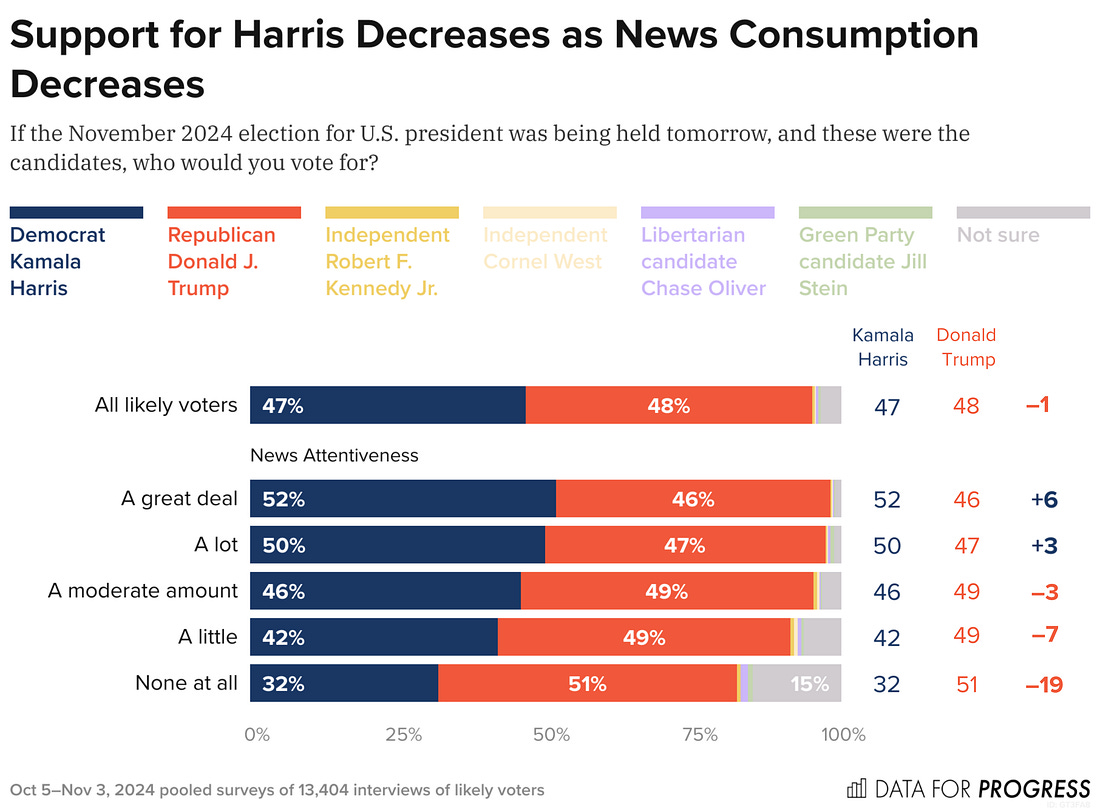
Last week, the GOP Congress passed the least popular piece of major legislation since the advent of modern polling nearly a century ago. Their own voters hate this bill. Even large swaths of Republicans oppose cuts to Medicaid and are ambivalent at best about the additional tax cuts for the rich. No one campaigned on this agenda. In fact, many Republicans explicitly campaigned against it. Members of Congress are among the most nakedly self-interested individuals on the planet. This is particularly true of Republicans in the Trump era, who believe in maintaining power at all costs. Yet by any standard definition, they just passed a bill that everyone believes puts that power at great risk. Even more than Congressional Republicans, Trump likes power and hates losing. He also knows that losing the majority means Democrats will have the power to investigate the vast amount of corruption in his administration. So once again, why would these people—who love power—pass a bill that vastly increases their chances of losing it? The answer is simple, and the same one that explains how we ended up electing a convicted criminal who sparked a violent insurrection and whose knowledge of how government works would be insufficient to pass the citizenship test: Our media ecosystem is fundamentally broken. It has become nearly impossible for all but the most engaged news consumers to follow what is happening in politics. The biggest chasm in politics is no longer between the Right and the Left—it’s between those who follow the news religiously and those who passively or actively avoid politics. Democrats do quite well with the former and struggle mightily with the latter. Trump benefits from a media environment powered by algorithms—where facts are fluid, context is impossible, anyone can be an “expert,” and the least credible voices are elevated above everyone else. In 2024, according to polling from Data for Progress, Trump won the election because he did incredibly well with the voters who consume the least news.
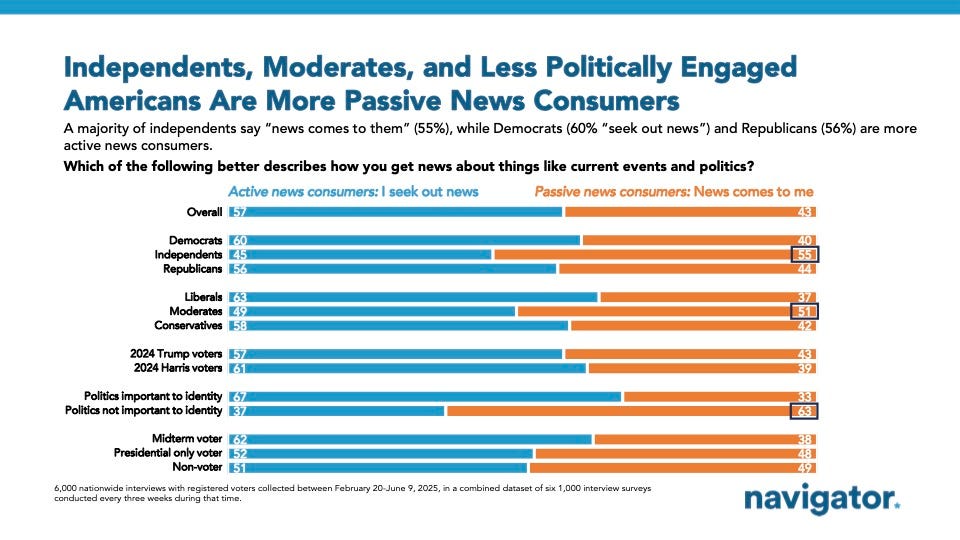
That dynamic persists to this day and helps explain why the GOP felt comfortable passing the most unpopular bill in recent memory less than 18 months before a critical election. Understanding this dynamic will be critical to winning elections in the Trump era. 1. Understanding the Real ProblemMany liberal activists, particularly those who are very online, are convinced that if MAGA voters were just made aware of some of Trump’s misdeeds, they would take off their Gulf of America hats, start watching MSNBC, and become Democrats in good standing. If only life were so simple. Polarization and partisanship are powerful drugs. Many people’s political identity is their primary identity, so abandoning their party or politician of choice is a massive step. It means leaving their community—and, in many cases, their family and friends—behind. There’s also more than a bit of elitism in suggesting that any voter bloc is simply too ignorant to know what’s good for them. But Trump’s base is not our target audience. The 2024 election was decided by two groups: people who voted for Biden in 2020 and Trump in 2024, and first-time voters—groups Democrats lost in 2024 for the first time in a very long time. This is the persuadable universe. And they happen to be people who engage with the news much less than people like us (I’m assuming that if you are reading this Substack, you are an absolutely voracious consumer of political news). Navigator Research tracks the media consumption habits of its poll respondents and has done a very helpful analysis that shows how stark the divide is.
The whole graph is fascinating, but I would draw your attention to three specific findings:
2. How Passive News Consumers Get Their InformationThe people we need to reach to win back the House and Senate are the 38% of midterm voters who don’t actively seek out the news. These folks have very different media diets than you and I. Social media is where most of them get their news. Only 17% consider CNN to be a major source of news. Only 8% say that about national newspapers. I love complaining about the New York Times’s headlines as much as the next person, but this data makes clear that the voters we need to persuade are paying no attention to the Times. The big battles over their headlines and story choices are mostly an insular conversation among people whose vote was never in doubt. 3. How It Affects the Battle Over the Big Ugly BillDuring the process of passing the Big Ugly Bill—that kicks people off their health care and food assistance to pay for tax cuts that mainly benefit the ultra-wealthy and large corporations—Republicans were confident the worst aspects of the bill would never reach the voters who will decide the midterms. An analysis from Priorities USA, a Democratic super PAC, found that the Republican plan was working. According to their research conducted right before the bill passed:
This is a massive problem because the Medicaid cuts are by far the least popular part of a very unpopular bill. Even Republican voters do not want Medicaid cuts. Democrats have a tree-falling-in-the-woods problem: If Republicans cut Medicaid and no one knows about it, is it really a political problem? 4. Where We Go From HereHere’s the simplest way to understand the problem: our current media ecosystem makes it very hard to get credible information—and the less credible the information voters have, the more likely they are to support Trump and the Republicans. Therefore, our challenge is to get our message in front of voters who don’t actively seek out the news. That means changing our strategy in three fundamental ways:
Democrats can’t fix our broken media ecosystem, but we can learn to better compete in it. If we don’t, we will keep losing elections—and Republicans will keep passing Big Ugly bills. Invite your friends and earn rewardsIf you enjoy The Message Box, share it with your friends and earn rewards when they subscribe.
|
Wednesday, July 9, 2025
How a Broken Media Ecosystem Enables Trump and the GOP





Subscribe to:
Post Comments (Atom)
January 24, 2026
This morning, on a street in Minneapolis, at least seven federal agents tackled and then shot and killed Alex Jeffrey Pretti, a 37-year-old ...
-
17 Personal Finance Concepts – #5 Home Ownershippwsadmin, 31 Oct 02:36 AM If you find value in these articles, please share them with your ...


No comments:
Post a Comment