This summer, big-name but small-scale fashion labels have been shuttering right and left. Mara Hoffman, Calvin Luo, The Vampire's Wife, and Rachel Pally have all announced plans to scale back or cease operations.
"Making clothes is an expensive endeavor," says Madeleine Schulz, a reporter for Vogue Business who has covered the recent closures. "Without big financial backing, founders are left to support production costs, materials costs, marketing, studio space, salaries, and more."
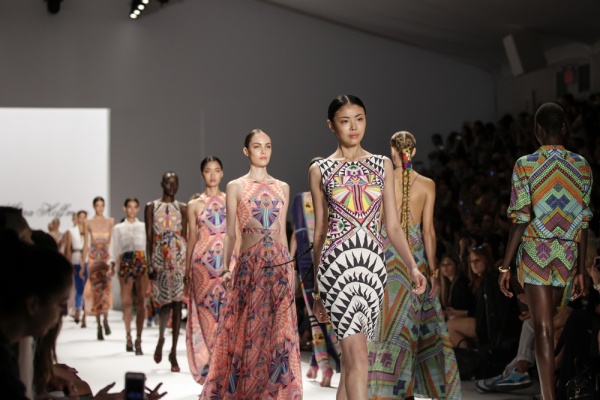
The biggest surprise might be Mara Hoffman, who famously started her label in 2002 out of her Upper East Side apartment. Everyone from Angelina Jolie to Anya Taylor-Joy has been spotted in Hoffman's designs.
But global exposure doesn't always equate to financial stability, especially when customers' shopping habits are changing; they're spending less due to inflation and feeling burnt out from online shopping in the COVID years.
"Most [customers] don't want to deal with the infinite scroll," Schulz says. "Consumers are seeking tangible, physical experiences to augment their digital browsing."
Because many indie brands are so tied up in online retail, their business model is hitting choppy waters. Delayed payments or nonpayment from wholesale e-commerce outlets — like Asos, Net-a-Porter, and the recently closed British luxury retailer Matchesfashion — can be much harder to absorb for a self-funded indie. The Vampire's Wife blamed the wholesale market for its recent closure.
Also, independent labels might shun investor backing to retain creative and ethical control. While this avoids the pitfalls of fast fashion, it often comes with a price.
"Indie brands are often more sustainable in material and workplace practices, which means it's even more costly to operate," says Schulz.
Meanwhile, they're competing against the likes of luxury brand KHAITE, which got a boost from growth equity firm Stripes in 2023, and Kim Kardashian's Skims, rumored to be exploring an IPO. That leaves indies with a strong artistic vision and a clear conscience, but literally struggling to keep up with the Kardashians.
"A lot of people would be surprised how small these brands really tend to be behind the scenes," says Schulz.












No comments:
Post a Comment