| Sign-up | Advertise
Join 73,446 smart people Read time: 3 minutes, 19 seconds
🤔 Did you know... Snickers has been producing delicious, peanut-filled candy bars since the 1930s. 😋 But it wasn't until about 80 years later that everything changed. Snickers unveiled a 6-word ad slogan that not only won awards… But also became one of the most famous slogans in HISTORY. The 6 specific words increased sales by 15.9% in just the first year. What are the 6 words and why were they a massive sales booster? Keep reading to find out. |
Brought to you today by Ignite Digital ❤️ Use SEO to reach red-hot buyers before the competition with Ignite Digital There are 8.5 billion searches per day on Google. Are you showing up? If not then you're losing sales. Ignite Digital are the SEO experts with 13 years of experience. They'll design a custom strategy to help you drive website traffic and online sales. Wanna give them a test drive? Request a FREE competitive analysis and Ignite Digital will respond on the same day with a sneak peek of your competitor's strategy & how you can beat them. → Get your FREE Competitive Analysis Today Imagine this… You're starving. You haven't eaten anything since breakfast, which was *checks Apple watch* 6 hours ago. You ferociously type out one last email, then peel yourself away from your desk, head to the kitchen, and open the fridge… All you see are a few bottles of water, a carton of milk, and some shriveled-up apples. As your stomach makes a Chewbacca-style growl, you grab your car keys and hurry over to the grocery store. Once inside, you zoom past the fruits and vegetables and stock up on instant mac and cheese, pre-made pizzas, potato chips, and cereal. *Fast forward one week.* Your groceries have dwindled, so it's time to go shopping again. After you finish eating your last bowl of cereal, you head back to the grocery store. But this time, you pick up chicken, Greek yogurt, sweet potatoes, and a couple of salad kits. What caused you to buy healthier groceries this week compared to last? In today's edition of Why We Buy 🧠we'll explore the Empathy Gap—why we often underestimate how much a buyer's emotional state can influence their behavior and decisions. Let's get into it. 🧠 The Psychology of the Empathy Gap People—including your customers—suck at predicting how they'll feel and act in the future. It's called the Projection Bias. That's why even though you *logically know* emotions influence 90% of your buying decisions… Your current emotional state doesn't allow you to accurately predict how you'll act in the future. Wild, huh? Behavioral economist George Loewenstein calls this the Empathy Gap (also known as the Hot-Cold Empathy Gap). When people are in a "cold" emotional state (i.e., they aren't feeling strong, negative emotions), they assume they'll make rational decisions in the future. But when people are in a "hot" emotional state (i.e., they are feeling strong, negative emotions such as hunger, exhaustion, jealousy, fear, or anger), they tend to make poorer decisions. So if you ask buyers about what they will do in the future—regardless if they're in a "cold" or "hot" emotional state—you can get (unintentionally) misleading answers. That's why to sell more, you have to smartly work with the Empathy Gap instead of against it.
🤑 How To Apply This Alright, so how can we apply this right now to sell more?
Customer research Focus on behavior patterns (not guesswork) Instead of asking customers to predict what they'll want (or buy) in the future, uncover what your ideal customers have already done so you know what they're likely to do. In other words, act like Amazon. When you browse through its website, you don't get bombarded with random product recommendations to check out. You see products recommended based on your past searches. Amazon uses your past behavior to more accurately predict your future behavior. And because it personalizes the suggestions, you're more likely to buy them.
Ads Factor in "hot" emotional needs In 2010, Snickers' released a 6-word ad slogan that would become one of the most famous in history: "You're not you when you're hungry." With corresponding ad campaigns, Snickers effectively taps into a "hot" emotional state (hunger) and the fallout (acting uncharacteristically and making poor decisions when hangry). But it doesn't stop there. Snickers then uses product-solution framing to show eating a Snickers bar alleviates customers' immediate need and restores them to their normal, rational selves (the "cold" emotional state).
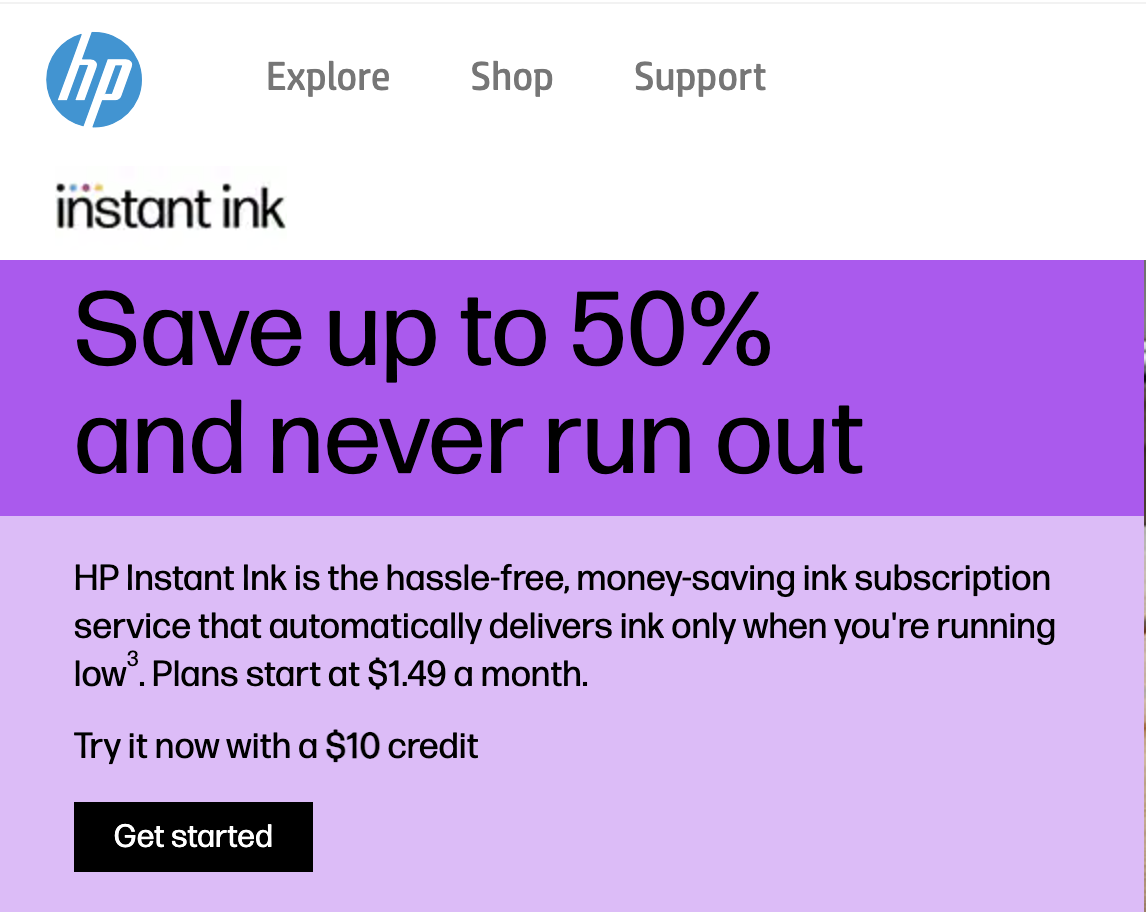
Subscriptions Leverage buyers' "cold" emotional state Connect with your customers waaay before they enter a "hot" emotional state (and when they're most rational). HP brilliantly does this with its Instant Ink subscription. Then letting the customers enter a "hot" emotional state where they inevitably run to a local competitor to buy ink ASAP… HP's Instant Ink subscription makes the buyer's journey seamless, giving the customer what they need before they need it. This ensures the customer and the profits stay with HP.
💥 The Short of It Everyone—especially your customers—is terrible at predicting how they'll act in the future. But if you wanna design more effective marketing campaigns, products, and customer experiences? Stop predicting what your customers will do (psst… You *and* them are probably wrong anyway). And start predicting how they'll feel instead. 🐦 Your Brainy Tweetable Customers SUCK at predicting their future behavior. So don't predict. Instead, rely on their PAST behavior to more accurately determine what they'll buy. Amazon does this by presenting products curated for you based on your past searches. Tweet this now > |
Until next time, happy selling! With ❤️ from Katelyn
P.S. Wanna really get inside your buyer's head? When you're ready, there are a few ways we can help: - Grab your Wallet-Opening Words playbook and make tiny copy tweaks that drive BIG bucks.
- Use Clarity Calls to deeply understand buyers... so you can get LOTS more of them.
- Apply to sponsor Why We Buy 🧠 (booked until Q4)
| 



No comments:
Post a Comment