Narrow in on their Trigger Events
The Growth Newsletter #165 Narrow in on their Trigger Events |
"Wait... this looks different than normal." We're changing up the newsletter after following the same format for ~5 years. Instead of sending three growth tactics once per week, we'll send one growth tactic three times per week. Each newsletter will be quicker to read, easier to take action on, and more focused. We'll also have room to go deeper on topics that need it. "Something Fun" will now include fun memes, examples of great marketing, and helpful visual resources. Let me know what you think! I read and respond to every reply :) – Neal
|
|
|
Email alone doesn't cut it anymore. 44% more startups sent messages on 2+ channels in 2023 than in 2022.
Those that did saw 63% better performance. That's huge. Dive into more data-driven insights in the Customer.io State of Messaging Report. The report analyzes 24 months of platform data and 360 survey responses from marketers, product managers, and engineers on messaging trends. We've been using Customer.io for over 4 years for this newsletter and to send the right message to the right person at the right time. Download the State of Messaging Report here. |
|
|
Want to be featured in front of 90,640 founders and marketers? Learn more here–booking 4 weeks in advance. |
Narrow in on their Trigger Events Insight written by us. Shout out to the Jobs To Be Done framework. Ever use a freemium product for years and then suddenly decide to upgrade to premium? Or you've heard of a product over and over again, and finally you decide to buy it? Those moments are the most important to dive into as a founder or marketer. They're called Trigger Events: An event or set of circumstances that triggers someone to be interested in or take action on purchasing a product. People will often suffer through painful problems for a long time before they finally have a trigger event that pushes them to relieve it. Momentum is powerful. You need an external jolt to change direction. You want to dig into: - The common trigger events for your product.
- The emotions customers feel at that moment.
- The job the customers are hiring the product to perform.
- How you can target and speak to them right after that trigger event.
- Whether the trigger events are random, recurring, or caused by macro conditions. More on this below.
A few examples: - Seasonal: People sign up for courses or fitness memberships more in January. They reflect on their year and decide to make changes. This caused our first cohort of UNIGNORABLE to sell out in 6 minutes.
- Seasonal: In a 3 day period, 4 people asked me if I skied. I felt ashamed to repeat that I never had despite living near five ski hills. I signed up for lessons that night.
- The trigger event was caused by it being the beginning of the season when everyone was excitedly talking about skiing.
- The pain I experienced was being 30, not knowing how to ski, and having to admit that. The trigger event made that pain more acute. The job of the lessons was to make me less ashamed. If I had waited a few weeks, fewer people would have been talking about skiing, and I would have found a new pain to focus on.
- Random: A startup just raised money and is ramping up marketing and hiring. Or they are in the process of raising money and need to show strong growth numbers.
- Random: Someone buys a Tesla because their neighbor did. An example from Branding That Means Business: In a 2007 survey, Prius drivers said they bought their hybrid car mainly because it "makes a statement about me" and "shows the world that its owner cares." But in reality… "one of the strongest predictors of whether someone buys a hybrid is whether the people in their same neighborhood own one."
- So much for caring about the environment 😂
- Macro: A recession is starting. Companies are laying people off. People start looking for increased financial security and side hustles or new jobs.
Dig into Trigger Events by - Talking to customers. Surveys. 1:1 calls. Casual DM or comment thread convos. Just be wary; the reasons they give are not necessarily the true reasons. Dig deeper. What job do they need help doing?
- Observing customers. Reddit posts. Social posts. Quora questions. Look at both the original post and the comments.
- Observing competitors: Does your competitor's marketing change throughout the year? Has it changed recently? What do they say in their ads? You can dive into the past with the Meta Ad Library and Archive.org.
A competitor in this context doesn't need to sell the same product. It just needs to target the same audience (startup founders) or perform the same job for them (reduce stress). If you can speak to someone's pain and emotional state right after a trigger event, you'll have their attention. |
|
|
What did you think of today's tactic? |
😍 Loved it: Forward to a friend, or send a reply—a simple 😍 will do! If really helps. 🤷♀️ Meh: You can unsubscribe here, or manage your subscription here. 🤔 I'm new here: You can join the party here. |
|
|
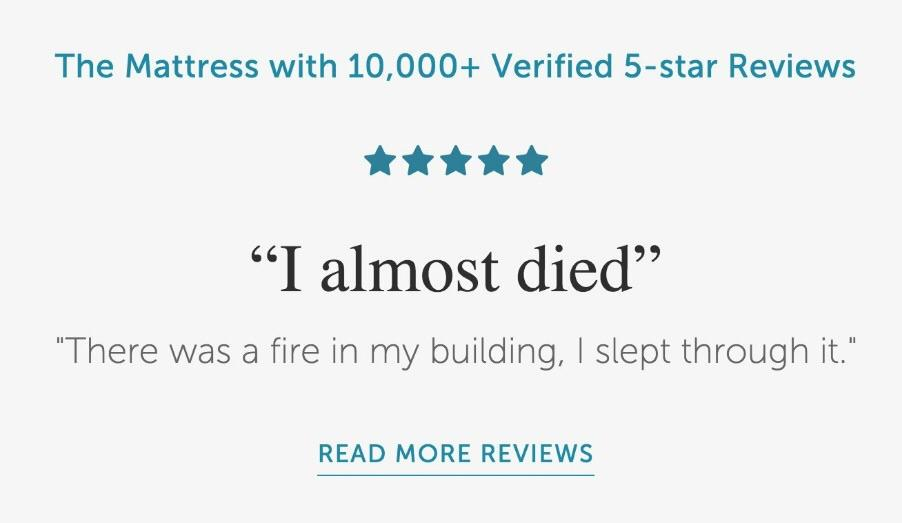
Something fun A+ use of an unignorable customer review of a Leesa mattress. |
|
| Thanks, everyone! See you on Wednesday with a strategic concept.
|
|
|
© 2024 Demand Curve, Inc. All rights reserved. 4460 Redwood Hwy, Suite 16-535, San Rafael, California, United States
Unsubscribe from all emails, including the newsletter, or manage subscription preferences. |
|
|
|







No comments:
Post a Comment