Hi! On the upside: While many people seem to agree that Netflix didn't quite stick the landing with the "Stranger Things" finale, the streamer looks to be wrapping up its Warner Bros. deal more smoothly… barring any major plot twists. Today we're exploring: |
- What's up, bot? Patients and doctors alike are turning to AI for healthcare assistance.
- Open to work: America now has more people looking for jobs than jobs available.
- Across the UNI-verse: Uniqlo's international shoppers are boosting its business.
|
Have feedback for us? Just hit reply - we'd love to hear from you! |
American patients are increasingly turning to AI for medical advice — so are their doctors |
With the world weighing up the pitfalls of giving AI access to sensitive personal data, OpenAI just unveiled a service where people can upload medical records directly to its chatbot. On Wednesday, the company announced the launch of ChatGPT Health, described as a "dedicated experience" for health information that will live as a tab within ChatGPT. According to a report from OpenAI, more than 40 million people globally already ask ChatGPT health-related questions every single day, equating to about 5% of all daily messages on the platform. |
Chat, what are my treatment options? |
The service, designed to help people "feel more informed, prepared, and confident navigating [their] health," allows users in the US to connect medical records and data from apps and wearable devices to ChatGPT. OpenAI underscored that Health is built with additional, layered protections for user information, including "purpose-built encryption." It also emphasized that the service is "not intended for diagnosis or treatment," and should instead be used to "support" existing medical care. But it seems that AI is already being used to support medical professionals, even more directly. A study conducted by the American Medical Association in November 2024, published last February, found that two-thirds of American physicians reported using AI at least once in 2024, up from 38% in 2023. |
Just what the doctor prompted |
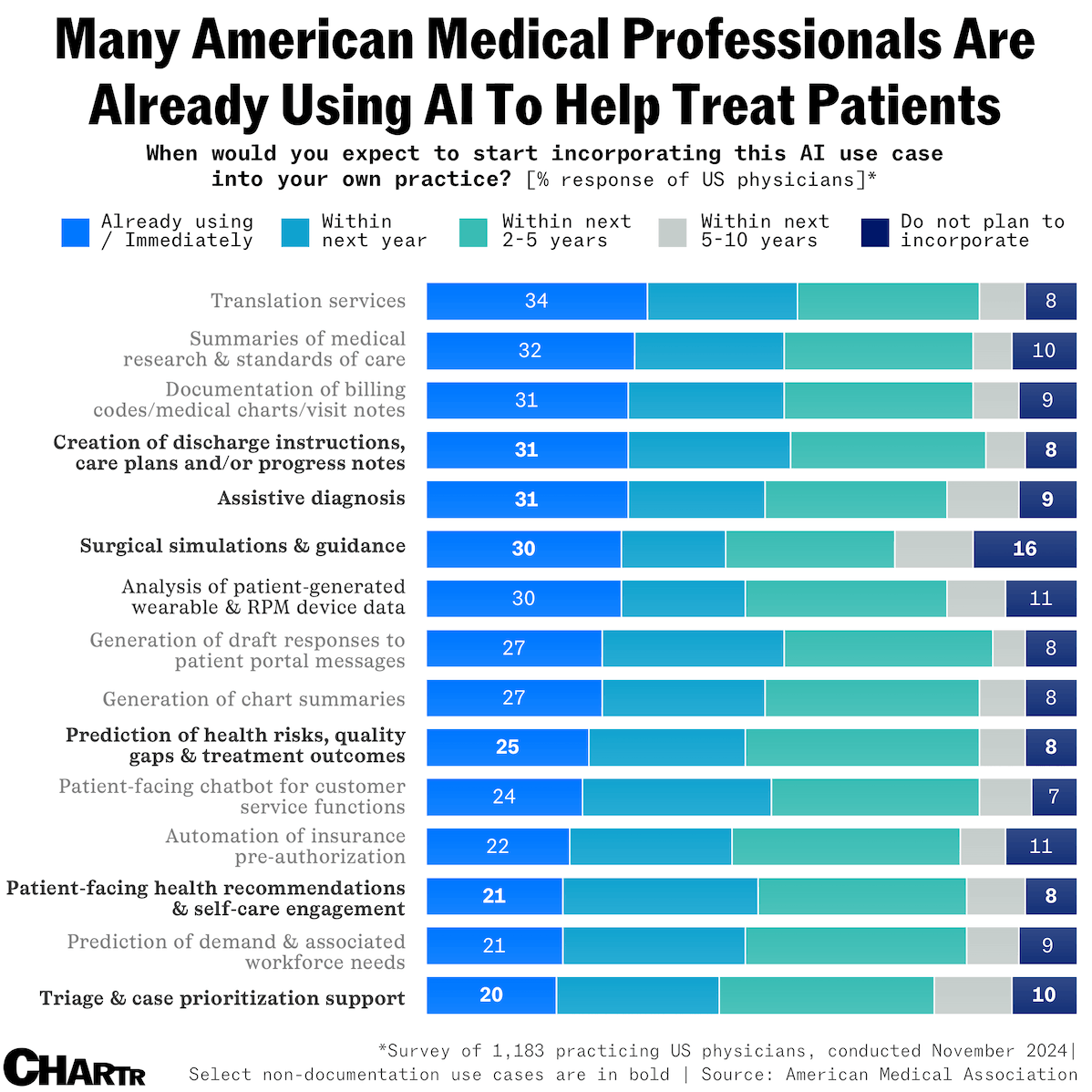
While many medical professionals said they were already using the tech for documentation purposes and translation services, a significant proportion also reported using AI for help with treatment, including surgery guidance (30%), prediction of health risks (25%), health recommendations (21%), and triage support (20%). Interestingly, the AMA found 30% of US physicians said they used AI to assist with diagnoses — the same thing that many turn to ChatGPT for, with OpenAI's report finding that 55% of US adults used AI tools to "check or explore symptoms" in the three months prior to the survey. |
America now has more job seekers than available jobs |
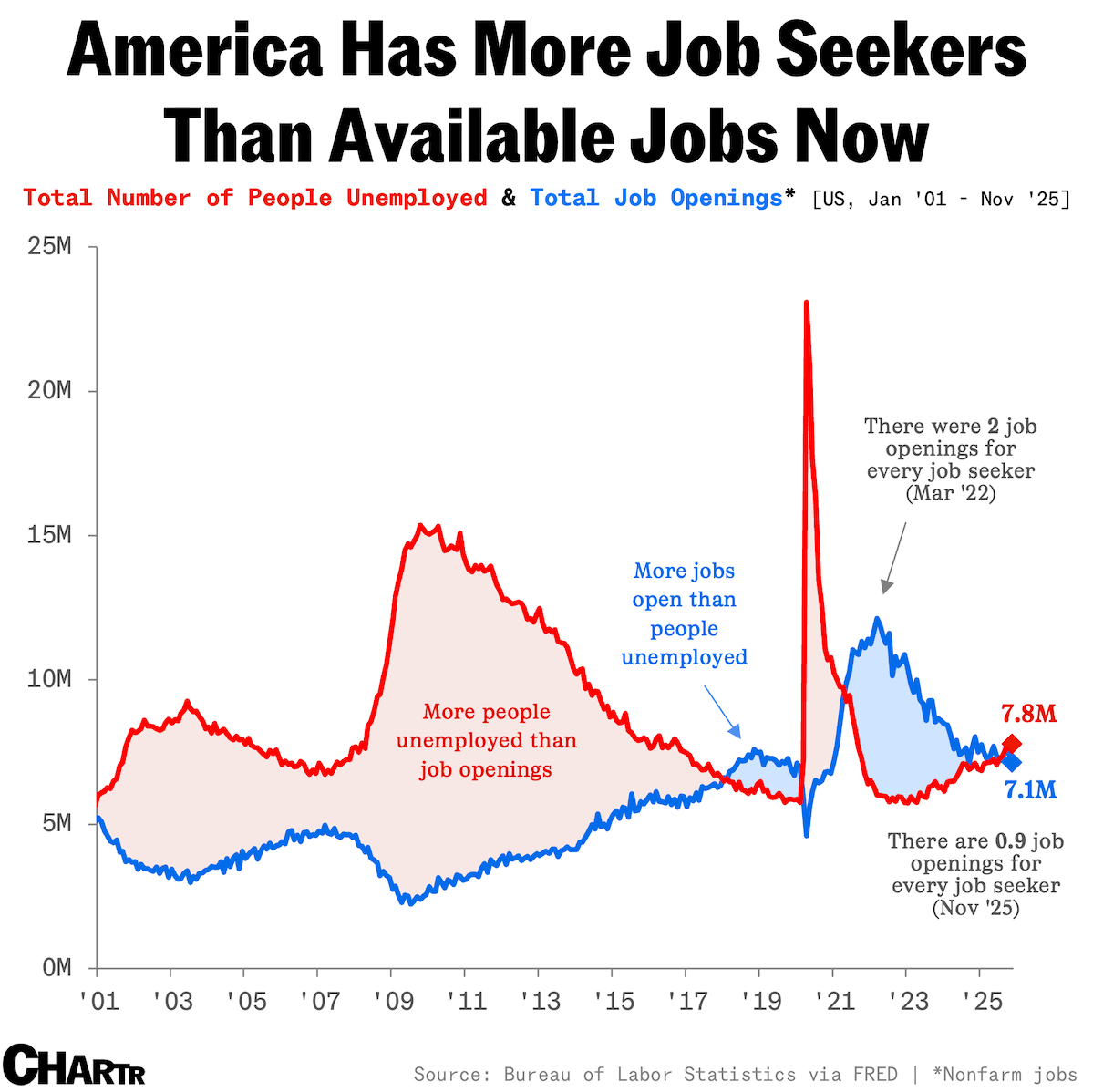
US job openings fell to 7.15 million in November, down from 7.45 million in the previous month, marking the lowest level since September 2024, according to the Bureau of Labor Statistics' Job Openings and Labor Turnover Summary report, released Wednesday. Hiring slowed as well, while layoffs declined to a six-month low, extending the "hire less, fire less" mode that has defined the US labor market for much of the past year. That shift is making life even tougher not just for aspiring job switchers, but also for those trying to land a job in the first place. |
Job openings and unemployment are often two sides of the same coin. When one rises, the other typically falls — a relationship economists track to gauge labor market tightness, or how many jobs are available per unemployed person. For much of the pandemic period, that balance was wildly skewed, with job seekers having more power as employers scrambled for workers to meet surging consumer demand and work through supply chain disruptions. At its peak in early 2022, there were roughly two job openings for every job seeker. However, with the hiring frenzy giving way to a painful correction, that ratio slipped below 1.0 in July, the first time in more than four years. As of November, there are about 0.9 vacancies for every unemployed person, per BLS data, meaning job seekers now outnumber available roles. December data out this morning revealed that employers added a fewer-than-expected 50,000 jobs last month, although the unemployment rate did tick down to 4.4%. |
|
|
Uniqlo's shiny international stores are pumping its sales as it targets Inditex's crown |
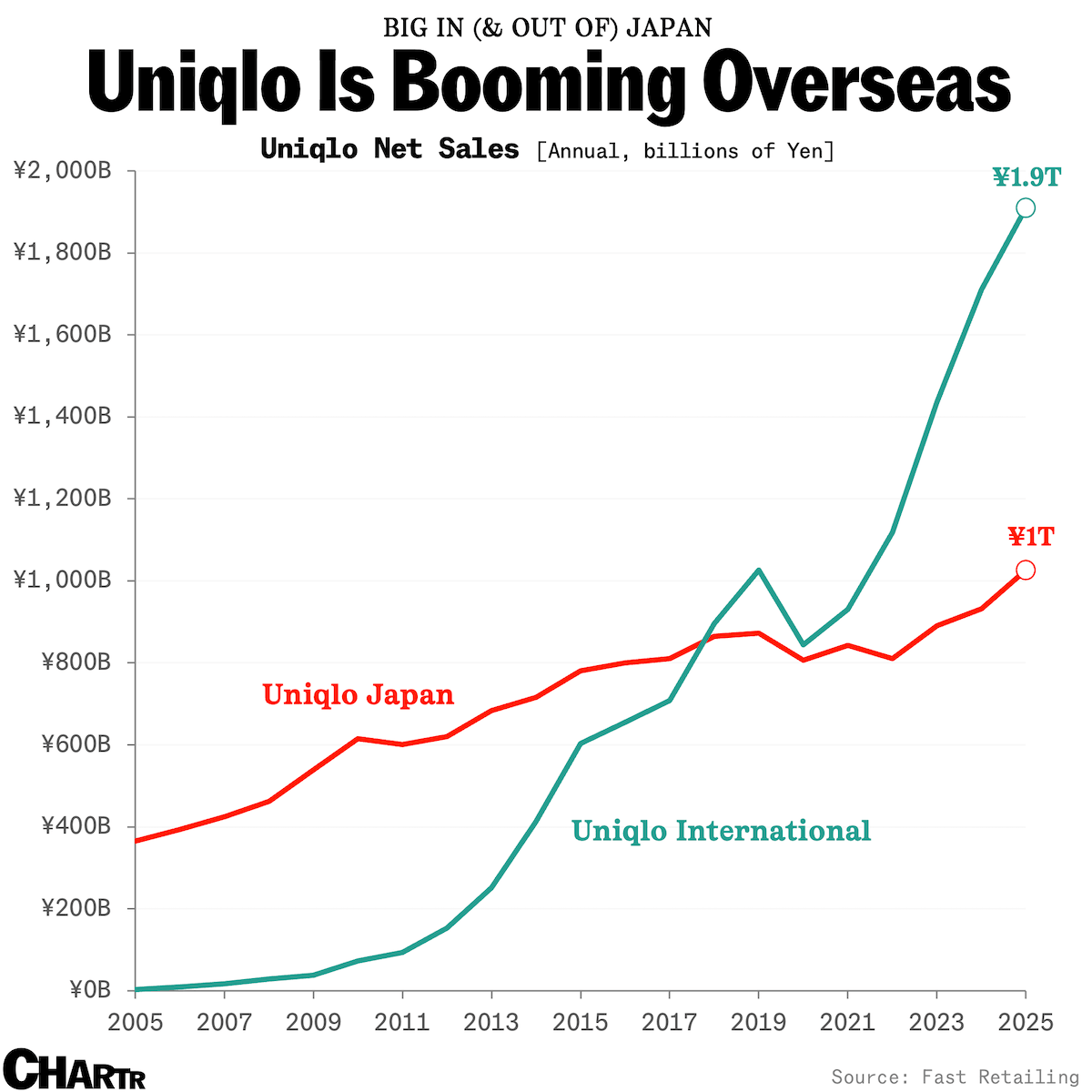
Calling all fans of Uniqlo's round shoulder bags, baggy curve jeans, and heat-tech thermal layers: thanks to you, the Japanese retailer is thriving more than ever. Reporting Q1 2026 results on Thursday, Uniqlo owner Fast Retailing celebrated a ~15% jump in quarterly revenue to more than 1 trillion yen ($6.3 billion) and hiked its profit outlook to 450 billion yen ($2.8 billion) for 2026. Entering its fifth consecutive year of profit, the company's growth was boosted by a pickup in international sales, even against a backdrop of US tariffs and escalating trade tensions between Japan and China, its biggest overseas market. |
Since it was founded in 1974, Uniqlo has found success with high-quality, casual, often unisex clothing — a model that's worked in Japan and has since been exported around the world. That international business first surpassed its domestic division back in 2018, and has been outpacing it ever since. |
Learning from its early struggles in North America, Uniqlo has now adopted a calculated and tailored expansion approach to its overseas business. In the US, for instance, it opened flagship stores in urban, high-traffic areas like Chicago, New York, and Boston, which have fared much better than the suburban outlets it launched earlier, while in China the brand has found more success in malls. |
Its international popularity is also boosting sales back home, too, as record tourists visit Japan with money to burn as the yen weakens. Fast Retailing reports that foreign visitors made up one-tenth of Uniqlo's Japan sales for the first time ever in the three months through the end of November. Fast Retailing's next goal? Overtake Zara owner Inditex to become the world's largest clothing retailer — but with a market cap of $122 billion against Inditex's $204 billion, it has a little ways to go yet. |
|
|
- As Google announces that Gmail is getting an AI makeover, its Gemini chatbot is already making strides towards rival ChatGPT's web visits, with traffic jumping 28% in the last month.
- Logan Paul is auctioning his $5.3 million Pikachu Illustrator Pokémon card — the most expensive trading card in history — and is even throwing in a $75K custom chain and personal delivery.
- UK PM Sir Keir Starmer has waded into the debate around X's Grok generating images of minors, with prediction markets pegging the chance of a ban in the country at ~20% this morning.
- Action thriller "One Battle After Another" scooped a record-breaking 7 nods at the Actor Awards (formerly the Screen Actors Guild Awards) on Wednesday.
- Rammed: A flock of about 50 sheep wandered into a German supermarket on Monday, only leaving after ~20 minutes when an employee banged loudly on a cash register.
|
|
|
- Friends of the pod: Why streaming giants like Netflix and Spotify are rushing to accommodate the rapid rise of video podcasts, from Stat Significant.
- Major news organizations, and many more in prediction markets, think Apple's hardware chief could be the next Tim Cook.
|
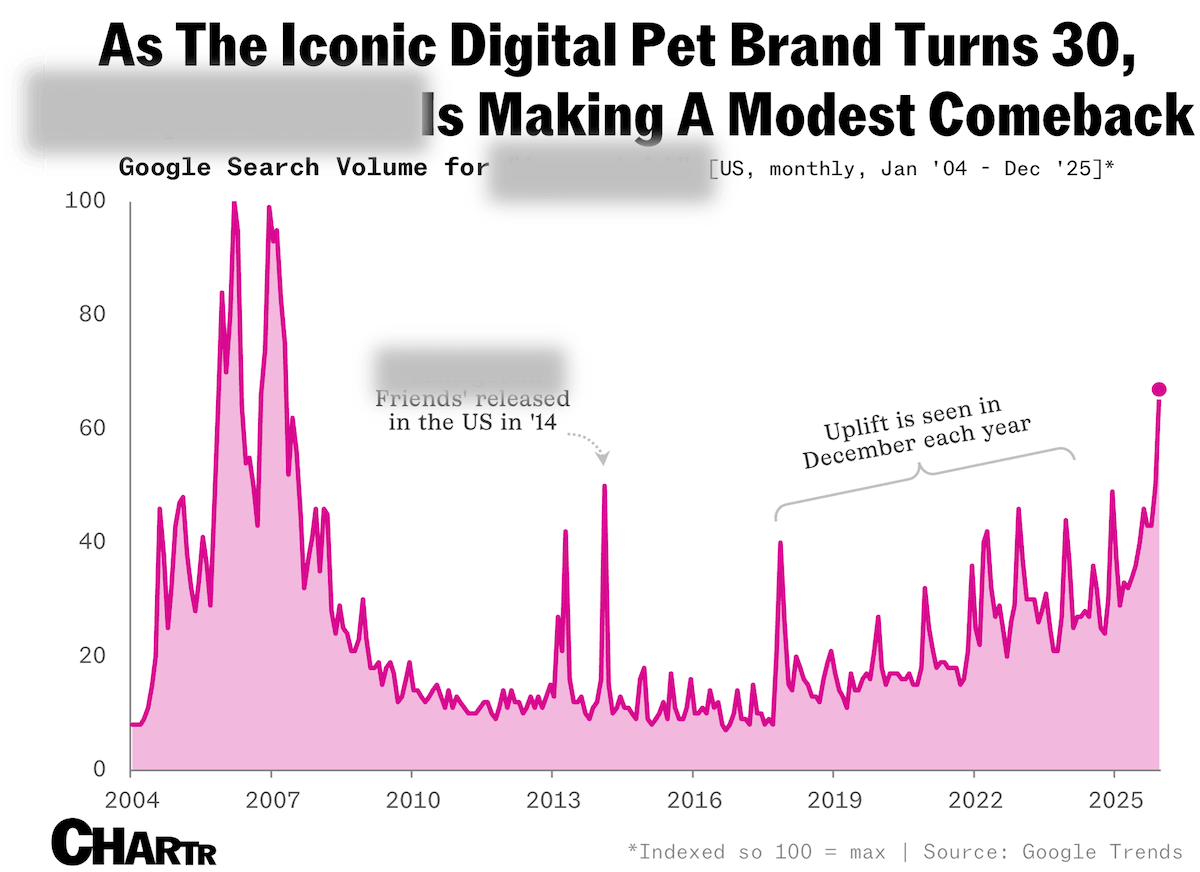
Off the charts: Which Japanese virtual toy companion appears to be making a comeback as it celebrates its 30th anniversary? [Answer below]. |
Not a subscriber? Sign up for free below. |
Sherwood Media, LLC produces fresh and unique perspectives on topical financial news and is a fully owned subsidiary of Robinhood Markets, Inc., and any views expressed here do not necessarily reflect the views of any other Robinhood affiliate... See more |
|
|
SHERWOOD MEDIA, LLC, 85 Willow Road, Menlo Park, CA 94025 |
|
|
|

%26stroke%3Dnone%26strokeWidth%3D3.6)